
Top Stories
Investors Add to Bets on Bank of England Rate Cuts in 2024
Published by Wanda Rich
Posted on December 14, 2023
2 min readLast updated: January 31, 2026
Add as preferred source on Google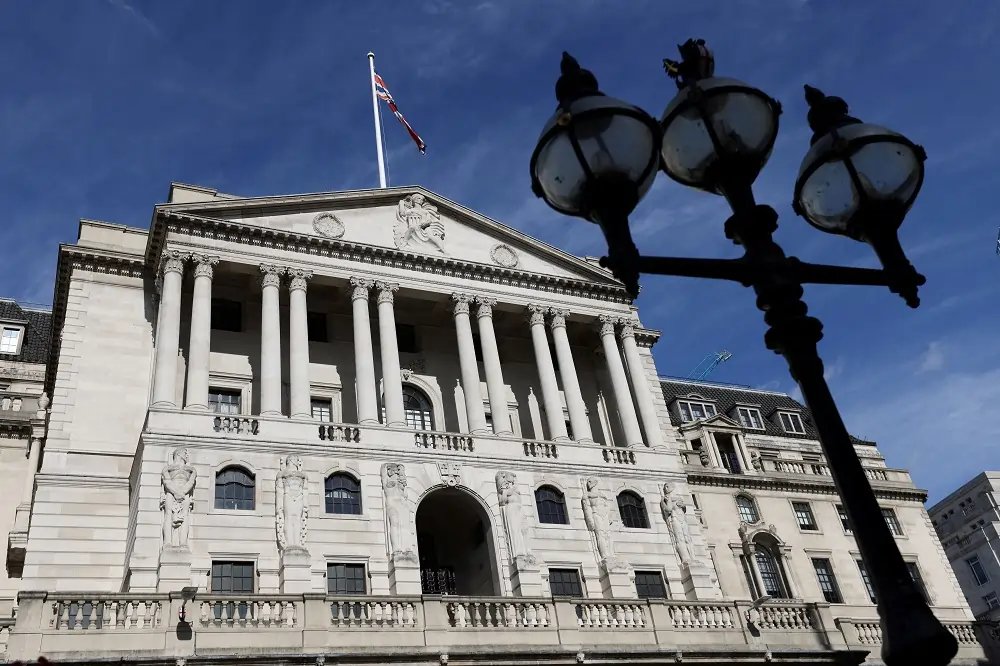
Published by Wanda Rich
Posted on December 14, 2023
2 min readLast updated: January 31, 2026
Add as preferred source on GoogleLONDON (Reuters) -Investors were almost fully pricing in five quarter-point interest rate cuts by the Bank of England during 2024, a day after the U.S. Federal Reserve signalled it was moving towards cutting borrowing costs.
LONDON (Reuters) -Investors were almost fully pricing in five quarter-point interest rate cuts by the Bank of England during 2024, a day after the U.S. Federal Reserve signalled it was moving towards cutting borrowing costs.
The BoE, which is expected to announce it has kept borrowing costs on hold for a third meeting in a row at 1200 GMT on Thursday, has stressed it is not close to thinking about cuts.
But signs that other central banks are moving in that direction and data showing the British economy is flat-lining have added to bets in financial markets on the BoE lowering Bank Rate from its 15-year high of 5.25%.
Rate futures markets on Thursday showed a first 25 basis-point rate cut as soon as March was seen as a 60% possibility by investors, with two quarter-point cuts fully priced in by June and five such moves almost fully priced in by the end of 2024.
Investors bought British government bonds heavily as the market opened, pushing yields on gilts down to their lowest levels since May as they bet increasingly on the prospect of the BoE cutting interest rates.
Two-year gilts, which are most sensitive to short-term changes in borrowing costs, were down by 17 basis point at 4.198% at 0810 GMT, tracking similar moves for German and U.S. government bonds of the same duration.
(Writing by William Schomberg; editing by Sarah Young)
The Bank of England is the central bank of the United Kingdom, responsible for issuing currency, managing monetary policy, and maintaining financial stability.
Interest rate cuts refer to a reduction in the rate at which banks can borrow from the central bank, often aimed at stimulating economic growth by making borrowing cheaper.
Monetary policy is the process by which a central bank manages the supply of money and interest rates to achieve specific economic objectives, such as controlling inflation and stabilizing currency.
Explore more articles in the Top Stories category











