Search
00
GBAF Logo
trophy
Top StoriesInterviewsBusinessFinanceBankingTechnologyInvestingTradingVideosAwardsMagazinesHeadlinesTrends

Subscribe to our newsletter

Get the latest news and updates from our team.

Global Banking and Finance Review

Global Banking & Finance Review

Company

    GBAF Logo
    • About Us
    • Profile
    • Privacy & Cookie Policy
    • Terms of Use
    • Contact Us
    • Advertising
    • Submit Post
    • Latest News
    • Research Reports
    • Press Release
    • Awards▾
      • About the Awards
      • Awards TimeTable
      • Submit Nominations
      • Testimonials
      • Media Room
      • Award Winners
      • FAQ
    • Magazines▾
      • Global Banking & Finance Review Magazine Issue 79
      • Global Banking & Finance Review Magazine Issue 78
      • Global Banking & Finance Review Magazine Issue 77
      • Global Banking & Finance Review Magazine Issue 76
      • Global Banking & Finance Review Magazine Issue 75
      • Global Banking & Finance Review Magazine Issue 73
      • Global Banking & Finance Review Magazine Issue 71
      • Global Banking & Finance Review Magazine Issue 70
      • Global Banking & Finance Review Magazine Issue 69
      • Global Banking & Finance Review Magazine Issue 66
    Top StoriesInterviewsBusinessFinanceBankingTechnologyInvestingTradingVideosAwardsMagazinesHeadlinesTrends

    Global Banking & Finance Review® is a leading financial portal and online magazine offering News, Analysis, Opinion, Reviews, Interviews & Videos from the world of Banking, Finance, Business, Trading, Technology, Investing, Brokerage, Foreign Exchange, Tax & Legal, Islamic Finance, Asset & Wealth Management.
    Copyright © 2010-2025 GBAF Publications Ltd - All Rights Reserved.

    ;
    Editorial & Advertiser disclosure

    Global Banking and Finance Review is an online platform offering news, analysis, and opinion on the latest trends, developments, and innovations in the banking and finance industry worldwide. The platform covers a diverse range of topics, including banking, insurance, investment, wealth management, fintech, and regulatory issues. The website publishes news, press releases, opinion and advertorials on various financial organizations, products and services which are commissioned from various Companies, Organizations, PR agencies, Bloggers etc. These commissioned articles are commercial in nature. This is not to be considered as financial advice and should be considered only for information purposes. It does not reflect the views or opinion of our website and is not to be considered an endorsement or a recommendation. We cannot guarantee the accuracy or applicability of any information provided with respect to your individual or personal circumstances. Please seek Professional advice from a qualified professional before making any financial decisions. We link to various third-party websites, affiliate sales networks, and to our advertising partners websites. When you view or click on certain links available on our articles, our partners may compensate us for displaying the content to you or make a purchase or fill a form. This will not incur any additional charges to you. To make things simpler for you to identity or distinguish advertised or sponsored articles or links, you may consider all articles or links hosted on our site as a commercial article placement. We will not be responsible for any loss you may suffer as a result of any omission or inaccuracy on the website.

    Home > Top Stories > Informal public transport: front-line mobility heroes
    Top Stories

    Informal public transport: front-line mobility heroes

    Informal public transport: front-line mobility heroes

    Published by Gbaf News

    Posted on May 29, 2020

    Featured image for article about Top Stories

    By Devin de Vries, CEO, WhereIsMyTransport.

    Every week, 5 billion commuters in emerging markets have no choice but to turn to informal transport networks to get around. Vehicles go by different names – minibus taxis in South Africa, matatus in Kenya, peseros in Mexico – but typically take the form of 16-passenger vans running along semi-flexible routes.

    These privately owned systems don’t always maximise efficiency. Drivers have strong incentives to fill vehicles to capacity, which means there are very few of the empty buses often seen in the developed world. However, this means vehicles leave when they’re full, not according to a timetable. No coordination between drivers, plus no real-time data, means there’s much room for efficiency gains.

    Despite these limitations, minibuses do affordably move up to 80% of the population for many emerging-market megacities. Mexico City’s 199 formal public transport lines pale compared to its almost 1400 informal routes.

    Bottom-up planning means extreme flexibility in the age of coronavirus

    Informal public transport networks are testament to ordinary people’s ingenuity in finding pragmatic solutions where governments lack capacity. In the coronavirus pandemic, these networks are responding to every demand placed on them, often with admirable solidarity.

    Without any central planning, operators have kept nearly all local routes open, albeit with fewer vehicles. Some minibus operators have even repurposed their vehicles to deliver essential goods and workers. Contrast with many formal transport agencies, which have often been forced to closeroutes, cutting off entire neighborhoods from even essential travel.

    In Mexico City, minibus drivers are coping with reduced demand by splitting up work. Drivers pick up fewer shifts – in essence, taking a pay cut rather than lay anyone off.

    Drivers typically don’t own vehicles themselves. Rather, drivers lease vehicles, paying owners an agreed-upon daily rate, then keep the profits from the day’s fares.

    With fares way down, many vehicles owners have renegotiated these lease rates to make it affordable for drivers to keep essential services operating. Indeed: “We’re all in it together!”

    Informal Transport Keeps Us Moving

    cdmxAs public services shut down, the pandemic is proving informal public transport’s value as a flexible system for any occasion. Across South Africa, for example, the government has shut down or cut back subsidised public transport, including halting service on the nation’s local rail networks.

    Governments only have these options because informal public transport networks are so flexible and resilient. Developed-world cities can shut down metro stations and cut back bus service in part because they can count on private vehicles, taxis, or ride hailing services, to fill the gap for essential workers.

    For emerging market megacities, informal transport plays a similar role. With comprehensive networks and no route cuts, informal transport keeps essential services running.

    Formalizing Inclusive Design

    Even in good times, informal public transport’s essential role has led to a long-latent conversation on the future of these systems. As government capacity expands, should formal systems gradually replace minibuses, or is it better to subsidise and upgrade an essential and adaptive service?

    Coronavirus has brought that conversation to the fore. At WhereIsMyTransport, the company I lead, we have built out the first comprehensive maps for informal transport networks in 36 cities around the world.

    From that work, we have come to firmly believe that while there’s room for improvement, any effort to replace informal transport networks will do more harm than good.

    This is not only due to the huge numbers of people they move. A glance at the map of Mexico City’s transport networks shows the wide reach of informal routes, giving low-cost rides to the cities’ farthest-flung neighborhoods. This network should be the nervous system of an inclusive city, where transport and opportunity reach every resident – to be inclusive of informal transport would be to enable more equitable mobility for all.

    For many megacities, some form of subsidy seems to be an inevitable part of the solution. Mexico City has responded quickly. The government will offer fuel subsidies starting in May, and is working with private creditors to postpone payments on loans used for fleet improvements. In the Philippines, the government is handing out cash payments to some drivers.

    Informal transport is essential to enabling the return of economic activity. Even one-off payments during this crisis can help keep drivers and vehicle owners afloat — avoiding a rash of bankruptcies that would endanger informal transport’s ability to ramp up as economies reopen. Despite some minibus owners’ willingness to renegotiate rates with drivers, many businesses are teetering on the edge of viability.

    What Comes Next

    During this pandemic, cities are responding quickly as cars vanish from the streets. New York, Paris, and Milan are among the cities seizing the opportunity to re-imagine those spaces, planning to add hundreds of kilometers of bike lanes this summer.

    I propose a similarly transformative vision for emerging megacities, but with a tweak. Informal transport’s great advantage is that routes, times, and frequencies are effectively crowd-sourced. Drivers make decisions based on commuter’s needs, often in close to real time.

    For complex, sprawling megacities, this approach should be preserved. It works much better than a bureaucrat drawing lines on a map ever could.

    What government can do is prioritise informal public transport to make it work better. Most important is adding fast lanes for all public transport, which would be transformative for billions of people.

    Despite fewer vehicles per route, minibus passengers in Mexico City are reporting shorter travel times. Without the city’s usual gridlock, minibuses connect neighborhoods even better than before. Faster rides give some idea of benefits for bus-only lanes, especially in cities with extreme congestion and pollution.

    Formalised transit hubs could connect minibus networks with city buses and trains. In many cases that will mean expanding existing informal taxi ranks, with benefits of reduced crowding, improved facilities for vendors, and better transport.

    In South Africa, the government is looking more closely at crowding on minibuses. Vehicles may run at up to 70% capacity; both passengers and drivers must wear masks. In Mexico City, the government is requiring vehicles to be fit with trackers and cameras to improve safety, in return for permission to operate. These sorts of sensible safety oversight measures are welcome – and not just in a crisis.

    The coronavirus has shown us how critical informal public transport networks are to keeping our smallest and largest emerging market cities running. They are the unsung heroes of our emerging market cities.

    Cities should seize the opportunity to learn from informal transport networks and incorporate them into the urban fabric, embracing their strengths of resilience, flexibility, and adaptability. Other informal sectors, such as street vending, are central to so many economies, and will also flourish from this collaboration.

    More is possible, with what we have today. Let’s seize the moment.

    Related Posts
    Chase Buchanan Private Wealth Management Highlights Key Autumn 2025 Budget Takeaways for Expats
    Chase Buchanan Private Wealth Management Highlights Key Autumn 2025 Budget Takeaways for Expats
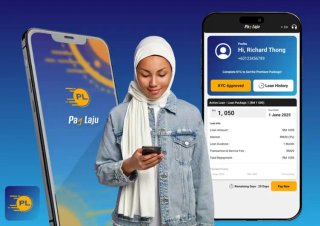
    PayLaju Strengthens Its Position as Malaysia’s Trusted Interest-Free Sharia-Compliant Loan Provider
    PayLaju Strengthens Its Position as Malaysia’s Trusted Interest-Free Sharia-Compliant Loan Provider
    A Notable Update for Employee Health Benefits:
    A Notable Update for Employee Health Benefits:
    Creating Equity Between Walls: How Mohak Chauhan is Using Engineering, Finance, and Community Vision to Reengineer Affordable Housing
    Creating Equity Between Walls: How Mohak Chauhan is Using Engineering, Finance, and Community Vision to Reengineer Affordable Housing
    Upcoming Book on Real Estate Investing: Harvard Grace Capital Founder Stewart Heath’s Puts Lessons in Print
    Upcoming Book on Real Estate Investing: Harvard Grace Capital Founder Stewart Heath’s Puts Lessons in Print
    ELECTIVA MARKS A LANDMARK FIRST YEAR WITH MAJOR SENIOR APPOINTMENTS AND EXPANSION MILESTONES
    ELECTIVA MARKS A LANDMARK FIRST YEAR WITH MAJOR SENIOR APPOINTMENTS AND EXPANSION MILESTONES
    Hebbia Processes One Billion Pages as Financial Institutions Deploy AI Infrastructure at Unprecedented Scale
    Hebbia Processes One Billion Pages as Financial Institutions Deploy AI Infrastructure at Unprecedented Scale
    Beyond Governance Fatigue: Making ESG Integration Work in Financial Markets
    Beyond Governance Fatigue: Making ESG Integration Work in Financial Markets
    Why I-9 Verification Matters for Financial Institutions: Building a Culture of Compliance and Trust
    Why I-9 Verification Matters for Financial Institutions: Building a Culture of Compliance and Trust
    Curvestone AI partners with The White Rose Finance Group to enhance compliance file reviews
    Curvestone AI partners with The White Rose Finance Group to enhance compliance file reviews
    LinkedIn Influence in 2025: Insights from Stevo Jokic on Building Authority and Trust
    LinkedIn Influence in 2025: Insights from Stevo Jokic on Building Authority and Trust
    Should You Take the Dealer’s Bike Insurance or Buy Online Yourself? Here’s the Real Difference
    Should You Take the Dealer’s Bike Insurance or Buy Online Yourself? Here’s the Real Difference

    Why waste money on news and opinions when you can access them for free?

    Take advantage of our newsletter subscription and stay informed on the go!

    Subscribe

    More from Top Stories

    Explore more articles in the Top Stories category

    ID-Pal Unveils ID-Detect Enhancements to Counter Surge in Digital Manipulation and Deepfakes

    ID-Pal Unveils ID-Detect Enhancements to Counter Surge in Digital Manipulation and Deepfakes

    TRUST TAKES THE LEAD: HALF OF UK SHOPPERS HAVE ABANDONED ONLINE PURCHASES OVER SECURITY CONCERNS

    TRUST TAKES THE LEAD: HALF OF UK SHOPPERS HAVE ABANDONED ONLINE PURCHASES OVER SECURITY CONCERNS

    Why Choose Premium Driver Service in Miami Over Rideshare Apps for Business Travel and Special Events?

    Why Choose Premium Driver Service in Miami Over Rideshare Apps for Business Travel and Special Events?

    Over 30 Million Users Benefit From Ant International’s Bettr Credit Tech Solutions

    Over 30 Million Users Benefit From Ant International’s Bettr Credit Tech Solutions

    Side-Hustle Economics: How Part-Time Service Work Can Strengthen Your Financial Plan

    Side-Hustle Economics: How Part-Time Service Work Can Strengthen Your Financial Plan

    London to Host Major Summit on “New Horizons” for Islamic Economy in the UK

    London to Host Major Summit on “New Horizons” for Islamic Economy in the UK

    BLOXX Launches World’s First Home Equity Subscription, Creating a New Residential Asset Class

    BLOXX Launches World’s First Home Equity Subscription, Creating a New Residential Asset Class

    LiaFi Addresses Gap Between Business Transaction and Savings Accounts

    LiaFi Addresses Gap Between Business Transaction and Savings Accounts

    Ant Group Chairman Eric Jing Outlines Strategy for Inclusive AI, Collaboration on Tokenised Settlement

    Ant Group Chairman Eric Jing Outlines Strategy for Inclusive AI, Collaboration on Tokenised Settlement

    Deeply Cultivating the Syndicated Loan and Cross-Border Financing Fields: Empowering Chinese Banks’ Global Expansion with Professional Excellence

    Deeply Cultivating the Syndicated Loan and Cross-Border Financing Fields: Empowering Chinese Banks’ Global Expansion with Professional Excellence

    Ant International’s Antom Launches AI‑Powered MSME App for Finance and Business Operations

    Ant International’s Antom Launches AI‑Powered MSME App for Finance and Business Operations

    A Gateway for U.S. Capital: Inside Kazakhstan’s Expanding Financial Hub

    A Gateway for U.S. Capital: Inside Kazakhstan’s Expanding Financial Hub

    View All Top Stories Posts
    Previous Top Stories PostFree Webinar: ESG Data Clarity – Practical Guidance to Maximize ESG Data Value
    Next Top Stories PostProtecting yourself against a recession