Search
00
GBAF Logo
trophy
Top StoriesInterviewsBusinessFinanceBankingTechnologyInvestingTradingVideosAwardsMagazinesHeadlinesTrends

Subscribe to our newsletter

Get the latest news and updates from our team.

Global Banking & Finance Review®

Global Banking & Finance Review® - Subscribe to our newsletter

Company

    GBAF Logo
    • About Us
    • Profile
    • Privacy & Cookie Policy
    • Terms of Use
    • Contact Us
    • Advertising
    • Submit Post
    • Latest News
    • Research Reports
    • Press Release
    • Awards▾
      • About the Awards
      • Awards TimeTable
      • Submit Nominations
      • Testimonials
      • Media Room
      • Award Winners
      • FAQ
    • Magazines▾
      • Global Banking & Finance Review Magazine Issue 79
      • Global Banking & Finance Review Magazine Issue 78
      • Global Banking & Finance Review Magazine Issue 77
      • Global Banking & Finance Review Magazine Issue 76
      • Global Banking & Finance Review Magazine Issue 75
      • Global Banking & Finance Review Magazine Issue 73
      • Global Banking & Finance Review Magazine Issue 71
      • Global Banking & Finance Review Magazine Issue 70
      • Global Banking & Finance Review Magazine Issue 69
      • Global Banking & Finance Review Magazine Issue 66
    Top StoriesInterviewsBusinessFinanceBankingTechnologyInvestingTradingVideosAwardsMagazinesHeadlinesTrends

    Global Banking & Finance Review® is a leading financial portal and online magazine offering News, Analysis, Opinion, Reviews, Interviews & Videos from the world of Banking, Finance, Business, Trading, Technology, Investing, Brokerage, Foreign Exchange, Tax & Legal, Islamic Finance, Asset & Wealth Management.
    Copyright © 2010-2026 GBAF Publications Ltd - All Rights Reserved. | Sitemap | Tags | Developed By eCorpIT

    Editorial & Advertiser disclosure

    Global Banking & Finance Review® is an online platform offering news, analysis, and opinion on the latest trends, developments, and innovations in the banking and finance industry worldwide. The platform covers a diverse range of topics, including banking, insurance, investment, wealth management, fintech, and regulatory issues. The website publishes news, press releases, opinion and advertorials on various financial organizations, products and services which are commissioned from various Companies, Organizations, PR agencies, Bloggers etc. These commissioned articles are commercial in nature. This is not to be considered as financial advice and should be considered only for information purposes. It does not reflect the views or opinion of our website and is not to be considered an endorsement or a recommendation. We cannot guarantee the accuracy or applicability of any information provided with respect to your individual or personal circumstances. Please seek Professional advice from a qualified professional before making any financial decisions. We link to various third-party websites, affiliate sales networks, and to our advertising partners websites. When you view or click on certain links available on our articles, our partners may compensate us for displaying the content to you or make a purchase or fill a form. This will not incur any additional charges to you. To make things simpler for you to identity or distinguish advertised or sponsored articles or links, you may consider all articles or links hosted on our site as a commercial article placement. We will not be responsible for any loss you may suffer as a result of any omission or inaccuracy on the website.

    Home > Top Stories > IMF chief warns natural gas disruptions could trigger recession in Europe
    Top Stories

    IMF chief warns natural gas disruptions could trigger recession in Europe

    Published by Jessica Weisman-Pitts

    Posted on July 13, 2022

    3 min read

    Last updated: February 5, 2026

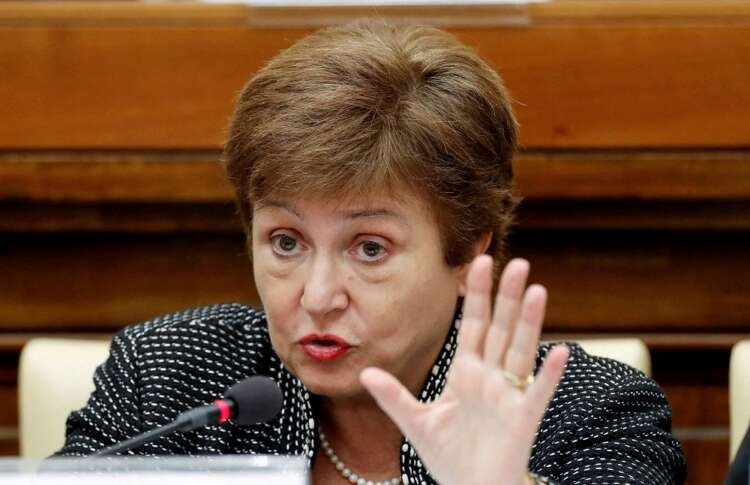
    Kristalina Georgieva, IMF Managing Director, speaks at a conference about the economic implications of gas supply disruptions in Europe, highlighting recession risks and inflation concerns.
    IMF Managing Director Kristalina Georgieva discusses economic risks of gas supply disruptions - Global Banking & Finance Review
    Why waste money on news and opinion when you can access them for free?

    Take advantage of our newsletter subscription and stay informed on the go!

    Subscribe

    Tags:GDPfinancial crisiseconomic growthmonetary policydebt sustainability

    Quick Summary

    NUSA DUA, Indonesia (Reuters) – The global economic outlook remains extremely uncertain, the head of the International Monetary Fund said on Wednesday, warning that further disruption in the natural gas supply to Europe could plunge many economies into recession.

    NUSA DUA, Indonesia (Reuters) – The global economic outlook remains extremely uncertain, the head of the International Monetary Fund said on Wednesday, warning that further disruption in the natural gas supply to Europe could plunge many economies into recession.

    In a blog published ahead of this week’s meeting of finance officials from the Group of 20 major economies, IMF Managing Director Kristalina Georgieva said Russia’s war in Ukraine had darkened the economic outlook significantly, and the IMF was poised to downgrade its outlook for 2022 and 2023.

    Georgieva last week told Reuters the fund would scale back its previous forecast for 3.6% growth in 2022 for the third time this year and said she could not rule out a recession next year. New numbers are due out later this month, after a downward revision of nearly a full percentage point in April.

    Georgieva said the war was causing a worsening human tragedy while related commodity shocks were slowing growth and driving up prices, exacerbating a cost-of-living crisis that threatened to drive an additional 71 million people into extreme poverty.

    “Countries must do everything in their power to bring down high inflation … because persistently high inflation could sink the recovery and further damage living standards, particularly for the vulnerable,” she said, adding that rising concerns over food and energy supplies also elevated the risks of social instability.

    To avoid further hunger, malnutrition and migration, wealthier countries should provide urgent support for those in need through new bilateral and multilateral funding, as well as reversing recent restrictions on food exports, Georgieva said.

    Most central banks would need to continue to tighten monetary policy decisively, especially in countries where inflation expectations were starting to de-anchor. Without action, she said, those countries could face a “destructive wage-price spiral” that would require more forceful monetary tightening, with even more harm to growth and employment.

    Policymakers should also be ready to use foreign exchange interventions or capital flow management measures where external shocks were so disruptive that they could not be absorbed by flexible foreign exchange rates alone, Georgieva wrote.

    Countries with high debt levels should reduce reliance on foreign currency borrowing and scale back fiscal spending to reduce the burden of increasingly expensive borrowing.

    But she said urgent efforts were also needed to reduce debt, especially in emerging and developing economies with high foreign exchange liabilities, noting that some 30% of emerging market countries and 60% of low-income nations were now in or near debt distress.

    (Reporting by Andrea Shalal; Editing by Chizu Nomiyama)

    Frequently Asked Questions about IMF chief warns natural gas disruptions could trigger recession in Europe

    1What is a financial crisis?

    A financial crisis is a situation where the value of financial institutions or assets drops significantly. It can lead to widespread economic instability, affecting banks, businesses, and consumers.

    2What is economic growth?

    Economic growth refers to an increase in the production of goods and services in an economy over a period of time. It is typically measured by the rise in GDP.

    3What is monetary policy?

    Monetary policy involves the management of a country's money supply and interest rates by its central bank to control inflation, stabilize currency, and achieve sustainable economic growth.

    4What is debt sustainability?

    Debt sustainability refers to the ability of a borrower to manage and repay their debts without requiring debt relief or accumulating further debt. It is crucial for maintaining economic stability.

    More from Top Stories

    Explore more articles in the Top Stories category

    Image for Lessons From the Ring and the Deal Table: How Boxing Shapes Steven Nigro’s Approach to Banking and Life
    Lessons From the Ring and the Deal Table: How Boxing Shapes Steven Nigro’s Approach to Banking and Life
    Image for Joe Kiani in 2025: Capital, Conviction, and a Focused Return to Innovation
    Joe Kiani in 2025: Capital, Conviction, and a Focused Return to Innovation
    Image for Marco Robinson – CLOSE THE DEAL AND SUDDENLY GROW RICH
    Marco Robinson – CLOSE THE DEAL AND SUDDENLY GROW RICH
    Image for Digital Tracing: Turning a regulatory obligation into a commercial advantage
    Digital Tracing: Turning a regulatory obligation into a commercial advantage
    Image for Exploring the Role of Blockchain and the Bitcoin Price Today in Education
    Exploring the Role of Blockchain and the Bitcoin Price Today in Education
    Image for Inside the World’s First Collection Industry Conglomerate: PCA Global’s Platform Strategy
    Inside the World’s First Collection Industry Conglomerate: PCA Global’s Platform Strategy
    Image for Chase Buchanan Private Wealth Management Highlights Key Autumn 2025 Budget Takeaways for Expats
    Chase Buchanan Private Wealth Management Highlights Key Autumn 2025 Budget Takeaways for Expats
    Image for PayLaju Strengthens Its Position as Malaysia’s Trusted Interest-Free Sharia-Compliant Loan Provider
    PayLaju Strengthens Its Position as Malaysia’s Trusted Interest-Free Sharia-Compliant Loan Provider
    Image for A Notable Update for Employee Health Benefits:
    A Notable Update for Employee Health Benefits:
    Image for Creating Equity Between Walls: How Mohak Chauhan is Using Engineering, Finance, and Community Vision to Reengineer Affordable Housing
    Creating Equity Between Walls: How Mohak Chauhan is Using Engineering, Finance, and Community Vision to Reengineer Affordable Housing
    Image for Upcoming Book on Real Estate Investing: Harvard Grace Capital Founder Stewart Heath’s Puts Lessons in Print
    Upcoming Book on Real Estate Investing: Harvard Grace Capital Founder Stewart Heath’s Puts Lessons in Print
    Image for ELECTIVA MARKS A LANDMARK FIRST YEAR WITH MAJOR SENIOR APPOINTMENTS AND EXPANSION MILESTONES
    ELECTIVA MARKS A LANDMARK FIRST YEAR WITH MAJOR SENIOR APPOINTMENTS AND EXPANSION MILESTONES
    View All Top Stories Posts
    Previous Top Stories PostAncestral ties: India avidly watching British leadership race
    Next Top Stories PostEuro falls below dollar parity for first time since 2002