
Top Stories
How Nassau Street Partners Helps Founders Avoid the Hidden Cost of a Slow Capital Raise
Published by Wanda Rich
Posted on July 1, 2025
4 min readLast updated: January 20, 2026
Add as preferred source on Google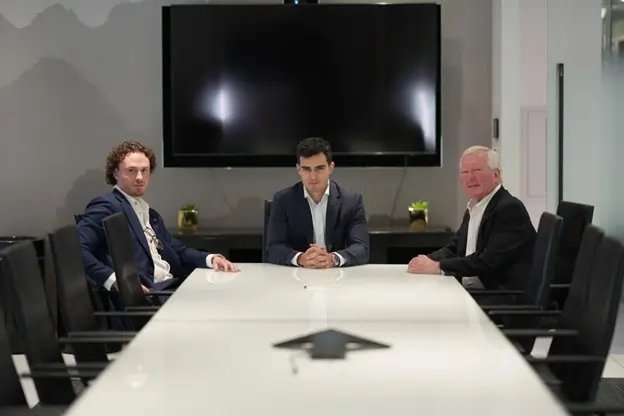
Published by Wanda Rich
Posted on July 1, 2025
4 min readLast updated: January 20, 2026
Add as preferred source on GoogleNassau Street Partners has implemented a new internal execution model focused on accelerating capital raises for founders in the lower middle market and independent sponsors. By combining tighter prep timelines, sector-specific investor mapping, and precision outreach, the firm is reducing the dead ...
Nassau Street Partners has implemented a new internal execution model focused on accelerating capital raises for founders in the lower middle market and independent sponsors. By combining tighter prep timelines, sector-specific investor mapping, and precision outreach, the firm is reducing the dead time that often derails private raises between $1m and $50m.
The initiative reflects a broader insight Nassau has seen across dozens of mandates: in today’s fragmented private markets, duration – not difficulty – is the silent killer. The longer a raise drags, the more opportunity cost compounds.
“Most founders expect fundraising to be hard. What they don’t plan for is the way a slow raise erodes execution,” said Juan Moreno, Managing Partner at Nassau Street Partners. “We’ve built a process to protect momentum, not just generate interest.”
Raising capital has always been hard. But in today’s fragmented, global private markets, it's not just difficulty founders should worry about – it’s duration. What most capital-seeking companies underestimate isn’t the challenge of closing a round. It’s the drag created when a raise takes too long. Slow capital formation doesn’t just delay growth, it disrupts execution, drains management attention, and quietly erodes the value of the business itself.
The Illusion of “More Time”
Many founders are told early in the process that raising capital takes 6 to 9 months – sometimes more. That timeline becomes internalized. But what starts as patience quickly turns into inertia with conversations dragging, momentum fading, and confidence leaking.
Nassau Street Partners sees this dynamic repeatedly. The firm works with companies and independent sponsors raising $1M–$50M and has engineered a model designed for speed: fast prep, broad investor reach, and front-loaded execution. It’s not about rushing. It’s about reducing dead time.
“A company with real traction shouldn’t be stuck in neutral for two quarters,” said Saul Friend, Director at Nassau Street Partners. “If your capital raise is slowing the rest of your business down, something’s broken.”
The costs of a slow raise show up in four places:
What founders often hear as “speed” sounds like cutting corners. But done right, speed simply means efficiency. It means cutting out the 3-month prep cycles, the version 9.1 pitch deck, and the endless teasing of investors who were never a fit to begin with.
At Nassau, the entire go-to-market process for a raise – deck, memo, model, financials, positioning – is completed in under 30 days. Investor outreach begins immediately thereafter, targeting thousands of family offices, strategics, and qualified HNWIs across a mapped and segmented universe.
“In traditional banking, the slow part isn’t sourcing capital – it’s the way deals are staged and sequenced,” said Saul Friend, Director at Nassau Street Partners. “We replace that with a system designed to surface real engagement fast.”
In recent transactions, this fast-execution model has yielded consistent traction:
The shared theme: not rushing the process, but compressing the dead time.
For founders and sponsors, the message is clear: capital raising should be treated like a go-to-market motion—not a relationship marathon.
Above all, founders must recognize the opportunity cost of time lost. There’s no line item for it on a balance sheet, but it compounds quickly.
Nassau Street Partners is a modern capital advisory firm helping growth-stage companies and independent sponsors raise $1M–$50M from global family offices, strategics, and HNWIs. With a distribution-first process and investment-bank quality execution, Nassau delivers faster, more efficient raises in markets where speed is often the difference between traction and fatigue.
Capital raising is the process of gathering funds from investors or financial institutions to finance a business's operations, growth, or projects.
Venture capital is a type of private equity financing provided by investors to startups and small businesses with long-term growth potential.
Independent sponsors are individuals or groups that seek to acquire companies or assets without having a committed fund, often raising capital on a deal-by-deal basis.
Opportunity cost refers to the potential benefits or returns that are lost when one alternative is chosen over another.
Explore more articles in the Top Stories category











