
Banking
How Brazil’s Pix Payment System Is Revolutionizing Financial Inclusion
Published by Jessica Weisman-Pitts
Posted on November 12, 2024
6 min readLast updated: January 28, 2026
Add as preferred source on Google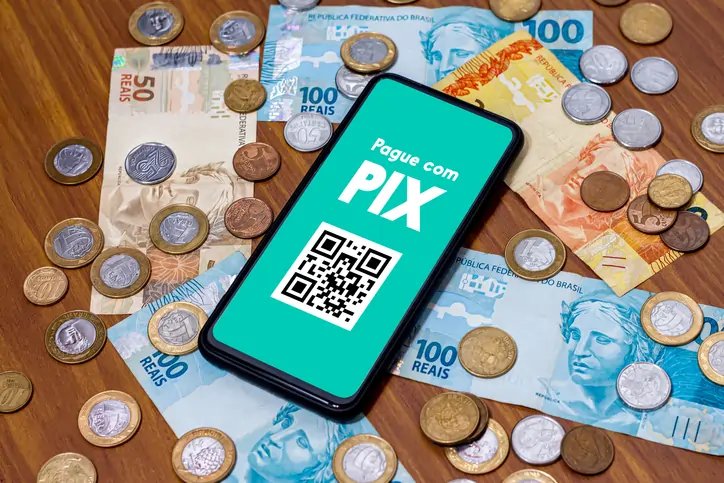
Published by Jessica Weisman-Pitts
Posted on November 12, 2024
6 min readLast updated: January 28, 2026
Add as preferred source on GoogleBy Ralf Germer, CEO and co-founder, PagBrasil
Brazil is currently in the midst of a financial revolution. At the heart of this is the concept of inclusion: the notion that to fully participate in a modern economy, one must be plugged into the banking system. With unbelievable energy and ingenuity, public and private forces in Brazil have combined to put this insight into action, and the results have been spectacular.
Take those who benefit from Brazil’s Bolsa Familia program, which helps people experiencing poverty. In 2016, only 35% of these people possessed bank accounts. Today, that number is closer to 90%, totaling over 160 million Brazilians. Much of this is the result of the fairly recent launch of the Pix Instant Payment System in 2020—a fast payment system offering clients real-time transfer through a mobile phone interface—which has turbocharged Brazilian commerce, rapidly maturing Brazil’s digital payment market.
It’s no surprise that PYMNTS recently labeled Brazil as one of the most digitally connected countries in the world, surpassing the U.S., the U.K., and Germany. With insight, it has advanced an ethos of financial inclusion, working tirelessly to grant everyone a stake in Brazil’s burgeoning economy.
How Pix overhauled Brazil’s payment systems
Historically, one of the largest hurdles to financial inclusion has been the steep fees that come with bank transfers and credit card transactions. The introduction of Pix in Brazil effectively eliminated this problem: peer-to-peer payments are free of charge, and for merchants, Pix costs an average of just 22 basis points.
The fact is, that credit in Brazil has become a serious problem. According to data from Brazil’s Central Bank, the annual interest rate for revolving credit card lines stands at 431.6% or 14.9% per month. Brazil’s government is moving to cap interest rates on revolving credit card lines, but this is just an example of how expensive and problematic credit has become. This not only affects consumers but also means that merchants have to pay the acquirer’s margin and other related fees.
That difference is easily calculable in sheer usage: in the last two years alone, the total number of bank clients in Brazil has increased by over 40 million. Meanwhile, in the same period, it is estimated that 50 million Brazilians made their first digital payment ever. Today, four-fifths of Brazilians have made or received payment via Pix, and its use has rapidly surpassed that of both debit and credit cards. Given the historically slow uptake of government initiatives globally, this is remarkable. We are witnessing, in real-time, a total transformation of a country’s relationship to financial transactions.
And of course, the success of Pix has not gone unnoticed by the broader financial industry—breeding the kind of healthy competition that helps an economy thrive. The last few years have seen the rise of a range of payment services institutions, whose banking subsidiaries have helped to heighten competition for deposits. The result has been more, better, and—crucially—cheaper payment options for Brazilians.
Increased collaboration, increased transparency
Increased financial inclusion can seem like a good thing in and of itself, but it is worth drilling into precisely why the spread of Pix has been so valuable to Brazilians.
For one thing, there is the collaboration Pix has mandated within the banking system, whose players were required to come together to create an effective network. Then there is the enhanced civic-mindedness encouraged by the Pix process itself. Pix’s rules were not lobbed down from on high but rather decided through a process of public dialogue, which resulted in a Pix “manual” that all users have to adhere to. Notably, nothing about this initiative has been static: the various players involved—in the banks, government, press, and beyond—are involved in a constant process of fine-tuning, with benefits for every sector of Brazilian society.
And at a time when cyberattack threats are continually on the rise, it doesn’t hurt that Pix has advanced attack and fraud detection closely woven into its operations. Because everyone is on the same page—because all stakeholders are aligned—it becomes much easier to detect both malicious attacks and potentially fraudulent financial activity.
What the future holds for Brazilian fintech
What’s exciting, given how far the system has come already—is that Pix is just getting started. As of September 2024, Pix processed US$ 432 billion, further entrenching it as Brazil’s most widely used payment method, capturing almost precisely as many transactions as credit cards. While over 160 million people have effectively made a Pix transaction which reached a record number of transactions in the second quarter of 2024 (BRL 15,433,584,000.00), credit cards are now in second place, accounting for much less during the same period (BRL 4,891,994,000.00). Better yet, the mass adoption of Pix is having a salutary effect on the fintech sector as a whole: according to the IMF, almost 40% of Pix activity is carried out through payment institutions and fintech entities, and that number is only expected to rise.
At the same time, Pix is in the process of going global: Brazilian-based fintech companies are rapidly adding successful extensions to the platform, broadening the ways that Brazilians and foreign tourists are able to use it. Brazilians traveling abroad, for instance, can now use Pix with an ever-increasing range of vendors and merchants in Europe, the US, and South America, while tourists to Brazil can use Pix to save substantially on transaction fees. The upshot is that Pix is knitting Brazil ever more tightly into the global financial scene—with dividends for everyone who uses it.
Brazil, of course, is not the only country that has seen success with Pix-like programs. Advanced economies across the globe have implemented equivalent efforts in recent years, and emerging markets and developing economies (EMDEs) are also making notable headway on this front. There can be no doubt, though, that Pix is leading the way—and other countries would be wise to take note.
Ralf Germer
About Ralf Germer:
Ralf Germer is the CEO and co-founder of PagBrasil and has extensive experience in business management, international business development, marketing, online sales, and payment processing. Prior to PagBrasil, he was Vice President of Product Marketing Europe at Actebis and later founded 4M Iberoamérica.
Financial inclusion refers to the accessibility of financial services to all individuals, allowing them to participate fully in the economy. It aims to provide affordable financial products to those who are underserved.
Pix is an instant payment system launched in Brazil in 2020, allowing users to make real-time transfers via mobile devices without fees, significantly enhancing the country's digital payment landscape.
A digital payment is a transaction made electronically, using digital methods such as mobile apps, online banking, or payment platforms, rather than cash or physical checks.
Fintech companies are businesses that use technology to provide financial services, including payment processing, lending, and investment management, often aiming to improve efficiency and accessibility in finance.
Explore more articles in the Banking category









