
Top Stories
Hakeem: Ahsan Tahir’s Vision for Islamic Financial Empowerment
Published by Wanda Rich
Posted on October 29, 2025
4 min readLast updated: January 19, 2026
Add as preferred source on Google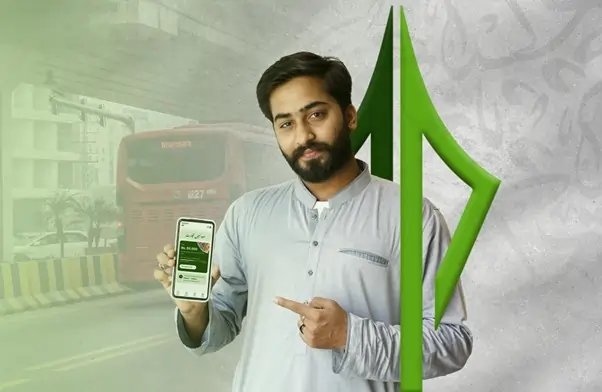
Published by Wanda Rich
Posted on October 29, 2025
4 min readLast updated: January 19, 2026
Add as preferred source on GoogleGeorgette Virgo
For decades, global financial systems have left millions behind—not because they lacked ambition, but because they lacked access. Traditional banking frameworks rely on collateral, formal credit histories, and interest-based lending, excluding vast populations across the Global South. For observant Muslims, the issue is compounded by faith: systems built on riba (interest) pose both ethical and practical barriers.
Islamic finance has long offered an alternative based on risk-sharing, fairness, and asset-backed transactions. But in practice, this has been confined to formal banks and high-net-worth products rarely reaching the informal worker with a basic mobile phone. That is the gap Hakeem, the Islamic nano-finance platform built by Walee Financial Services under the leadership of CEO Muhammad Ahsan Tahir, aims to close.
“The goal isn’t to debate doctrine,” Tahir explains. “It’s to build financial architecture that honors Islamic values while serving people’s needs.”
Hakeem is Pakistan’s first digital Islamic nano-financing platform—structured around Shariah-compliant commodity trading (tawarruq)—and delivers microloans through a mobile app using AI-based credit assessment and digital identity verification.
Its credibility is no longer local. In 2024, Hakeem won the Emerging FinTech Award at the Singapore FinTech Festival, one of the world’s most competitive stages for financial innovation. It has since been nominated for the 2025 APAC Payments Excellence Award in the Sustainable & Inclusive Payments category.
“Recognition matters,” Tahir admits, “because it proves ethical finance can scale. Our ambition is to build rails for a new financial infrastructure—this is why we work closely with both Islamic scholars and regulators.”
Hakeem’s model is already in motion. It has entered partnerships with Leyjao.pk, ADM Group, NCHD, and Jacked Nutrition, embedding compliant credit into the daily reality of women, domestic workers, and low-income earners.
“Technology without ethical architecture is just automation,” Tahir notes. “AI, used correctly, can enforce strong guardrails and compliance in Islamic finance.”
Ahsan embraces Islamic finance principles and focuses on compliance at the system level: Shariah advisors oversee every financial flow, while recovery mechanisms are designed to prevent debt traps.
“Inclusion without dignity is dependency,” he says. “If people fear humiliation, they won’t use your system. That’s why ethics comes first through code, AI, governance, and every part of Hakeem’s operations.”
Hakeem is rooted in Islamic principles, and built as financial infrastructure built for the global market. Tahir believes its rails can evolve into Banking-as-a-Service solutions, serving part of the USD 7 trillion Islamic finance market projected by 2030[1] .
Under his stewardship, Walee has expanded from media technology into finance and policy. Hakeem stands as a pillar of that evolution: a blueprint for how emerging markets can architect local financial solutions without compromising global standards.
“Our goal is not to make Islamic finance digital,” Tahir clarifies. “It’s to prove ethical finance can be built at scale without moral compromise.”
If models like Hakeem succeed, they will redefine financial inclusion for millions as participation—with dignity, transparency, and autonomy. Ahsan Tahir’s vision poses a challenge to global finance: inclusion needs to go beyond access, into ethics and humanity. Real good will only come when finance is used for the betterment of humanity.
Disclaimer: Hakeem is a digital Islamic financing platform offered by Walee Financial Services (Private) Limited, a licensed Non-Banking Financial Company (Investment Finance Services) regulated by the Securities and Exchange Commission of Pakistan (SECP). Hakeem appears on SECP’s Digital Lending App White List. Services are provided in Pakistan under SECP supervision and are not offered or regulated in the UK, EU, or other jurisdictions. Hakeem operates on a Shariah-compliant tawarruq structure and does not charge interest. Data handling complies with SECP’s Digital Lending Code of Conduct.
Islamic finance refers to financial activities that comply with Islamic law (Shariah), which prohibits interest (riba) and emphasizes ethical investing and risk-sharing.
Microloans are small loans typically offered to individuals or small businesses that do not have access to traditional banking services, aimed at promoting entrepreneurship and financial inclusion.
Financial inclusion is the process of ensuring that individuals and businesses have access to useful and affordable financial products and services that meet their needs.
A digital banking platform is an online service that allows users to perform banking transactions and manage their finances via the internet, often through a mobile app.
A fintech company uses technology to provide financial services, making them more accessible, efficient, and user-friendly, often disrupting traditional banking models.
Explore more articles in the Top Stories category











