
Top Stories
Greece PM Senses “momentum” in “Elgin Marbles” Talks With Britain
Published by Uma Rajagopal
Posted on November 29, 2022
1 min readLast updated: February 3, 2026
Add as preferred source on Google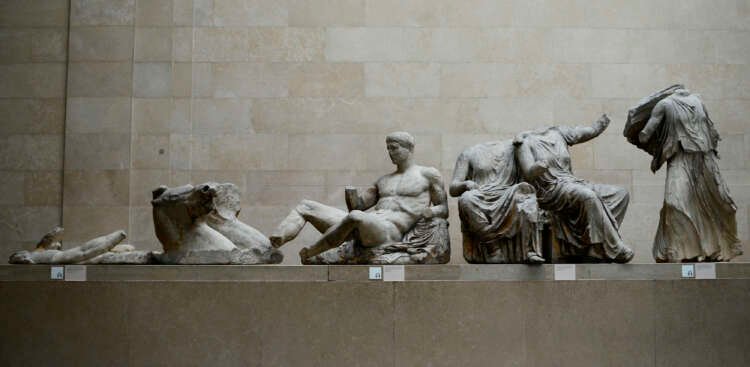
Published by Uma Rajagopal
Posted on November 29, 2022
1 min readLast updated: February 3, 2026
Add as preferred source on GoogleLONDON (Reuters) – Greece’s Prime Minister Kyriakos Mitsotakis said on Monday there was “progress” and a sense of “momentum” in talks with Britain to reunite the Parthenon Sculptures in Greece.
LONDON (Reuters) – Greece’s Prime Minister Kyriakos Mitsotakis said on Monday there was “progress” and a sense of “momentum” in talks with Britain to reunite the Parthenon Sculptures in Greece.
Athens has campaigned to have the “Elgin Marbles”, as they are often known – 75 metres of Parthenon frieze, 15 metopes and 17 sculptures – returned from the British Museum since they were removed by British diplomat Lord Elgin in the early 19th century when he was ambassador to the Ottoman Empire then ruling Greece.
“We have seen progress,” Mitsotakis said during an event at the London School of Economics, saying that while discussions remained private, the reunification of the sculptures could be a “win-win solution”.
The British Museum bought the marbles in 1816 and British officials say they had been acquired legally by Elgin, a claim Greece denies.
“I do sense the momentum (to reunite the sculptures),” Mitsotakis added.
(Reporting by Marc Jones; editing by Rodrigo Campos)
The Elgin Marbles are a collection of classical Greek marble sculptures that were part of the Parthenon and other buildings on the Acropolis of Athens. They were removed by Lord Elgin in the early 19th century and are currently housed in the British Museum.
The British Museum is a public institution in London dedicated to human history, art, and culture. It houses a vast collection of world art and artifacts, including the Elgin Marbles.
Cultural heritage refers to the legacy of physical artifacts and intangible attributes of a group or society inherited from past generations. It includes monuments, artworks, traditions, and languages.
Explore more articles in the Top Stories category











