Search
00
GBAF Logo
trophy
Top StoriesInterviewsBusinessFinanceBankingTechnologyInvestingTradingVideosAwardsMagazinesHeadlinesTrends

Subscribe to our newsletter

Get the latest news and updates from our team.

Global Banking & Finance Review®

Global Banking & Finance Review® - Subscribe to our newsletter

Company

    GBAF Logo
    • About Us
    • Profile
    • Privacy & Cookie Policy
    • Terms of Use
    • Contact Us
    • Advertising
    • Submit Post
    • Latest News
    • Research Reports
    • Press Release
    • Awards▾
      • About the Awards
      • Awards TimeTable
      • Submit Nominations
      • Testimonials
      • Media Room
      • Award Winners
      • FAQ
    • Magazines▾
      • Global Banking & Finance Review Magazine Issue 79
      • Global Banking & Finance Review Magazine Issue 78
      • Global Banking & Finance Review Magazine Issue 77
      • Global Banking & Finance Review Magazine Issue 76
      • Global Banking & Finance Review Magazine Issue 75
      • Global Banking & Finance Review Magazine Issue 73
      • Global Banking & Finance Review Magazine Issue 71
      • Global Banking & Finance Review Magazine Issue 70
      • Global Banking & Finance Review Magazine Issue 69
      • Global Banking & Finance Review Magazine Issue 66
    Top StoriesInterviewsBusinessFinanceBankingTechnologyInvestingTradingVideosAwardsMagazinesHeadlinesTrends

    Global Banking & Finance Review® is a leading financial portal and online magazine offering News, Analysis, Opinion, Reviews, Interviews & Videos from the world of Banking, Finance, Business, Trading, Technology, Investing, Brokerage, Foreign Exchange, Tax & Legal, Islamic Finance, Asset & Wealth Management.
    Copyright © 2010-2026 GBAF Publications Ltd - All Rights Reserved. | Sitemap | Tags | Developed By eCorpIT

    Editorial & Advertiser disclosure

    Global Banking & Finance Review® is an online platform offering news, analysis, and opinion on the latest trends, developments, and innovations in the banking and finance industry worldwide. The platform covers a diverse range of topics, including banking, insurance, investment, wealth management, fintech, and regulatory issues. The website publishes news, press releases, opinion and advertorials on various financial organizations, products and services which are commissioned from various Companies, Organizations, PR agencies, Bloggers etc. These commissioned articles are commercial in nature. This is not to be considered as financial advice and should be considered only for information purposes. It does not reflect the views or opinion of our website and is not to be considered an endorsement or a recommendation. We cannot guarantee the accuracy or applicability of any information provided with respect to your individual or personal circumstances. Please seek Professional advice from a qualified professional before making any financial decisions. We link to various third-party websites, affiliate sales networks, and to our advertising partners websites. When you view or click on certain links available on our articles, our partners may compensate us for displaying the content to you or make a purchase or fill a form. This will not incur any additional charges to you. To make things simpler for you to identity or distinguish advertised or sponsored articles or links, you may consider all articles or links hosted on our site as a commercial article placement. We will not be responsible for any loss you may suffer as a result of any omission or inaccuracy on the website.

    Home > Banking > Global supply disruptions could still get worse, central bankers warn
    Banking

    Global supply disruptions could still get worse, central bankers warn

    Published by maria gbaf

    Posted on September 30, 2021

    4 min read

    Last updated: February 1, 2026

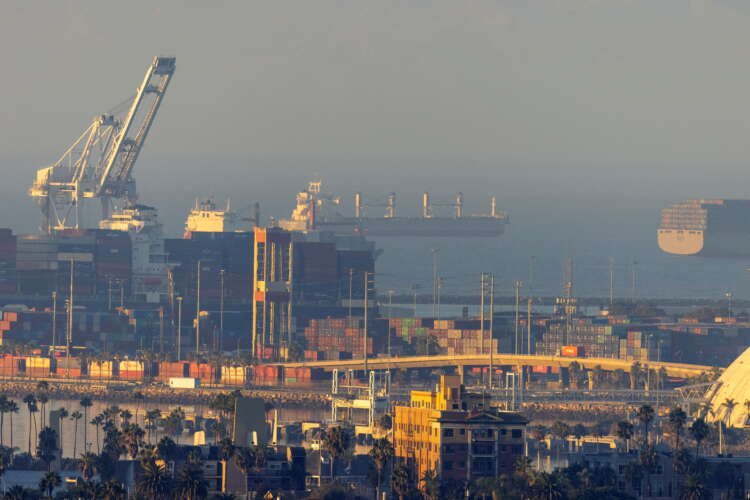
    Image depicting central bankers at a conference addressing concerns over global supply disruptions and inflation. The discussion highlights ongoing challenges in supply chains affecting the economy.
    Central bankers discussing global supply disruptions impacting inflation - Global Banking & Finance Review
    Why waste money on news and opinion when you can access them for free?

    Take advantage of our newsletter subscription and stay informed on the go!

    Subscribe

    Quick Summary

    Central bankers warn that global supply disruptions may worsen, prolonging inflation. They emphasize that monetary policy cannot solve supply side shocks.

    Central Bankers Warn: Global Supply Disruptions May Worsen

    By Balazs Koranyi and Francesco Canepa

    FRANKFURT (Reuters) – Supply constraints thwarting global economic growth could still get worse, keeping inflation elevated longer, even if the current spike in prices is still likely to remain temporary, the world’s top central bankers warned on Wednesday.

    The disruptions to the global economy during the pandemic have upset supply chains across continents, leaving the world short of a plethora of goods and services from car parts and microchips to container vessels that transport goods across the seas.

    “It’s … frustrating to see the bottlenecks and supply chain problems not getting better, in fact at the margin apparently getting a little bit worse,” Federal Reserve Chair Jerome Powell told a conference.

    “We see that continuing into next year probably and holding inflation up longer than we had thought,” Powell told the European Central Bank‘s Forum on Central Banking.

    Speaking alongside Powell, ECB chief Christine Lagarde voiced similar concerns, arguing that the end of these bottlenecks, once thought by economists to be just weeks away, is uncertain.

    “The supply bottlenecks and the disruption of supply chains, which we have been experiencing for a few months … seem to be continuing and in some sectors accelerating,” Lagarde said. “I’m thinking here about shipping, cargo handling and things like that.”

    VERY ATTENTIVE

    Global inflation has spiked in recent months on a surge in energy prices, and the production bottlenecks are pushing prices even higher, raising fears that the runup, if it lasts long enough, could seep into expectations and raise the overall profile of inflation.

    Indeed, Lagarde said the ECB would be “very attentive” to these second-round effects while Bank of England Governor Andrew Bailey, another speaker at the forum, said he would keep a “very close watch” on inflation expectations.

    “If this period of higher inflation, even though it ultimately is very likely to prove temporary, if it lasts long enough, will it start affecting, changing the way people think about inflation? We monitor this very carefully,” Powell added.

    The problem is that central banks, the main authority for controlling prices, have no influence over short-term supply disruptions, so they are likely to be bystanders, waiting for economic anomalies to self-correct without lasting damage.

    “Monetary policy cannot solve supply side shocks. Monetary policy cannot produce computer chips, it cannot produce wind, it cannot produce truck drivers,” Bailey said.

    Still, even as policymakers called for heightened attention to inflation, all maintained their long standing view that the spike in inflation would be temporary and price rises would moderate next year, moving back to or below central bank targets.

    Concerns about “sticky” inflation have fuelled a debate about the need to unwind crisis-era stimulus measures, and comments from Wednesday’s panel reinforced expectations for the world’s biggest central banks to move on vastly different schedules, staying out of sync for years to come.

    The Fed, the BoE and the Bank of Canada have openly discussed policy tightening while central banks in such countries as South Korea, Norway and Hungary have already raised interest rates, beginning a long road to policy normalisation.

    The ECB and the Bank of Japan are meanwhile likely to be the last movers, exercising extreme caution after undershooting their inflation targets for years.

    The ECB even refuses to discuss tapering and already signalled its tolerance for overshooting its inflation target as it would rather move too late than too early.

    This sort of patience was only reinforced by Lagarde and Bank of Japan Governor Haruhiko Kuroda, even as both provided a relatively upbeat outlook on growth, arguing that their economies could be back at their pre pandemic levels in the coming months.

    (Additional reporting by Leika Kihara, Howard Schneider, Dan Burns, David Milliken and Andy Bruce; Editing by Hugh Lawson)

    Key Takeaways

    • •Global supply constraints could worsen, affecting economic growth.
    • •Central bankers expect inflation to remain high temporarily.
    • •Supply chain issues are impacting a wide range of goods and services.
    • •Monetary policy cannot directly address supply side shocks.
    • •Different central banks may move on varying schedules for policy changes.

    Frequently Asked Questions about Global supply disruptions could still get worse, central bankers warn

    1What is the main topic?

    The main topic is the potential worsening of global supply disruptions and its impact on inflation and economic growth.

    2How are central banks responding?

    Central banks are monitoring inflation expectations closely but acknowledge that monetary policy cannot directly address supply chain issues.

    3What are the implications for inflation?

    Inflation may remain elevated longer than expected due to persistent supply bottlenecks, though central banks believe it will eventually moderate.

    More from Banking

    Explore more articles in the Banking category

    Image for Latin Securities Named Winner of Two Prestigious 2026 Global Banking & Finance Awards
    Latin Securities Named Winner of Two Prestigious 2026 Global Banking & Finance Awards
    Image for Pix at five years: how Brazil built one of the world’s most advanced public payments infrastructures - and why other countries are paying attention
    Pix at five years: how Brazil built one of the world’s most advanced public payments infrastructures - and why other countries are paying attention
    Image for Idle Stablecoins Are Becoming a Systemic Efficiency Problem — and Banks Should Pay Attention
    Idle Stablecoins Are Becoming a Systemic Efficiency Problem — and Banks Should Pay Attention
    Image for Banking Without Boundaries: A More Practical Approach to Global Banking
    Banking Without Boundaries: A More Practical Approach to Global Banking
    Image for Lessons From the Ring and the Deal Table: How Boxing Shapes Steven Nigro’s Approach to Banking and Life
    Lessons From the Ring and the Deal Table: How Boxing Shapes Steven Nigro’s Approach to Banking and Life
    Image for The Key to Unlocking ROI from GenAI
    The Key to Unlocking ROI from GenAI
    Image for The Changing Landscape of Small Business Lending: What Traditional Finance Models Miss
    The Changing Landscape of Small Business Lending: What Traditional Finance Models Miss
    Image for VestoFX.net Expands Education-Oriented Content as Focus on Risk Awareness Grows in CFD Trading
    VestoFX.net Expands Education-Oriented Content as Focus on Risk Awareness Grows in CFD Trading
    Image for The Hybrid Banking Model That Digital-Only Providers Cannot Match
    The Hybrid Banking Model That Digital-Only Providers Cannot Match
    Image for INTERPOLITAN MONEY ANNOUNCES RECORD GROWTH ACROSS 2025
    INTERPOLITAN MONEY ANNOUNCES RECORD GROWTH ACROSS 2025
    Image for Alter Bank Wins Two Prestigious Awards in the 2025 Global Banking & Finance Awards®
    Alter Bank Wins Two Prestigious Awards in the 2025 Global Banking & Finance Awards®
    Image for CIBC wins two Global Banking and Finance Awards for student banking
    CIBC wins two Global Banking and Finance Awards for student banking
    View All Banking Posts
    Previous Banking PostECB’s Lagarde flags bottlenecks, energy and virus as key risks
    Next Banking PostHSBC, Temasek launch debt financing platform for sustainable infrastructure