Search
00
GBAF Logo
trophy
Top StoriesInterviewsBusinessFinanceBankingTechnologyInvestingTradingVideosAwardsMagazinesHeadlinesTrends

Subscribe to our newsletter

Get the latest news and updates from our team.

Global Banking & Finance Review®

Global Banking & Finance Review® - Subscribe to our newsletter

Company

    GBAF Logo
    • About Us
    • Profile
    • Privacy & Cookie Policy
    • Terms of Use
    • Contact Us
    • Advertising
    • Submit Post
    • Latest News
    • Research Reports
    • Press Release
    • Awards▾
      • About the Awards
      • Awards TimeTable
      • Submit Nominations
      • Testimonials
      • Media Room
      • Award Winners
      • FAQ
    • Magazines▾
      • Global Banking & Finance Review Magazine Issue 79
      • Global Banking & Finance Review Magazine Issue 78
      • Global Banking & Finance Review Magazine Issue 77
      • Global Banking & Finance Review Magazine Issue 76
      • Global Banking & Finance Review Magazine Issue 75
      • Global Banking & Finance Review Magazine Issue 73
      • Global Banking & Finance Review Magazine Issue 71
      • Global Banking & Finance Review Magazine Issue 70
      • Global Banking & Finance Review Magazine Issue 69
      • Global Banking & Finance Review Magazine Issue 66
    Top StoriesInterviewsBusinessFinanceBankingTechnologyInvestingTradingVideosAwardsMagazinesHeadlinesTrends

    Global Banking & Finance Review® is a leading financial portal and online magazine offering News, Analysis, Opinion, Reviews, Interviews & Videos from the world of Banking, Finance, Business, Trading, Technology, Investing, Brokerage, Foreign Exchange, Tax & Legal, Islamic Finance, Asset & Wealth Management.
    Copyright © 2010-2026 GBAF Publications Ltd - All Rights Reserved. | Sitemap | Tags | Developed By eCorpIT

    Editorial & Advertiser disclosure

    Global Banking & Finance Review® is an online platform offering news, analysis, and opinion on the latest trends, developments, and innovations in the banking and finance industry worldwide. The platform covers a diverse range of topics, including banking, insurance, investment, wealth management, fintech, and regulatory issues. The website publishes news, press releases, opinion and advertorials on various financial organizations, products and services which are commissioned from various Companies, Organizations, PR agencies, Bloggers etc. These commissioned articles are commercial in nature. This is not to be considered as financial advice and should be considered only for information purposes. It does not reflect the views or opinion of our website and is not to be considered an endorsement or a recommendation. We cannot guarantee the accuracy or applicability of any information provided with respect to your individual or personal circumstances. Please seek Professional advice from a qualified professional before making any financial decisions. We link to various third-party websites, affiliate sales networks, and to our advertising partners websites. When you view or click on certain links available on our articles, our partners may compensate us for displaying the content to you or make a purchase or fill a form. This will not incur any additional charges to you. To make things simpler for you to identity or distinguish advertised or sponsored articles or links, you may consider all articles or links hosted on our site as a commercial article placement. We will not be responsible for any loss you may suffer as a result of any omission or inaccuracy on the website.

    Home > Top Stories > Global economic crisis strangling progress for poor, warns U.N. development chief
    Top Stories

    Global economic crisis strangling progress for poor, warns U.N. development chief

    Published by Jessica Weisman-Pitts

    Posted on November 10, 2022

    5 min read

    Last updated: February 3, 2026

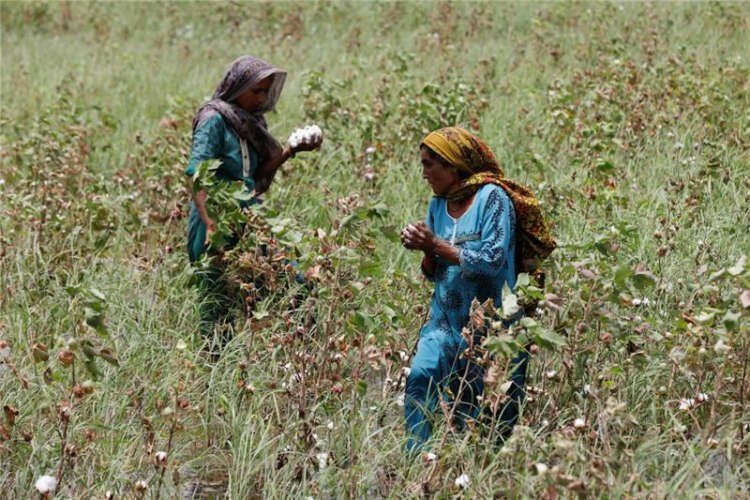
    This image shows two women working in a flooded cotton field in Pakistan, illustrating the adverse effects of climate change on agriculture. It relates to the article's discussion on how global economic crises and climate change threaten sustainable development progress.
    Women working in a flooded cotton field, highlighting climate change's impact on agriculture - Global Banking & Finance Review
    Why waste money on news and opinion when you can access them for free?

    Take advantage of our newsletter subscription and stay informed on the go!

    Subscribe

    Tags:sustainabilityfinancial crisisDeveloping countriesclimate financedebt sustainability

    By Laurie Goering

    SHARM EL-SHEIKH, Egypt (Thomson Reuters Foundation) – Decades of development progress are at risk as economies are pushed backward by climate change losses, the COVID-19 economic fallout, a growing cost-of-living crisis, and soaring debt and inflation, the U.N. development chief said at COP27 in Egypt.

    “We essentially document a regression – and regression that is virtually universal across the board,” said Achim Steiner, who leads the United Nations Development Programme (UNDP).

    Progress toward the globally agreed Sustainable Development Goals – which include ending poverty and hunger and are due to be achieved by 2030 – is sliding, he said, with some countries finding themselves back where they were in 2016.

    The economic pain is making it harder for many governments to find the funding needed to roll out clean energy and tackle climate change – something that would have been easier when interest rates were still low, Steiner said in an interview.

    With 54 countries now in debt distress – and getting close to defaulting – “it will be more costly to step in,” he added.

    But multiplying global crises, particularly the war in Ukraine, are also creating new incentives to swap fossil fuels for renewable energy, with its possibilities for cheaper power bills once in place and greater energy independence, he said.

    It has also become clearer that demands for environmental protection and economic advancement are “no longer forces pulling in opposite directions”, especially as renewables like solar become the cheapest source of energy, Steiner said.

    That means there are still strong possibilities to wrest the world off using coal, oil and gas and onto a greener development path, despite the economic headwinds around the globe, he said.

    The problem – particularly for poorer, debt-ridden countries – is finding the money to actually install clean energy, which has higher upfront costs but produces decades of cheap power.

    DROWNING IN DEBT

    One solution to boost renewable energy faster – and reap the development benefits that come with it – may be debt forgiveness, Steiner said.

    “For many countries this is an absolutely horrendous moment,” he said. “They can’t go to the financial markets.”

    Debt forgiveness – or debt-for-climate swaps, in which money freed up from cancelled debt goes directly into climate projects – would be like “putting a scalpel to a festering wound”, painful but necessary, he added.

    A momentum-gathering push at COP27 to reshape international financial institutions to make it easier for money to flow where it is needed also is part of the puzzle, he said.

    “Our financial system… needs to evolve with the size and nature of the challenges,” Steiner said. “We need better institutions.”

    Barbados Prime Minister Mia Mottley has proposed a revamp of post-World War II international financial systems, dubbed the “Bridgetown Agenda”, designed to boost climate funding flows and make them easier to access for debt-strapped countries.

    The proposal has won some early key backing, including from France’s President Emmanuel Macron.

    Sameh Shoukry, Egypt’s COP27 president, has also called for new finance that is “sustainable and cheap”.

    “Undoubtedly this is an important gap in climate action,” he said.

    ADAPTATION AND RISK

    Besides powering up green energy investment, more money is needed to help countries adapt to climate change impacts that are already happening, and to reduce the risks, so as to stop development efforts sliding, Steiner said.

    The U.N. “Adaptation Gap” report, released this month, says developing countries may need as much as $340 billion a year by 2030 to stay ahead of wilder weather and rising sea levels.

    Finding much-needed private investment for adaptation efforts is difficult, because the returns are less clear and often seen as having only local impact, it noted.

    But Steiner, whose agency is trying to create a pipeline of adaptation projects to attract investment, said the shortfall in finance has far wider implications than many people realise.

    Flood-battered Pakistan, for instance, is likely to see its exports of key commodities like cotton and rice hit, which affects international markets and commodity prices. Making payments on its debt will also be tougher with less income.

    “When nations such as Pakistan undergo the kind of profound shock they’ve just gone through, when small island nations in the Caribbean every year worry about in 12 hours losing a third or more of their GDP … you have created an economically impossible scenario,” Steiner said.

    That has direct implications for rich countries and the global economy – not just those nations being slammed the hardest, he said.

    “The wealth of many of the savers in many of the wealthy countries are inexplicably linked to the economies of the Global South,” he added.

    Success at the COP27 negotiations in Sharm el-Sheikh, he said, will require leaving the talks with a sense that climate action is pushing forward “built on shared interests, transparency, mutual accountability and trust”.

    “This is not a law-making convention,” he noted. “This is essentially negotiating an extraordinary transition in our economies, with 8 billion people sitting at the table.”

    Originally published on:

    (Reporting by Laurie Goering @lauriegoering; Editing by Megan Rowling. The Thomson Reuters Foundation is the charitable arm of Thomson Reuters. Visit https://www.context.news/)

    Frequently Asked Questions about Global economic crisis strangling progress for poor, warns U.N. development chief

    1What is climate finance?

    Climate finance refers to financial resources allocated for projects aimed at mitigating or adapting to climate change, including investments in renewable energy and sustainable practices.

    2What is debt sustainability?

    Debt sustainability is the ability of a country to manage its debt levels without requiring debt relief or accumulating excessive debt that could lead to default.

    3What are the Sustainable Development Goals?

    The Sustainable Development Goals (SDGs) are a set of 17 global goals established by the United Nations to address social, economic, and environmental challenges by 2030.

    4What is renewable energy?

    Renewable energy is energy generated from natural resources that are replenished constantly, such as solar, wind, and hydroelectric power.

    5What is adaptation funding?

    Adaptation funding refers to financial resources dedicated to helping communities and countries adjust to the impacts of climate change, ensuring resilience and sustainability.

    More from Top Stories

    Explore more articles in the Top Stories category

    Image for Lessons From the Ring and the Deal Table: How Boxing Shapes Steven Nigro’s Approach to Banking and Life
    Lessons From the Ring and the Deal Table: How Boxing Shapes Steven Nigro’s Approach to Banking and Life
    Image for Joe Kiani in 2025: Capital, Conviction, and a Focused Return to Innovation
    Joe Kiani in 2025: Capital, Conviction, and a Focused Return to Innovation
    Image for Marco Robinson – CLOSE THE DEAL AND SUDDENLY GROW RICH
    Marco Robinson – CLOSE THE DEAL AND SUDDENLY GROW RICH
    Image for Digital Tracing: Turning a regulatory obligation into a commercial advantage
    Digital Tracing: Turning a regulatory obligation into a commercial advantage
    Image for Exploring the Role of Blockchain and the Bitcoin Price Today in Education
    Exploring the Role of Blockchain and the Bitcoin Price Today in Education
    Image for Inside the World’s First Collection Industry Conglomerate: PCA Global’s Platform Strategy
    Inside the World’s First Collection Industry Conglomerate: PCA Global’s Platform Strategy
    Image for Chase Buchanan Private Wealth Management Highlights Key Autumn 2025 Budget Takeaways for Expats
    Chase Buchanan Private Wealth Management Highlights Key Autumn 2025 Budget Takeaways for Expats
    Image for PayLaju Strengthens Its Position as Malaysia’s Trusted Interest-Free Sharia-Compliant Loan Provider
    PayLaju Strengthens Its Position as Malaysia’s Trusted Interest-Free Sharia-Compliant Loan Provider
    Image for A Notable Update for Employee Health Benefits:
    A Notable Update for Employee Health Benefits:
    Image for Creating Equity Between Walls: How Mohak Chauhan is Using Engineering, Finance, and Community Vision to Reengineer Affordable Housing
    Creating Equity Between Walls: How Mohak Chauhan is Using Engineering, Finance, and Community Vision to Reengineer Affordable Housing
    Image for Upcoming Book on Real Estate Investing: Harvard Grace Capital Founder Stewart Heath’s Puts Lessons in Print
    Upcoming Book on Real Estate Investing: Harvard Grace Capital Founder Stewart Heath’s Puts Lessons in Print
    Image for ELECTIVA MARKS A LANDMARK FIRST YEAR WITH MAJOR SENIOR APPOINTMENTS AND EXPANSION MILESTONES
    ELECTIVA MARKS A LANDMARK FIRST YEAR WITH MAJOR SENIOR APPOINTMENTS AND EXPANSION MILESTONES
    View All Top Stories Posts
    Previous Top Stories PostU.S., EU plan AI road map at upcoming trade, technology council meeting
    Next Top Stories PostWinter weather could be mild, German met office DWD says