Search
00
GBAF Logo
trophy
Top StoriesInterviewsBusinessFinanceBankingTechnologyInvestingTradingVideosAwardsMagazinesHeadlinesTrends

Subscribe to our newsletter

Get the latest news and updates from our team.

Global Banking & Finance Review®

Global Banking & Finance Review® - Subscribe to our newsletter

Company

    GBAF Logo
    • About Us
    • Profile
    • Privacy & Cookie Policy
    • Terms of Use
    • Contact Us
    • Advertising
    • Submit Post
    • Latest News
    • Research Reports
    • Press Release
    • Awards▾
      • About the Awards
      • Awards TimeTable
      • Submit Nominations
      • Testimonials
      • Media Room
      • Award Winners
      • FAQ
    • Magazines▾
      • Global Banking & Finance Review Magazine Issue 79
      • Global Banking & Finance Review Magazine Issue 78
      • Global Banking & Finance Review Magazine Issue 77
      • Global Banking & Finance Review Magazine Issue 76
      • Global Banking & Finance Review Magazine Issue 75
      • Global Banking & Finance Review Magazine Issue 73
      • Global Banking & Finance Review Magazine Issue 71
      • Global Banking & Finance Review Magazine Issue 70
      • Global Banking & Finance Review Magazine Issue 69
      • Global Banking & Finance Review Magazine Issue 66
    Top StoriesInterviewsBusinessFinanceBankingTechnologyInvestingTradingVideosAwardsMagazinesHeadlinesTrends

    Global Banking & Finance Review® is a leading financial portal and online magazine offering News, Analysis, Opinion, Reviews, Interviews & Videos from the world of Banking, Finance, Business, Trading, Technology, Investing, Brokerage, Foreign Exchange, Tax & Legal, Islamic Finance, Asset & Wealth Management.
    Copyright © 2010-2026 GBAF Publications Ltd - All Rights Reserved. | Sitemap | Tags | Developed By eCorpIT

    Editorial & Advertiser disclosure

    Global Banking & Finance Review® is an online platform offering news, analysis, and opinion on the latest trends, developments, and innovations in the banking and finance industry worldwide. The platform covers a diverse range of topics, including banking, insurance, investment, wealth management, fintech, and regulatory issues. The website publishes news, press releases, opinion and advertorials on various financial organizations, products and services which are commissioned from various Companies, Organizations, PR agencies, Bloggers etc. These commissioned articles are commercial in nature. This is not to be considered as financial advice and should be considered only for information purposes. It does not reflect the views or opinion of our website and is not to be considered an endorsement or a recommendation. We cannot guarantee the accuracy or applicability of any information provided with respect to your individual or personal circumstances. Please seek Professional advice from a qualified professional before making any financial decisions. We link to various third-party websites, affiliate sales networks, and to our advertising partners websites. When you view or click on certain links available on our articles, our partners may compensate us for displaying the content to you or make a purchase or fill a form. This will not incur any additional charges to you. To make things simpler for you to identity or distinguish advertised or sponsored articles or links, you may consider all articles or links hosted on our site as a commercial article placement. We will not be responsible for any loss you may suffer as a result of any omission or inaccuracy on the website.

    Home > Banking > Germany’s journey from cash to contactless – are biometric payment cards the logical next step?
    Banking

    Germany’s journey from cash to contactless – are biometric payment cards the logical next step?
    Published by Jessica Weisman-Pitts

    Posted on July 7, 2022

    5 min read

    Last updated: February 5, 2026

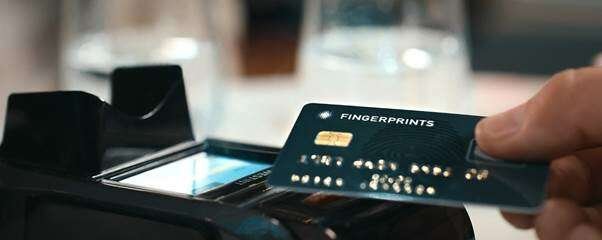
    The image illustrates a biometric payment card used in a contactless transaction, highlighting Germany's transition from cash to digital payments. This evolution reflects the growing trend of contactless payments and the adoption of innovative banking solutions.
    Biometric payment card showcased in a contactless payment environment - Global Banking & Finance Review
    Why waste money on news and opinion when you can access them for free?

    Take advantage of our newsletter subscription and stay informed on the go!

    Subscribe

    Tags:paymentsinnovationBiometric technologyContactless paymentsFinancial technology

    Quick Summary

    By Aida Hosseini, Global Marketing Manager at Fingerprints

    By Aida Hosseini, Global Marketing Manager at Fingerprints

    Despite its reputation for technical innovation, Germany has traditionally been heavily reliant on cash. Cast your mind back to 2016 when, in a bid to tackle money laundering and terrorism financing, the German Finance Minister announced plans to ban the use of cash for purchases over €5,000. The German tabloid, Bild, responded with an open letter ’Hands Off Our Cash’, denouncing the move.

    Fast-forward to 2022 and the country has experienced a dramatic transformation. 47% of those surveyed by the German Payment Systems Initiative have significantly reduced their use of cash to a point whereby debit and credit cards now outrank cash as the preferred method for instore payments. But how did we get here, and what’s next?

    The rise of contactless

    Consumer recognition of the advantages of contactless payments was a key driver in the shift away from cash. Six in ten (60%) Germans now make contactless payments with their smartphone or a contactless card – an increase from 56% in 2021 and 47% in 2020.

    The COVID-19 pandemic was a major catalyst for this mass contactless adoption, with regulators actively discouraging the use of unhygienic cash. A survey by Fingerprints also found that more than a fifth (21%) of German consumers were worried about using cash for hygiene reasons. When combined with the fact that 24% were concerned about touching PIN pads, the move to contactless payments was an obvious one.

    Increasing contactless limits

    Of course, contactless payments bring many benefits beyond hygiene, including faster checkouts and shorter waiting times, making them an attractive proposition for consumers. These benefits and increased consumer reliance on contactless payments resulted in the German government doubling the transaction limit from €25 to €50 in mid-2021.

    Since raising the contactless cap, Germany has seen a growth of contactless from 35% of card transactions to 50%, highlighting the popularity of this change.

    Brewing consumer trust

    Despite previous privacy concerns that historically delayed the country’s move away from cash, many German consumers have learned to trust cards – leaning into the convenience that they provide.

    As noted by Euromonitor International’s report on how German consumers shop and pay: “There is greater appreciation of improved convenience of payments without a PIN entry or signature and growing trust in security measures and assurances from issuers and merchants. Consequently, by 2040, consumers are poised to be heavy payment card users, with relatively frequent use of mobile device for payments too.”

    How biometrics enhance contactless payments

    Burgeoning consumer trust will only be amplified by adding fingerprint sensors for biometric authentication to the contactless card. Biometric payment cards provide multi-factor authentication, adding an additional layer of security at the point-of-sale (POS) and ensuring compliance with the European regulatory requirement, Strong Customer Authentication (SCA).

    Convenience will also enhance as, with biometric payment cards, there’s no need to enter a PIN at the POS, and no cap on the transaction values. This is a particularly useful feature considering 20% of German consumers currently feel that the contactless payment cap is too low, and 25% are confused over ‘allowable’ payments value at the POS and when PIN entry is needed. By removing any cap with biometrics, spending will increase and the consumer benefits of contactless are maximized.

    And while daily use of contactless cards is growing, 44% fear a lack of security if their card is lost or stolen. Incorporating a biometric sensor into the cards removes this problem entirely, since only the owner of the card will be authorized to use it. The consumer’s biometric data is also kept safe as the card doesn’t store an image of a fingerprint – only a template is saved and stored securely as encrypted data on the card and never leaves it.

    A growing demand for contactless 2.0

    The demand for biometric payment cards already exists in Germany. Fingerprints found that more than half (51%) of German consumers surveyed would prefer having a biometric payment card to a standard card. In addition, 46% are willing to pay an average of $8.70 per year for one, and 31% of consumers would switch banks to get hold of one. These findings indicate that the German market is ready and willing to continue its payments evolution towards the next generation of contactless.

    Germany’s journey from cash to contactless reflects a global trend in which payments are evolving away from cash and PIN pads towards alternative digital innovations. As this trend unfolds further within Germany and around the world, biometric payment cards present significant opportunities for consumers, banks and merchants.

    The scene is set for the introduction of contactless 2.0 in Germany. It’s only a matter of time before it follows its neighbour, France, with further commercial launches, adding to the rising global tally.

    Learn more about the global potential of biometric payment cards by downloading its eBook on ‘Making Contactless Payments Worryless’.

    Frequently Asked Questions about Germany’s journey from cash to contactless – are biometric payment cards the logical next step?

    1What is biometric authentication?

    Biometric authentication is a security process that uses unique biological characteristics, such as fingerprints or facial recognition, to verify an individual's identity.

    2What is Strong Customer Authentication (SCA)?

    Strong Customer Authentication (SCA) is a European regulatory requirement aimed at enhancing the security of online payments by requiring two or more verification factors.

    3What are payment cards?

    Payment cards are plastic cards issued by financial institutions that allow consumers to access funds in their bank accounts or credit lines for transactions.

    4What is a digital wallet?

    A digital wallet is an electronic application that allows users to store payment information and make transactions using their smartphones or computers.

    More from Banking

    Explore more articles in the Banking category

    Image for Latin Securities Named Winner of Two Prestigious 2026 Global Banking & Finance Awards
    Latin Securities Named Winner of Two Prestigious 2026 Global Banking & Finance Awards
    Image for Pix at five years: how Brazil built one of the world’s most advanced public payments infrastructures - and why other countries are paying attention
    Pix at five years: how Brazil built one of the world’s most advanced public payments infrastructures - and why other countries are paying attention
    Image for Idle Stablecoins Are Becoming a Systemic Efficiency Problem — and Banks Should Pay Attention
    Idle Stablecoins Are Becoming a Systemic Efficiency Problem — and Banks Should Pay Attention
    Image for Banking Without Boundaries: A More Practical Approach to Global Banking
    Banking Without Boundaries: A More Practical Approach to Global Banking
    Image for Lessons From the Ring and the Deal Table: How Boxing Shapes Steven Nigro’s Approach to Banking and Life
    Lessons From the Ring and the Deal Table: How Boxing Shapes Steven Nigro’s Approach to Banking and Life
    Image for The Key to Unlocking ROI from GenAI
    The Key to Unlocking ROI from GenAI
    Image for The Changing Landscape of Small Business Lending: What Traditional Finance Models Miss
    The Changing Landscape of Small Business Lending: What Traditional Finance Models Miss
    Image for VestoFX.net Expands Education-Oriented Content as Focus on Risk Awareness Grows in CFD Trading
    VestoFX.net Expands Education-Oriented Content as Focus on Risk Awareness Grows in CFD Trading
    Image for The Hybrid Banking Model That Digital-Only Providers Cannot Match
    The Hybrid Banking Model That Digital-Only Providers Cannot Match
    Image for INTERPOLITAN MONEY ANNOUNCES RECORD GROWTH ACROSS 2025
    INTERPOLITAN MONEY ANNOUNCES RECORD GROWTH ACROSS 2025
    Image for Alter Bank Wins Two Prestigious Awards in the 2025 Global Banking & Finance Awards®
    Alter Bank Wins Two Prestigious Awards in the 2025 Global Banking & Finance Awards®
    Image for CIBC wins two Global Banking and Finance Awards for student banking
    CIBC wins two Global Banking and Finance Awards for student banking
    View All Banking Posts
    Previous Banking PostBanks have to help drive down global trade’s carbon emissions
    Next Banking PostFrozen or terminated bank accounts: What can you do?