
Top Stories
German Property Bank PBB’s Profit Plunges as US Office Loans Sour
Published by Uma Rajagopal
Posted on August 14, 2024
2 min readLast updated: January 29, 2026
Add as preferred source on Google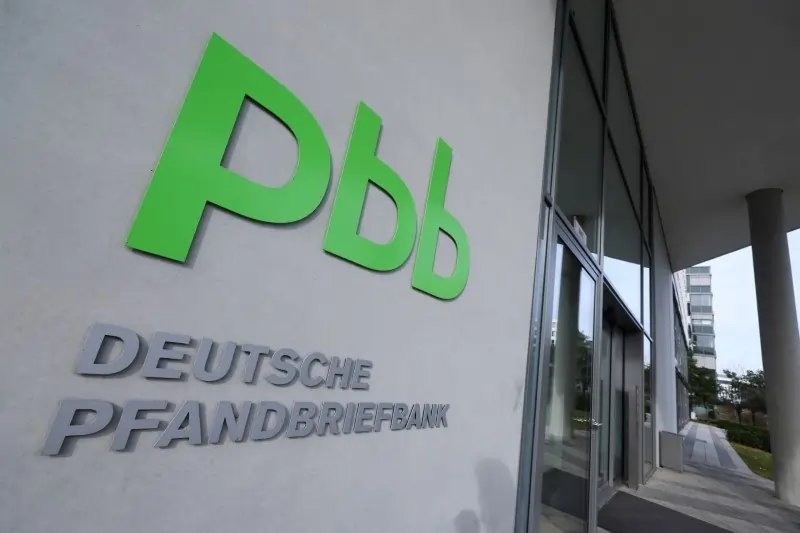
Published by Uma Rajagopal
Posted on August 14, 2024
2 min readLast updated: January 29, 2026
Add as preferred source on GoogleBy Tom Sims and Alexander Hübner
FRANKFURT (Reuters) -Deutsche Pfandbriefbank (PBB), one of Germany’s top property financiers, reported on Wednesday a 74% plunge in second-quarter profit and set aside more money to cover potential bad loans in a weak U.S. office market.
The move follows a wave of bad news this year for the bank, which dates back to the 1860s and was bailed out by the government in the 2009 financial crisis, as it navigates what it has called “the greatest real estate crisis” since then.
PBB in recent years bet heavily on the U.S. market by offering commercial real estate loans, which across the industry have succumbed to pressure from high office vacancies and falling property prices following rises in interest rates and a trend towards home-working since the pandemic.
PBB said it expected the commercial property market to “enter calmer waters” in the second half of 2024.
But loans likely to go unpaid in the United States – so-called non-performing loans – increased 13% in the second quarter from the first, which PBB attributed to four loans for offices mainly in Chicago and the U.S. West Coast.
The bank’s quarterly profit was 11 million euros ($12.1 million), compared with 42 million euros a year earlier, while provisions for loan losses rose to 56 million euros from 19 million last year.
The bank suffered cuts to its credit rating earlier this year, and its shares and bonds dropped sharply as fears of a widening property crisis took hold.
The shares have recovered somewhat but are still down nearly 20% this year. They fell 3% in early Frankfurt trade.
PBB, which is under new management, has vowed to restore trust with investors.
It has halted new business in the United States and is seeking to reduce exposure there and in Britain.
($1 = 0.9098 euros)
(Reporting by Tom Sims and Alexander Huebner; Editing by Miranda Murray and Mark Potter)
A non-performing loan (NPL) is a loan on which the borrower is not making interest payments or repaying any principal. It typically occurs when the borrower is unable to meet the terms of the loan agreement.
Commercial real estate refers to properties used exclusively for business purposes, such as office buildings, retail spaces, warehouses, and industrial facilities. These properties are typically leased to tenants.
Credit risk management is the process of assessing and mitigating the risk that a borrower will default on a loan. It involves evaluating the creditworthiness of potential borrowers and monitoring existing loans.
Explore more articles in the Top Stories category











