Search
00
GBAF Logo
trophy
Top StoriesInterviewsBusinessFinanceBankingTechnologyInvestingTradingVideosAwardsMagazinesHeadlinesTrends

Subscribe to our newsletter

Get the latest news and updates from our team.

Global Banking & Finance Review®

Global Banking & Finance Review® - Subscribe to our newsletter

Company

    GBAF Logo
    • About Us
    • Profile
    • Privacy & Cookie Policy
    • Terms of Use
    • Contact Us
    • Advertising
    • Submit Post
    • Latest News
    • Research Reports
    • Press Release
    • Awards▾
      • About the Awards
      • Awards TimeTable
      • Submit Nominations
      • Testimonials
      • Media Room
      • Award Winners
      • FAQ
    • Magazines▾
      • Global Banking & Finance Review Magazine Issue 79
      • Global Banking & Finance Review Magazine Issue 78
      • Global Banking & Finance Review Magazine Issue 77
      • Global Banking & Finance Review Magazine Issue 76
      • Global Banking & Finance Review Magazine Issue 75
      • Global Banking & Finance Review Magazine Issue 73
      • Global Banking & Finance Review Magazine Issue 71
      • Global Banking & Finance Review Magazine Issue 70
      • Global Banking & Finance Review Magazine Issue 69
      • Global Banking & Finance Review Magazine Issue 66
    Top StoriesInterviewsBusinessFinanceBankingTechnologyInvestingTradingVideosAwardsMagazinesHeadlinesTrends

    Global Banking & Finance Review® is a leading financial portal and online magazine offering News, Analysis, Opinion, Reviews, Interviews & Videos from the world of Banking, Finance, Business, Trading, Technology, Investing, Brokerage, Foreign Exchange, Tax & Legal, Islamic Finance, Asset & Wealth Management.
    Copyright © 2010-2026 GBAF Publications Ltd - All Rights Reserved. | Sitemap | Tags | Developed By eCorpIT

    Editorial & Advertiser disclosure

    Global Banking & Finance Review® is an online platform offering news, analysis, and opinion on the latest trends, developments, and innovations in the banking and finance industry worldwide. The platform covers a diverse range of topics, including banking, insurance, investment, wealth management, fintech, and regulatory issues. The website publishes news, press releases, opinion and advertorials on various financial organizations, products and services which are commissioned from various Companies, Organizations, PR agencies, Bloggers etc. These commissioned articles are commercial in nature. This is not to be considered as financial advice and should be considered only for information purposes. It does not reflect the views or opinion of our website and is not to be considered an endorsement or a recommendation. We cannot guarantee the accuracy or applicability of any information provided with respect to your individual or personal circumstances. Please seek Professional advice from a qualified professional before making any financial decisions. We link to various third-party websites, affiliate sales networks, and to our advertising partners websites. When you view or click on certain links available on our articles, our partners may compensate us for displaying the content to you or make a purchase or fill a form. This will not incur any additional charges to you. To make things simpler for you to identity or distinguish advertised or sponsored articles or links, you may consider all articles or links hosted on our site as a commercial article placement. We will not be responsible for any loss you may suffer as a result of any omission or inaccuracy on the website.

    Home > Top Stories > Factbox-What is OPEC+ and how does it impact oil prices?
    Top Stories

    Factbox-What is OPEC+ and how does it impact oil prices?

    Published by Wanda Rich

    Posted on November 20, 2023

    4 min read

    Last updated: January 31, 2026

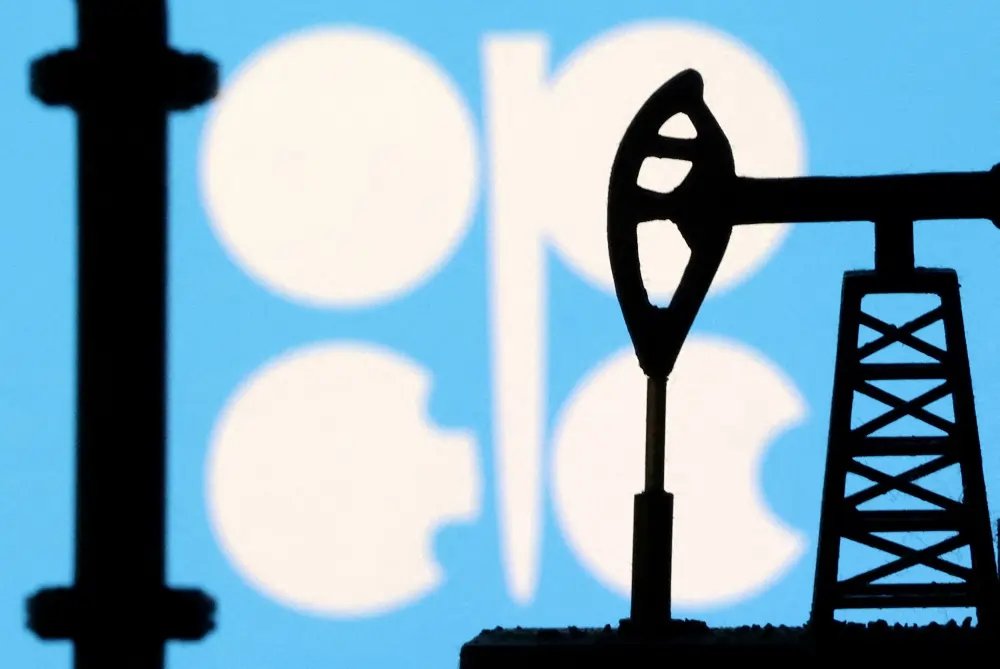
    An informative image related to the upcoming OPEC+ meeting in Vienna, discussing its influence on global oil prices and petroleum policies. Key players include Saudi Arabia and Russia.
    OPEC+ meeting overview impacting global oil prices - Global Banking & Finance Review
    Why waste money on news and opinion when you can access them for free?

    Take advantage of our newsletter subscription and stay informed on the go!

    Subscribe

    Tags:oil and gasglobal economyfinancial marketsinvestment

    Quick Summary

    (Reuters) – The Organization of the Petroleum Exporting Countries (OPEC) and its allies, including Russia, are known as OPEC+ and will meet in Vienna, Austria, on Nov. 26 to discuss their joint output policy.

    Table of Contents

    • What are OPEC and OPEC+?
    • How does OPEC influence global oil prices?
    • How do OPEC decisions affect the global economy?
    • Which countries are OPEC members?

    Factbox-What is OPEC+ and how does it impact oil prices?

    (Reuters) – The Organization of the Petroleum Exporting Countries (OPEC) and its allies, including Russia, are known as OPEC+ and will meet in Vienna, Austria, on Nov. 26 to discuss their joint output policy.

    Below are key facts about OPEC+ and its role.

    What are OPEC and OPEC+?

    OPEC was founded in 1960 in Baghdad by Iraq, Iran, Kuwait, Saudi Arabia and Venezuela with an aim of coordinating petroleum policies and securing fair and stable prices. Now, it includes 13 countries, which are mainly from the Middle East and Africa. They produce around 30% of the world’s oil.

    There have been some challenges to OPEC’s influence over the years, often resulting in internal divisions, and a global push towards cleaner energy sources and a move away from fossil fuels could ultimately diminish its dominance.

    OPEC formed the so-called OPEC+ coalition with 10 of the world’s major non-OPEC oil-exporting nations, including Russia, at the end of 2016.

    OPEC+ represents around 40% of world oil production and its main objective is to regulate the supply of oil to the world market. The leaders are Saudi Arabia and Russia, which produce around 9 and 9.5 million barrels per day (bpd) of oil, respectively.

    How does OPEC influence global oil prices?

    OPEC member states’ exports make up around 60% of global petroleum trade. In 2021, OPEC estimated that its member countries accounted for more than 80% of the world’s proven oil reserves.

    Because of the large market share, the decisions OPEC makes can affect global oil prices. Its members meet regularly to decide how much oil to sell on global markets.

    As a result, when they lower supply when demand falls, oil prices tend to rise. Prices tend to fall when the group decides to supply more oil to the market.

    At the last OPEC+ meeting in June, Saudi Arabia pledged to make a deep cut of 1 million bpd to its output in July on top of a broader OPEC+ deal to limit supply into 2024 as the group sought to boost flagging oil prices.

    Since then, Saudi Arabia has extended the additional voluntary cut until the end of this year.

    Oil prices on Nov. 16 slumped by about 5% to a four-month low amid economic growth concerns. They have since recovered some ground on expectations that OPEC+ will take action to shore up prices.

    Prices, however, have largely brushed off rising tensions in the Middle East.

    How do OPEC decisions affect the global economy?

    Some of the production cut decisions have had significant effects on the global economy.

    During the 1973 Arab-Israeli War, Arab members of OPEC imposed an embargo against the United States in retaliation for its decision to re-supply the Israeli military, as well as other countries that supported Israel. The embargo banned petroleum exports to those nations and introduced cuts in oil production.

    The oil embargo pressured an already strained U.S. economy which had grown dependent on imported oil. Oil prices jumped, causing high fuel costs for consumers and fuel shortages in the United States. The embargo also brought the United States and other countries to the brink of a global recession.

    In 2020, during COVID-19 lockdowns around the world, crude oil prices slumped. After that development, OPEC+ slashed oil production by 10 million barrels a day, which is equivalent to around 10% of global production, to try to bolster prices.

    Which countries are OPEC members?

    The current members of OPEC are: Saudi Arabia, United Arab Emirates, Kuwait, Iraq, Iran, Algeria, Angola, Libya, Nigeria, Congo, Equatorial Guinea, Gabon and Venezuela.

    Non-OPEC countries in the global alliance of OPEC+ are represented by Russia, Azerbaijan, Kazakhstan, Bahrain, Brunei, Malaysia, Mexico, Oman, South Sudan and Sudan.

    Sources: Reuters news, World Economic Forum website, OPEC website, U.S. Department of State website

    (Reporting by Nina Chestney, Ahmad Ghaddar and Olesya Astakhova; Editing by Emelia Sithole-Matarise)

    Frequently Asked Questions about Factbox-What is OPEC+ and how does it impact oil prices?

    1What is OPEC?

    The Organization of the Petroleum Exporting Countries (OPEC) is a group of oil-producing nations that coordinates petroleum policies to stabilize oil prices and ensure a fair return on investment.

    2What is OPEC+?

    OPEC+ is an expanded coalition that includes OPEC members and other major oil-producing countries like Russia, formed to manage oil production and influence global oil prices.

    3What are proven oil reserves?

    Proven oil reserves are quantities of oil that are confirmed to be recoverable under current economic and operating conditions, often reported by OPEC members.

    4What is the economic impact of OPEC decisions?

    OPEC decisions can significantly impact the global economy, affecting fuel prices, inflation rates, and economic growth, especially in oil-dependent countries.

    More from Top Stories

    Explore more articles in the Top Stories category

    Image for Lessons From the Ring and the Deal Table: How Boxing Shapes Steven Nigro’s Approach to Banking and Life
    Lessons From the Ring and the Deal Table: How Boxing Shapes Steven Nigro’s Approach to Banking and Life
    Image for Joe Kiani in 2025: Capital, Conviction, and a Focused Return to Innovation
    Joe Kiani in 2025: Capital, Conviction, and a Focused Return to Innovation
    Image for Marco Robinson – CLOSE THE DEAL AND SUDDENLY GROW RICH
    Marco Robinson – CLOSE THE DEAL AND SUDDENLY GROW RICH
    Image for Digital Tracing: Turning a regulatory obligation into a commercial advantage
    Digital Tracing: Turning a regulatory obligation into a commercial advantage
    Image for Exploring the Role of Blockchain and the Bitcoin Price Today in Education
    Exploring the Role of Blockchain and the Bitcoin Price Today in Education
    Image for Inside the World’s First Collection Industry Conglomerate: PCA Global’s Platform Strategy
    Inside the World’s First Collection Industry Conglomerate: PCA Global’s Platform Strategy
    Image for Chase Buchanan Private Wealth Management Highlights Key Autumn 2025 Budget Takeaways for Expats
    Chase Buchanan Private Wealth Management Highlights Key Autumn 2025 Budget Takeaways for Expats
    Image for PayLaju Strengthens Its Position as Malaysia’s Trusted Interest-Free Sharia-Compliant Loan Provider
    PayLaju Strengthens Its Position as Malaysia’s Trusted Interest-Free Sharia-Compliant Loan Provider
    Image for A Notable Update for Employee Health Benefits:
    A Notable Update for Employee Health Benefits:
    Image for Creating Equity Between Walls: How Mohak Chauhan is Using Engineering, Finance, and Community Vision to Reengineer Affordable Housing
    Creating Equity Between Walls: How Mohak Chauhan is Using Engineering, Finance, and Community Vision to Reengineer Affordable Housing
    Image for Upcoming Book on Real Estate Investing: Harvard Grace Capital Founder Stewart Heath’s Puts Lessons in Print
    Upcoming Book on Real Estate Investing: Harvard Grace Capital Founder Stewart Heath’s Puts Lessons in Print
    Image for ELECTIVA MARKS A LANDMARK FIRST YEAR WITH MAJOR SENIOR APPOINTMENTS AND EXPANSION MILESTONES
    ELECTIVA MARKS A LANDMARK FIRST YEAR WITH MAJOR SENIOR APPOINTMENTS AND EXPANSION MILESTONES
    View All Top Stories Posts
    Previous Top Stories PostUK says new science initiative to work on climate-resilient crops
    Next Top Stories PostNational Grid’s Massachusetts utilities submit clean energy investment plan