
Top Stories
Exxon’s Russian Oil Output Collapsed After Rejecting Local Tanker Insurance – Sources
Published by Jessica Weisman-Pitts
Posted on October 17, 2022
2 min readLast updated: February 3, 2026
Add as preferred source on Google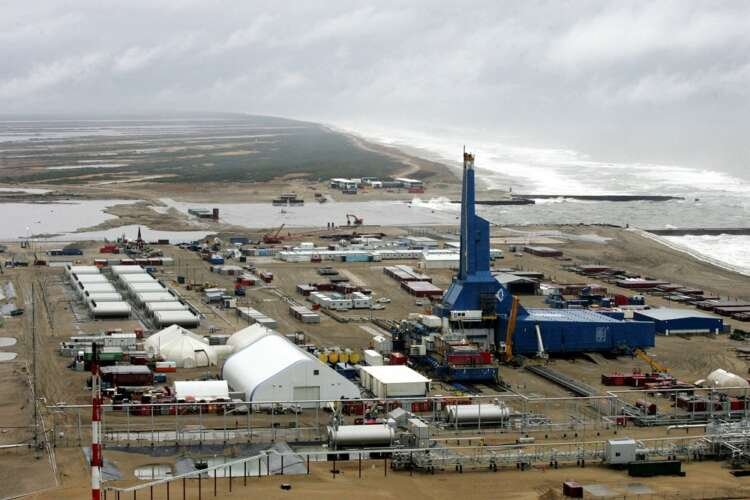
Published by Jessica Weisman-Pitts
Posted on October 17, 2022
2 min readLast updated: February 3, 2026
Add as preferred source on GoogleHOUSTON/NEW DELHI (Reuters) – Oil output at the giant Exxon-led Sakhalin-1 Russian Pacific project collapsed following the U.S. major’s refusal to accept local insurance for tankers after Western insurers pulled out due to sanctions, several industry sources told Reuters.
HOUSTON/NEW DELHI (Reuters) – Oil output at the giant Exxon-led Sakhalin-1 Russian Pacific project collapsed following the U.S. major’s refusal to accept local insurance for tankers after Western insurers pulled out due to sanctions, several industry sources told Reuters.
Western insurers withdrew cover from tankers operated by state-run Sovcomflot, Russia’s biggest shipping group, which was sanctioned following Moscow’s invasion of Ukraine.
“Exxon has refused to take Sovcomflot’s tankers,” one industry source said. Some cargoes meant for supplies to Indian refiners were also hit as Exxon did not recognise the alternative cover Sovcomflot had arranged from Russian insurers, according to the sources.
Sovcomflot and Exxon did not immediately respond to requests for comment.
The developments have unfolded as the European Union is due to impose a ban on Russian oil tanker insurance and shows the major impact ship insurance and re-insurance guarantees can have on operations.
Russia’s state oil champion Rosneft, a partner in the Sakhalin-1 project, has blamed Exxon for falling output, saying that since mid-May the project produced hardly any oil.
Exxon’s Russian unit, Exxon Neftegas Ltd, has cited difficulty chartering tankers due to sanctions. Russian newspaper Kommersant was first to report on Monday that production at Sakhalin-1 collapsed following Exxon’s refusal to work with Sovcomflot. Oil output at the Sakhalin-1 project fell to just 10,000 barrels per day (bpd) earlier this year from 220,000 bpd before Russia invaded Ukraine on Feb. 24. Russian President Vladimir Putin signed a decree earlier this month establishing a new operator for Sakhalin-1 that will be managed by Rosneft subsidiary Sakhalinmorneftegaz-Shelf. The decision gives the Russian government authority to decide whether foreign shareholders can retain stakes in the project, giving them one month to express interest or else losing their stakes. Rosneft holds a 20% stake in Sakhalin-1, ONGC Videsh, the overseas investment arm of India’s state-run ONGC, has a 20% stake in the project, and Japan’s state-backed oil producer SODECO the remaining 30%. In August, Exxon said it was in the process of transferring its 30% stake in the oil and gas project “to another party”, without naming it.
(Reporting by Nidhi Verma and Sabrina Valle; Editing by Alex Richardson)
Oil output refers to the amount of crude oil produced by a company or region over a specific period. It is typically measured in barrels per day (bpd) and is crucial for understanding production capacity and market supply.
Tanker insurance is a type of marine insurance that covers the risks associated with transporting oil and other liquids by ship. It protects against losses due to accidents, damage, or environmental liabilities during transit.
A sanctions regime refers to a set of restrictive measures imposed by countries or international bodies to influence the behavior of a specific nation or entity. These can include trade restrictions, asset freezes, and financial prohibitions.
A stake in a project refers to an ownership interest or share in that project. Stakeholders may include investors, partners, or companies that contribute resources and expect returns based on their investment.
Explore more articles in the Top Stories category











