Search
00
GBAF Logo
trophy
Top StoriesInterviewsBusinessFinanceBankingTechnologyInvestingTradingVideosAwardsMagazinesHeadlinesTrends

Subscribe to our newsletter

Get the latest news and updates from our team.

Global Banking & Finance Review®

Global Banking & Finance Review® - Subscribe to our newsletter

Company

    GBAF Logo
    • About Us
    • Profile
    • Privacy & Cookie Policy
    • Terms of Use
    • Contact Us
    • Advertising
    • Submit Post
    • Latest News
    • Research Reports
    • Press Release
    • Awards▾
      • About the Awards
      • Awards TimeTable
      • Submit Nominations
      • Testimonials
      • Media Room
      • Award Winners
      • FAQ
    • Magazines▾
      • Global Banking & Finance Review Magazine Issue 79
      • Global Banking & Finance Review Magazine Issue 78
      • Global Banking & Finance Review Magazine Issue 77
      • Global Banking & Finance Review Magazine Issue 76
      • Global Banking & Finance Review Magazine Issue 75
      • Global Banking & Finance Review Magazine Issue 73
      • Global Banking & Finance Review Magazine Issue 71
      • Global Banking & Finance Review Magazine Issue 70
      • Global Banking & Finance Review Magazine Issue 69
      • Global Banking & Finance Review Magazine Issue 66
    Top StoriesInterviewsBusinessFinanceBankingTechnologyInvestingTradingVideosAwardsMagazinesHeadlinesTrends

    Global Banking & Finance Review® is a leading financial portal and online magazine offering News, Analysis, Opinion, Reviews, Interviews & Videos from the world of Banking, Finance, Business, Trading, Technology, Investing, Brokerage, Foreign Exchange, Tax & Legal, Islamic Finance, Asset & Wealth Management.
    Copyright © 2010-2026 GBAF Publications Ltd - All Rights Reserved. | Sitemap | Tags | Developed By eCorpIT

    Editorial & Advertiser disclosure

    Global Banking & Finance Review® is an online platform offering news, analysis, and opinion on the latest trends, developments, and innovations in the banking and finance industry worldwide. The platform covers a diverse range of topics, including banking, insurance, investment, wealth management, fintech, and regulatory issues. The website publishes news, press releases, opinion and advertorials on various financial organizations, products and services which are commissioned from various Companies, Organizations, PR agencies, Bloggers etc. These commissioned articles are commercial in nature. This is not to be considered as financial advice and should be considered only for information purposes. It does not reflect the views or opinion of our website and is not to be considered an endorsement or a recommendation. We cannot guarantee the accuracy or applicability of any information provided with respect to your individual or personal circumstances. Please seek Professional advice from a qualified professional before making any financial decisions. We link to various third-party websites, affiliate sales networks, and to our advertising partners websites. When you view or click on certain links available on our articles, our partners may compensate us for displaying the content to you or make a purchase or fill a form. This will not incur any additional charges to you. To make things simpler for you to identity or distinguish advertised or sponsored articles or links, you may consider all articles or links hosted on our site as a commercial article placement. We will not be responsible for any loss you may suffer as a result of any omission or inaccuracy on the website.

    Home > Top Stories > Explainer-Why the survival of Scandinavian airline SAS hinges on Denmark
    Top Stories

    Explainer-Why the survival of Scandinavian airline SAS hinges on Denmark

    Published by Jessica Weisman-Pitts

    Posted on June 28, 2022

    4 min read

    Last updated: February 6, 2026

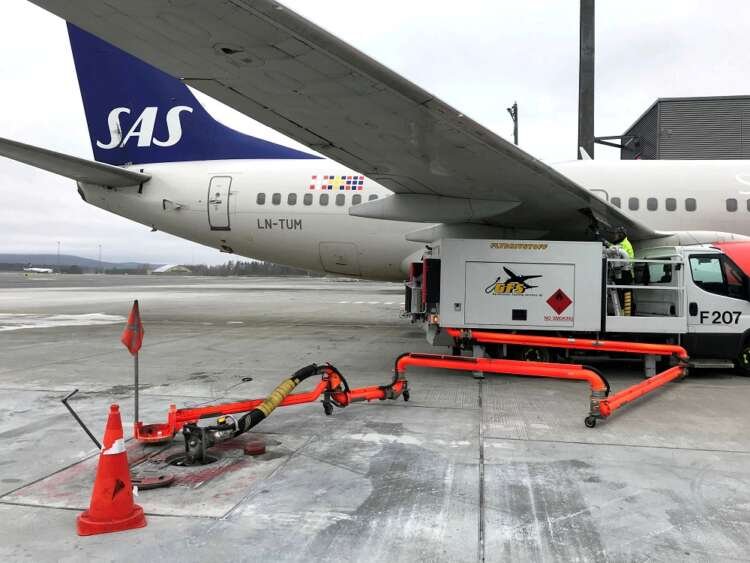
    A Scandinavian Airlines (SAS) plane is seen being refueled at Oslo Gardermoen airport, symbolizing the airline's struggle for survival amid financial challenges and restructuring efforts in Denmark and Sweden.
    Scandinavian Airlines (SAS) aircraft at Oslo Gardermoen airport - Global Banking & Finance Review
    Why waste money on news and opinion when you can access them for free?

    Take advantage of our newsletter subscription and stay informed on the go!

    Subscribe

    Tags:SASequity

    By Jacob Gronholt-Pedersen and Nikolaj Skydsgaard

    COPENHAGEN (Reuters) – Swedish loss-making airline SAS is fighting for survival, the latest carrier to hit financial straits due to hefty debts, stiff competition and soaring costs, even as the travel industry recovers from the pandemic.

    SAS has said a restructuring plan announced in February depends on it raising 9.5 billion Swedish crowns ($946 million)in cash and converting 20 billion crowns of debt to equity.

    Many governments across the world helped shore up their national carriers during the pandemic. But Sweden and Denmark, which both have 21.8% stakes in SAS, are taking very different approaches to the Scandinavian brand.

    Denmark has said it is willing to increase its ownership and write off debt, but Sweden has refused to inject more money.

    WHY DOES SAS MATTER SO MUCH TO DENMARK?

    SAS AB, formally known as Scandinavian Airlines System Denmark – Norway – Sweden, is headquartered in Stockholm, but it uses Copenhagen Airport, the largest in Scandinavia, as its main hub.

    Denmark’s Finance Minister Nicolai Wammen has said SAS is important for the Danish economy and ensuring good travel connections from the Nordic country to the rest of Europe as well as long-distance flights to other continents.

    SAS directly employs almost 7,000 people, equally shared between Denmark, Sweden and Norway. Prior to the COVID-19 pandemic, the company underpinned 20,000 jobs in the Scandinavian region, 6,800 of those in Denmark, according to a 2019 report by Copenhagen Economics commissioned by SAS.

    SAS accounted for almost a third of direct and indirect flights to Denmark, according to the report. It also accounted for 82% of transfer air traffic at Copenhagen airport in 2017.

    To Danes, SAS has traditionally been linked to a sense of pride and even a collective sense of ownership as it evolved to become a leading premium carrier in the decades following its creation in 1946.

    WHAT HAS GONE WRONG?

    At its height in the 1980s, SAS was named the world’s best airline by an industry group. But with the emergence of low-cost rivals such as Ryanair things began to change.

    The company has been in nearly constant financial trouble since the turn of the century, and last year lost 6.5 billion Swedish crowns ($638 million), with revenue just a third of pre-pandemic levels.

    On consumer review site Trustpilot, SAS is rated 1.5 out of five stars, just above Ryanair’s 1.4.

    Adding to SAS’ trouble, some 1,000 SAS pilots in Denmark, Norway and Sweden plan to go on strike on June 29 over disagreements over wages and cost-cutting plans.

    WHAT DOES DENMARK WANT?

    Denmark’s parliament agreed this month to write off some of SAS’ debt and convert some more into equity, as well as to inject new cash. That could increase Copenhagen’s stake in the airline to up to 30%.

    But the government has made it a condition of the cash injection that SAS gets private investors to participate too.

    IS THIS A PROBLEM?

    While the Danish government has promised to stay out of day-to-day business, it wants to protect its interests.

    Denmark wants “influence over the elements in SAS that are central to maintaining SAS’ strong foothold in Denmark and contribution to Denmark’s international accessibility,” the finance ministry said this month.

    That may deter large investors and consortia that might have been interested in making sweeping changes at SAS, according to Sydbank analyst Jacob Pedersen.

    WHAT IS SWEDEN DOING?

    Sweden, which has already injected more than 8 billion Swedish crowns into SAS over recent decades, has taken a harder line on new financing.

    Stockholm said this month it would not provide new cash to SAS, though it approved the debt-for-equity plan.

    If the airline does raise new equity, this will reduce Sweden’s stake. The country has said it wants to exit SAS completely in the long term.

    HOW ABOUT NORWAY?

    Neighbouring Norway’s government sold its remaining 10% stake in SAS in 2018, arguing there was no need for the state to own airline stocks.

    Still, it is a major creditor with 1.5 billion Norwegian crowns ($153 million) in loans made during the pandemic.

    On Tuesday, Oslo said it would support SAS’ debt-to-equity plan, under certain conditions, but did not plan to remain a long-term stakeholder.

    ($1 = 10.0434 Swedish crowns)

    ($1 = 9.7801 Norwegian crowns)

    (Reporting by Jacob Gronholt-Pedersen and Nikolaj Skydsgaard, additional reporting by Gwladys Fouche. Editing by Mark Potter)

    Frequently Asked Questions about Explainer-Why the survival of Scandinavian airline SAS hinges on Denmark

    1What is restructuring?

    Restructuring refers to the process of reorganizing a company's structure, operations, or finances to improve efficiency and address financial difficulties.

    2What is equity in finance?

    Equity represents ownership in a company, typically in the form of stocks or shares, and signifies the value of an owner's stake in the business.

    3What is the significance of Copenhagen Airport?

    Copenhagen Airport is the largest airport in Scandinavia, serving as a major hub for international and domestic flights, vital for regional connectivity.

    More from Top Stories

    Explore more articles in the Top Stories category

    Image for Lessons From the Ring and the Deal Table: How Boxing Shapes Steven Nigro’s Approach to Banking and Life
    Lessons From the Ring and the Deal Table: How Boxing Shapes Steven Nigro’s Approach to Banking and Life
    Image for Joe Kiani in 2025: Capital, Conviction, and a Focused Return to Innovation
    Joe Kiani in 2025: Capital, Conviction, and a Focused Return to Innovation
    Image for Marco Robinson – CLOSE THE DEAL AND SUDDENLY GROW RICH
    Marco Robinson – CLOSE THE DEAL AND SUDDENLY GROW RICH
    Image for Digital Tracing: Turning a regulatory obligation into a commercial advantage
    Digital Tracing: Turning a regulatory obligation into a commercial advantage
    Image for Exploring the Role of Blockchain and the Bitcoin Price Today in Education
    Exploring the Role of Blockchain and the Bitcoin Price Today in Education
    Image for Inside the World’s First Collection Industry Conglomerate: PCA Global’s Platform Strategy
    Inside the World’s First Collection Industry Conglomerate: PCA Global’s Platform Strategy
    Image for Chase Buchanan Private Wealth Management Highlights Key Autumn 2025 Budget Takeaways for Expats
    Chase Buchanan Private Wealth Management Highlights Key Autumn 2025 Budget Takeaways for Expats
    Image for PayLaju Strengthens Its Position as Malaysia’s Trusted Interest-Free Sharia-Compliant Loan Provider
    PayLaju Strengthens Its Position as Malaysia’s Trusted Interest-Free Sharia-Compliant Loan Provider
    Image for A Notable Update for Employee Health Benefits:
    A Notable Update for Employee Health Benefits:
    Image for Creating Equity Between Walls: How Mohak Chauhan is Using Engineering, Finance, and Community Vision to Reengineer Affordable Housing
    Creating Equity Between Walls: How Mohak Chauhan is Using Engineering, Finance, and Community Vision to Reengineer Affordable Housing
    Image for Upcoming Book on Real Estate Investing: Harvard Grace Capital Founder Stewart Heath’s Puts Lessons in Print
    Upcoming Book on Real Estate Investing: Harvard Grace Capital Founder Stewart Heath’s Puts Lessons in Print
    Image for ELECTIVA MARKS A LANDMARK FIRST YEAR WITH MAJOR SENIOR APPOINTMENTS AND EXPANSION MILESTONES
    ELECTIVA MARKS A LANDMARK FIRST YEAR WITH MAJOR SENIOR APPOINTMENTS AND EXPANSION MILESTONES
    View All Top Stories Posts
    Previous Top Stories PostUK’s South West Water added to wastewater investigation
    Next Top Stories PostCopper firms after China relaxes quarantine rules