Search
00
GBAF Logo
trophy
Top StoriesInterviewsBusinessFinanceBankingTechnologyInvestingTradingVideosAwardsMagazinesHeadlinesTrends

Subscribe to our newsletter

Get the latest news and updates from our team.

Global Banking & Finance Review®

Global Banking & Finance Review® - Subscribe to our newsletter

Company

    GBAF Logo
    • About Us
    • Profile
    • Privacy & Cookie Policy
    • Terms of Use
    • Contact Us
    • Advertising
    • Submit Post
    • Latest News
    • Research Reports
    • Press Release
    • Awards▾
      • About the Awards
      • Awards TimeTable
      • Submit Nominations
      • Testimonials
      • Media Room
      • Award Winners
      • FAQ
    • Magazines▾
      • Global Banking & Finance Review Magazine Issue 79
      • Global Banking & Finance Review Magazine Issue 78
      • Global Banking & Finance Review Magazine Issue 77
      • Global Banking & Finance Review Magazine Issue 76
      • Global Banking & Finance Review Magazine Issue 75
      • Global Banking & Finance Review Magazine Issue 73
      • Global Banking & Finance Review Magazine Issue 71
      • Global Banking & Finance Review Magazine Issue 70
      • Global Banking & Finance Review Magazine Issue 69
      • Global Banking & Finance Review Magazine Issue 66
    Top StoriesInterviewsBusinessFinanceBankingTechnologyInvestingTradingVideosAwardsMagazinesHeadlinesTrends

    Global Banking & Finance Review® is a leading financial portal and online magazine offering News, Analysis, Opinion, Reviews, Interviews & Videos from the world of Banking, Finance, Business, Trading, Technology, Investing, Brokerage, Foreign Exchange, Tax & Legal, Islamic Finance, Asset & Wealth Management.
    Copyright © 2010-2026 GBAF Publications Ltd - All Rights Reserved. | Sitemap | Tags | Developed By eCorpIT

    Editorial & Advertiser disclosure

    Global Banking & Finance Review® is an online platform offering news, analysis, and opinion on the latest trends, developments, and innovations in the banking and finance industry worldwide. The platform covers a diverse range of topics, including banking, insurance, investment, wealth management, fintech, and regulatory issues. The website publishes news, press releases, opinion and advertorials on various financial organizations, products and services which are commissioned from various Companies, Organizations, PR agencies, Bloggers etc. These commissioned articles are commercial in nature. This is not to be considered as financial advice and should be considered only for information purposes. It does not reflect the views or opinion of our website and is not to be considered an endorsement or a recommendation. We cannot guarantee the accuracy or applicability of any information provided with respect to your individual or personal circumstances. Please seek Professional advice from a qualified professional before making any financial decisions. We link to various third-party websites, affiliate sales networks, and to our advertising partners websites. When you view or click on certain links available on our articles, our partners may compensate us for displaying the content to you or make a purchase or fill a form. This will not incur any additional charges to you. To make things simpler for you to identity or distinguish advertised or sponsored articles or links, you may consider all articles or links hosted on our site as a commercial article placement. We will not be responsible for any loss you may suffer as a result of any omission or inaccuracy on the website.

    Home > Banking > Explainer-Why is the Bank of England selling government bonds?
    Banking

    Explainer-Why is the Bank of England selling government bonds?

    Published by Jessica Weisman-Pitts

    Posted on November 1, 2022

    5 min read

    Last updated: February 3, 2026

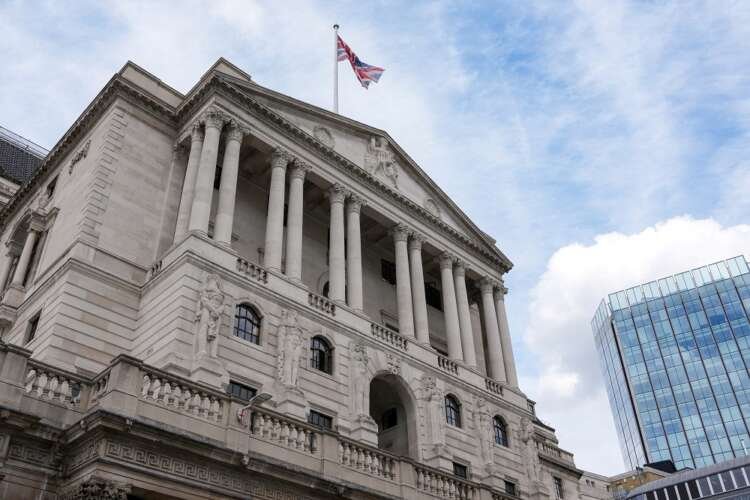
    The image features the iconic Bank of England building, highlighting its role in the recent auction of government bonds. This event marks a significant step in the Bank's quantitative tightening strategy, impacting the UK financial landscape.
    Bank of England building with a focus on bond auction news - Global Banking & Finance Review
    Why waste money on news and opinion when you can access them for free?

    Take advantage of our newsletter subscription and stay informed on the go!

    Subscribe

    Tags:auctionquantitative tighteninggovernment bondsUK economyfinancial markets

    By David Milliken

    LONDON (Reuters) – The Bank of England will pass a major milestone on Tuesday when it holds a first auction to sell some of the 875 billion pounds ($1.01 trillion) of government bonds it bought during successive quantitative easing (QE) programmes from 2009-2021.

    Britain’s central bank will be the first in the Group of Seven rich nations to actively sell QE bonds to investors.

    It has been reducing its holdings of British government bonds, known as gilts, bought under QE since February, when the BoE said it would no longer buy new gilts to replace those which matured. Total holdings have since fallen to 838 billion pounds.

    The U.S. Federal Reserve and Bank of Canada have adopted similar policies, sometimes known as passive quantitative tightening (QT), to help shed bonds accumulated during years of stimulus to support crisis-hit economies.

    WHAT IS THE BOE DOING NOW?

    The BoE aims to sell 750 million pounds of British government bonds with a remaining maturity of three to seven years at its first gilt auction on Tuesday, with results published shortly after 1445 GMT.

    In August, the BoE said it wanted to reduce its total gilt holdings by 80 billion pounds over a 12-month period starting in late September. To achieve this, it said it would need to sell around 10 billion pounds of gilts every three months, in addition to not reinvesting the proceeds of maturing bonds.

    A start to sales was delayed first by the postponement of September’s Monetary Policy Committee meeting after the death of Queen Elizabeth, and then by a chaotic sell-off in gilts triggered by former Prime Minister Liz Truss’s plan for unfunded tax cuts.

    The market turmoil forced the BoE to intervene and buy 19 billion pounds of long-dated and inflation-linked gilts in an emergency programme that ran until Oct. 14.

    The BoE will now hold eight gilt auctions this year, totalling 6 billion pounds of sales and including gilts with a maturity of up to 20 years.

    It had originally aimed to sell 8.7 billion pounds of gilts this year, including some with a maturity of over 20 years – the type hit hardest by a fire sale of assets by pension funds following the Truss government’s Sept. 23 “mini-budget”.

    The BoE says it still intends to reduce total gilt holdings by the 80 billion pounds announced in August. Policymakers will review the pace of sales annually.

    WHY IS THE BOE SELLING GILTS?

    British government bonds have a longer average maturity than those issued by other countries, so the BoE has to sell gilts to achieve the same pace of balance sheet reduction that other central banks would get by simply allowing their bonds to mature.

    More broadly, QE was always intended to be temporary and Governor Andrew Bailey has been keen to reverse some of the purchases, especially after BoE gilt holdings doubled during the wave of QE purchases in the COVID-19 pandemic.

    At its peak in December 2021, the BoE owned roughly half of all conventional British government bonds in issue.

    The BoE does not intend to fully reverse QE, because regulatory changes since the 2008 financial crisis mean banks need to hold more cash than before. It has not set a long-term target for gilt holdings.

    Reversing QE may help fight inflation, to the extent it pushes up borrowing costs and gives the government, business and the public less money to spend on other things.

    However, the BoE says raising interest rates is its main tool for controlling inflation, because the impact is better understood than that of QT.

    WHAT EFFECT WILL SELLING GILTS HAVE?

    The BoE aims for QT to have relatively little impact on gilt prices and borrowing costs.

    It sees the impact of QE and QT as depending heavily on financial market conditions – pushing borrowing costs up or down significantly if carried out at scale during times of market turmoil, but having little impact if done gradually while markets are calm.

    The BoE’s upcoming 6 billion pounds of sales come alongside 37 billion pounds of gilt issuance by the government over the same period.

    Bond strategists have questioned how strong demand will be, as gilt prices have slumped this year, and some investors suggested the central bank would be wiser to postpone sales until 2023.

    Strategists at Citi noted that long-dated gilts prices rallied relative to those for shorter-dated gilts after the BoE announced on Oct. 18 that it would exclude them from its purchases this year.

    The overall past effect of QE on the economy has been difficult to measure, and it is especially hard to separate the effect of actions by the BoE from spillovers from bond purchases by the Fed and the European Central Bank.

    In broad terms, QE pushed down borrowing costs for medium or longer-term periods, slightly raised inflation and probably led to somewhat lower unemployment and faster growth than otherwise.

    The BoE also emphasised the need for QE to stabilise markets at the start of the COVID-19 pandemic.

    Critics say QE played a major role in pushing up house prices and stock markets for more than a decade, worsening inequality. The BoE has said that without QE, consumer price inflation would have undershot its 2% target during the 2010s, and that unemployment would have been much higher at points.

    ($1 = 0.8671 pounds)

    (Reporting by David Milliken; Editing by Catherine Evans)

    Frequently Asked Questions about Explainer-Why is the Bank of England selling government bonds?

    1What is the role of the Bank of England?

    The Bank of England is the central bank of the UK, responsible for monetary policy, issuing currency, and maintaining financial stability.

    2What is quantitative tightening?

    Quantitative tightening is the process by which a central bank reduces the amount of money in circulation, often by selling assets it previously purchased.

    More from Banking

    Explore more articles in the Banking category

    Image for Pix at five years: how Brazil built one of the world’s most advanced public payments infrastructures - and why other countries are paying attention
    Pix at five years: how Brazil built one of the world’s most advanced public payments infrastructures - and why other countries are paying attention
    Image for Idle Stablecoins Are Becoming a Systemic Efficiency Problem — and Banks Should Pay Attention
    Idle Stablecoins Are Becoming a Systemic Efficiency Problem — and Banks Should Pay Attention
    Image for Banking Without Boundaries: A More Practical Approach to Global Banking
    Banking Without Boundaries: A More Practical Approach to Global Banking
    Image for Lessons From the Ring and the Deal Table: How Boxing Shapes Steven Nigro’s Approach to Banking and Life
    Lessons From the Ring and the Deal Table: How Boxing Shapes Steven Nigro’s Approach to Banking and Life
    Image for The Key to Unlocking ROI from GenAI
    The Key to Unlocking ROI from GenAI
    Image for The Changing Landscape of Small Business Lending: What Traditional Finance Models Miss
    The Changing Landscape of Small Business Lending: What Traditional Finance Models Miss
    Image for VestoFX.net Expands Education-Oriented Content as Focus on Risk Awareness Grows in CFD Trading
    VestoFX.net Expands Education-Oriented Content as Focus on Risk Awareness Grows in CFD Trading
    Image for The Hybrid Banking Model That Digital-Only Providers Cannot Match
    The Hybrid Banking Model That Digital-Only Providers Cannot Match
    Image for INTERPOLITAN MONEY ANNOUNCES RECORD GROWTH ACROSS 2025
    INTERPOLITAN MONEY ANNOUNCES RECORD GROWTH ACROSS 2025
    Image for Alter Bank Wins Two Prestigious Awards in the 2025 Global Banking & Finance Awards®
    Alter Bank Wins Two Prestigious Awards in the 2025 Global Banking & Finance Awards®
    Image for CIBC wins two Global Banking and Finance Awards for student banking
    CIBC wins two Global Banking and Finance Awards for student banking
    Image for DeFi and banking are converging. Here’s what banks can do.
    DeFi and banking are converging. Here’s what banks can do.
    View All Banking Posts
    Previous Banking PostGen Z is Sparking a Banking Revolution: Here’s what banks need to do to win over this generation
    Next Banking PostThe ‘risk’ of financial inclusion: How digital banks can increase their social impact and profit margins