Search
00
GBAF Logo
trophy
Top StoriesInterviewsBusinessFinanceBankingTechnologyInvestingTradingVideosAwardsMagazinesHeadlinesTrends

Subscribe to our newsletter

Get the latest news and updates from our team.

Global Banking & Finance Review®

Global Banking & Finance Review® - Subscribe to our newsletter

Company

    GBAF Logo
    • About Us
    • Profile
    • Privacy & Cookie Policy
    • Terms of Use
    • Contact Us
    • Advertising
    • Submit Post
    • Latest News
    • Research Reports
    • Press Release
    • Awards▾
      • About the Awards
      • Awards TimeTable
      • Submit Nominations
      • Testimonials
      • Media Room
      • Award Winners
      • FAQ
    • Magazines▾
      • Global Banking & Finance Review Magazine Issue 79
      • Global Banking & Finance Review Magazine Issue 78
      • Global Banking & Finance Review Magazine Issue 77
      • Global Banking & Finance Review Magazine Issue 76
      • Global Banking & Finance Review Magazine Issue 75
      • Global Banking & Finance Review Magazine Issue 73
      • Global Banking & Finance Review Magazine Issue 71
      • Global Banking & Finance Review Magazine Issue 70
      • Global Banking & Finance Review Magazine Issue 69
      • Global Banking & Finance Review Magazine Issue 66
    Top StoriesInterviewsBusinessFinanceBankingTechnologyInvestingTradingVideosAwardsMagazinesHeadlinesTrends

    Global Banking & Finance Review® is a leading financial portal and online magazine offering News, Analysis, Opinion, Reviews, Interviews & Videos from the world of Banking, Finance, Business, Trading, Technology, Investing, Brokerage, Foreign Exchange, Tax & Legal, Islamic Finance, Asset & Wealth Management.
    Copyright © 2010-2026 GBAF Publications Ltd - All Rights Reserved. | Sitemap | Tags | Developed By eCorpIT

    Editorial & Advertiser disclosure

    Global Banking & Finance Review® is an online platform offering news, analysis, and opinion on the latest trends, developments, and innovations in the banking and finance industry worldwide. The platform covers a diverse range of topics, including banking, insurance, investment, wealth management, fintech, and regulatory issues. The website publishes news, press releases, opinion and advertorials on various financial organizations, products and services which are commissioned from various Companies, Organizations, PR agencies, Bloggers etc. These commissioned articles are commercial in nature. This is not to be considered as financial advice and should be considered only for information purposes. It does not reflect the views or opinion of our website and is not to be considered an endorsement or a recommendation. We cannot guarantee the accuracy or applicability of any information provided with respect to your individual or personal circumstances. Please seek Professional advice from a qualified professional before making any financial decisions. We link to various third-party websites, affiliate sales networks, and to our advertising partners websites. When you view or click on certain links available on our articles, our partners may compensate us for displaying the content to you or make a purchase or fill a form. This will not incur any additional charges to you. To make things simpler for you to identity or distinguish advertised or sponsored articles or links, you may consider all articles or links hosted on our site as a commercial article placement. We will not be responsible for any loss you may suffer as a result of any omission or inaccuracy on the website.

    Home > Top Stories > Explainer-Why calls for oil embargo on Israel are unlikely to go anywhere
    Top Stories

    Explainer-Why calls for oil embargo on Israel are unlikely to go anywhere

    Published by Wanda Rich

    Posted on November 21, 2023

    4 min read

    Last updated: January 31, 2026

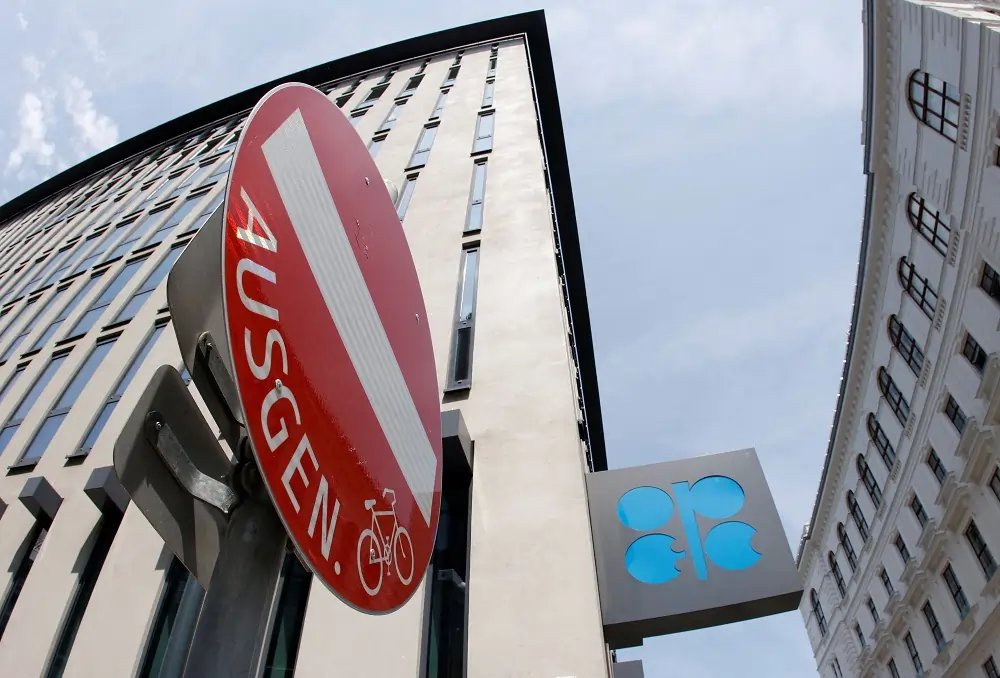
    This image depicts oil barrels, symbolizing discussions around the potential oil embargo against Israel amid rising geopolitical tensions. It relates to the article's analysis of OPEC's stance and the historical context of oil as a political weapon.
    Oil barrels representing the potential impact of an oil embargo on Israel amid geopolitical tensions - Global Banking & Finance Review
    Why waste money on news and opinion when you can access them for free?

    Take advantage of our newsletter subscription and stay informed on the go!

    Subscribe

    Tags:oil and gasfinancial marketsInvestment Strategies

    Explainer-Why calls for oil embargo on Israel are unlikely to go anywhere

    By Ahmad Ghaddar

    LONDON (Reuters) -Israel’s military offensive in Gaza following an Oct. 7 attack by the enclave’s ruling Islamist group Hamas has raised calls in the Middle East, particularly from OPEC member Iran, for using oil as a weapon to punish Israel.

    The conflict has led many analysts, oil market watchers and politicians to draw parallels with the 1973 OPEC embargo, when Arab oil producers cut off oil exports to several allies of Israel, including the United States and Britain, following the Israeli-Arab war that year.

    Analysts and OPEC sources, however, say that the energy world today is far different from 50 years ago, and play down any possibility of a new embargo.

    The Organization of the Petroleum Exporting Countries and its allies led by Russia, or OPEC+, meet in Vienna on Sunday to decide on output policy, and sources have told Reuters that additional output cuts are likely to be discussed.

    WHERE ARE CALLS FOR EMBARGO COMING FROM?

    Last month, Iranian Foreign Minister Hossein Amirabdollahian urged members of the Organisation of Islamic Cooperation (OIC) to impose an oil embargo and other sanctions on Israel and expel all Israeli ambassadors.

    Four sources from OPEC, which produces a third of the world’s oil and includes several Muslim states including Iran, told Reuters at the time that no immediate action or emergency meetings were planned by the group in light of Iran’s comments.

    On Sunday, Iranian Supreme Leader Ayatollah Ali Khamenei appealed to Muslim states that have normalised relations with Israel to cut those ties for at least “a limited time”, weeks after he called for an Islamic oil and food embargo on Israel.

    During a joint summit between members of the OIC and the Arab League in Riyadh on Nov. 11, Muslim states did not agree to impose wide-ranging sanctions on Israel, as requested by Iranian President Ebrahim Raisi.

    WHAT HAPPENED BACK IN 1973?

    In 1973, Arab OPEC producers led by Saudi Arabia imposed an oil embargo on the United States in retaliation for its support for Israel in the Middle East war in October of that year. The embargo, and subsequent output cuts, soon added other countries as targets, including Britain, the Netherlands and Japan.

    The embargo led to severe shortages with long queues forming at gas stations. The negative impact on the U.S. economy was significant.

    The embargo led to a spike in oil prices, but over the longer term the crisis encouraged the development of new oil sources outside the Middle East such as the North Sea and deepwater assets, as well as alternative energy sources.

    WHY IS ANOTHER EMBARGO UNLIKELY?

    While Western countries were the main buyers of oil produced by Arab countries a half century ago, nowadays Asia is the main customer for OPEC’s crude, accounting for about 70% of the group’s total exports.

    “The geopolitical environment is different compared to 50 years ago,” one OPEC source said about why a new embargo was not in prospect.

    “A 1970s-style oil embargo by the Gulf oil-producing states appears unlikely because two-thirds of GCC (Gulf Cooperation Council) oil exports today are purchased by Asian clients and, importantly, the economic transformation currently planned and implemented in the region requires a sustained absence of conflict,” JPM Morgan said in a note.

    UBS analyst Giovanni Staunovo said that China’s influence in the Middle East is growing.

    “China has brokered a deal between Saudi Arabia and Iran, and … is a very important client for Middle Eastern oil producers, the second largest oil consumer, and, together with India, the engine of oil demand growth.”

    Morgan Bazilian, director of the Payne Institute, said the energy landscape has changed substantially over the past 50 years. “The U.S. is now the largest producer of oil and gas, and has a long-established strategic petroleum reserve.”

    (Editing by Mark Heinrich and Jason Neely)

    Frequently Asked Questions about Explainer-Why calls for oil embargo on Israel are unlikely to go anywhere

    1What are the current major oil consumers?

    Today, major oil consumers include countries in Asia, particularly China and India, which account for a significant portion of global oil imports.

    More from Top Stories

    Explore more articles in the Top Stories category

    Image for Lessons From the Ring and the Deal Table: How Boxing Shapes Steven Nigro’s Approach to Banking and Life
    Lessons From the Ring and the Deal Table: How Boxing Shapes Steven Nigro’s Approach to Banking and Life
    Image for Joe Kiani in 2025: Capital, Conviction, and a Focused Return to Innovation
    Joe Kiani in 2025: Capital, Conviction, and a Focused Return to Innovation
    Image for Marco Robinson – CLOSE THE DEAL AND SUDDENLY GROW RICH
    Marco Robinson – CLOSE THE DEAL AND SUDDENLY GROW RICH
    Image for Digital Tracing: Turning a regulatory obligation into a commercial advantage
    Digital Tracing: Turning a regulatory obligation into a commercial advantage
    Image for Exploring the Role of Blockchain and the Bitcoin Price Today in Education
    Exploring the Role of Blockchain and the Bitcoin Price Today in Education
    Image for Inside the World’s First Collection Industry Conglomerate: PCA Global’s Platform Strategy
    Inside the World’s First Collection Industry Conglomerate: PCA Global’s Platform Strategy
    Image for Chase Buchanan Private Wealth Management Highlights Key Autumn 2025 Budget Takeaways for Expats
    Chase Buchanan Private Wealth Management Highlights Key Autumn 2025 Budget Takeaways for Expats
    Image for PayLaju Strengthens Its Position as Malaysia’s Trusted Interest-Free Sharia-Compliant Loan Provider
    PayLaju Strengthens Its Position as Malaysia’s Trusted Interest-Free Sharia-Compliant Loan Provider
    Image for A Notable Update for Employee Health Benefits:
    A Notable Update for Employee Health Benefits:
    Image for Creating Equity Between Walls: How Mohak Chauhan is Using Engineering, Finance, and Community Vision to Reengineer Affordable Housing
    Creating Equity Between Walls: How Mohak Chauhan is Using Engineering, Finance, and Community Vision to Reengineer Affordable Housing
    Image for Upcoming Book on Real Estate Investing: Harvard Grace Capital Founder Stewart Heath’s Puts Lessons in Print
    Upcoming Book on Real Estate Investing: Harvard Grace Capital Founder Stewart Heath’s Puts Lessons in Print
    Image for ELECTIVA MARKS A LANDMARK FIRST YEAR WITH MAJOR SENIOR APPOINTMENTS AND EXPANSION MILESTONES
    ELECTIVA MARKS A LANDMARK FIRST YEAR WITH MAJOR SENIOR APPOINTMENTS AND EXPANSION MILESTONES
    View All Top Stories Posts
    Previous Top Stories PostSiemens Energy’s struggling wind unit plans $436 million in cost cuts
    Next Top Stories PostBBC scraps UK Top Gear show for ‘foreseeable future’ following crash