Search
00
GBAF Logo
trophy
Top StoriesInterviewsBusinessFinanceBankingTechnologyInvestingTradingVideosAwardsMagazinesHeadlinesTrends

Subscribe to our newsletter

Get the latest news and updates from our team.

Global Banking & Finance Review®

Global Banking & Finance Review® - Subscribe to our newsletter

Company

    GBAF Logo
    • About Us
    • Profile
    • Privacy & Cookie Policy
    • Terms of Use
    • Contact Us
    • Advertising
    • Submit Post
    • Latest News
    • Research Reports
    • Press Release
    • Awards▾
      • About the Awards
      • Awards TimeTable
      • Submit Nominations
      • Testimonials
      • Media Room
      • Award Winners
      • FAQ
    • Magazines▾
      • Global Banking & Finance Review Magazine Issue 79
      • Global Banking & Finance Review Magazine Issue 78
      • Global Banking & Finance Review Magazine Issue 77
      • Global Banking & Finance Review Magazine Issue 76
      • Global Banking & Finance Review Magazine Issue 75
      • Global Banking & Finance Review Magazine Issue 73
      • Global Banking & Finance Review Magazine Issue 71
      • Global Banking & Finance Review Magazine Issue 70
      • Global Banking & Finance Review Magazine Issue 69
      • Global Banking & Finance Review Magazine Issue 66
    Top StoriesInterviewsBusinessFinanceBankingTechnologyInvestingTradingVideosAwardsMagazinesHeadlinesTrends

    Global Banking & Finance Review® is a leading financial portal and online magazine offering News, Analysis, Opinion, Reviews, Interviews & Videos from the world of Banking, Finance, Business, Trading, Technology, Investing, Brokerage, Foreign Exchange, Tax & Legal, Islamic Finance, Asset & Wealth Management.
    Copyright © 2010-2026 GBAF Publications Ltd - All Rights Reserved. | Sitemap | Tags | Developed By eCorpIT

    Editorial & Advertiser disclosure

    Global Banking & Finance Review® is an online platform offering news, analysis, and opinion on the latest trends, developments, and innovations in the banking and finance industry worldwide. The platform covers a diverse range of topics, including banking, insurance, investment, wealth management, fintech, and regulatory issues. The website publishes news, press releases, opinion and advertorials on various financial organizations, products and services which are commissioned from various Companies, Organizations, PR agencies, Bloggers etc. These commissioned articles are commercial in nature. This is not to be considered as financial advice and should be considered only for information purposes. It does not reflect the views or opinion of our website and is not to be considered an endorsement or a recommendation. We cannot guarantee the accuracy or applicability of any information provided with respect to your individual or personal circumstances. Please seek Professional advice from a qualified professional before making any financial decisions. We link to various third-party websites, affiliate sales networks, and to our advertising partners websites. When you view or click on certain links available on our articles, our partners may compensate us for displaying the content to you or make a purchase or fill a form. This will not incur any additional charges to you. To make things simpler for you to identity or distinguish advertised or sponsored articles or links, you may consider all articles or links hosted on our site as a commercial article placement. We will not be responsible for any loss you may suffer as a result of any omission or inaccuracy on the website.

    Home > Top Stories > Explainer-How Wall Street is preparing for possible US debt default
    Top Stories

    Explainer-How Wall Street is preparing for possible US debt default

    Published by Uma Rajagopal

    Posted on May 22, 2023

    4 min read

    Last updated: February 1, 2026

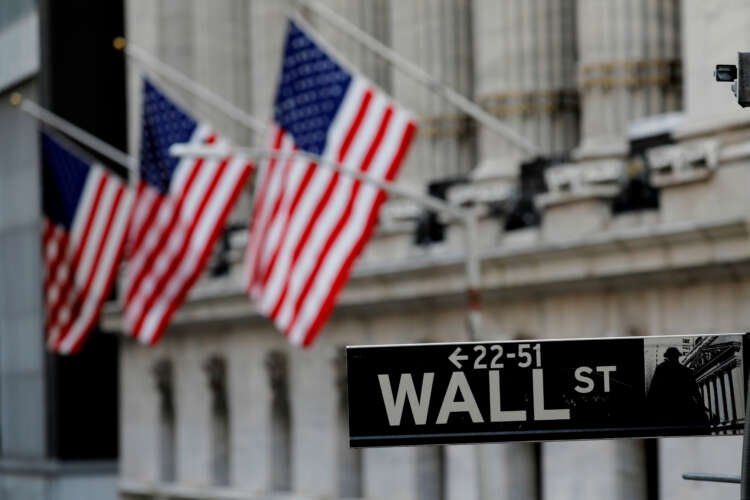
    The New York Stock Exchange stands as Wall Street braces for potential fallout from a US debt default. This image highlights the financial hub's atmosphere during critical debt ceiling negotiations.
    Exterior view of the New York Stock Exchange, reflecting Wall Street's concern over US debt default - Global Banking & Finance Review
    Why waste money on news and opinion when you can access them for free?

    Take advantage of our newsletter subscription and stay informed on the go!

    Subscribe

    Tags:debt instrumentsfinancial marketsCapital Marketsinvestment portfoliosrisk management

    Quick Summary

    NEW YORK/WASHINGTON (Reuters) – As talks over raising the U.S. government’s $31.4 trillion debt ceiling go down to the wire, Wall Street banks and asset managers have been preparing for the fallout from a potential default.

    Table of Contents

    • WHAT WOULD HAPPEN IF THE U.S. DEFAULTED?
    • HOW ARE INSTITUTIONS PREPARING?
    • WHAT SCENARIOS ARE BEING CONSIDERED?

    NEW YORK/WASHINGTON (Reuters) – As talks over raising the U.S. government’s $31.4 trillion debt ceiling go down to the wire, Wall Street banks and asset managers have been preparing for the fallout from a potential default.

    The financial industry has prepared for such a crisis before, most recently in September 2021. But this time, the relatively short time frame for reaching a compromise has bankers on edge, said one senior industry official.

    Less than two weeks remain until June 1, when the Treasury Department has warned that the federal government might not be able to pay all its debts, a deadline U.S. Treasury Secretary Janet Yellen reaffirmed on Sunday.

    Citigroup CEO Jane Fraser said this debate on the debt ceiling is “more worrying” than previous ones. JPMorgan Chase & CO CEO Jamie Dimon said the bank is convening weekly meetings on the implications.

    WHAT WOULD HAPPEN IF THE U.S. DEFAULTED?

    U.S. government bonds underpin the global financial system so it is difficult to fully gauge the damage a default would create, but executives expect massive volatility across equity, debt and other markets.

    The ability to trade in and out of Treasury positions in the secondary market would be severely impaired.

    Wall Street executives who have advised the Treasury’s debt operations have warned that Treasury market dysfunction would quickly spread to the derivative, mortgage and commodity markets, as investors would question the validity of Treasuries widely used as collateral for securing trades and loans. Financial institutions could ask counterparties to replace the bonds affected by missed payments, said analysts.

    Even a short breach of the debt limit could lead to a spike in interest rates, a plunge in equity prices, and covenant breaches in loan documentation and leverage agreements.

    Short-term funding markets would likely freeze up as well, Moody’s Analytics said.

    HOW ARE INSTITUTIONS PREPARING?

    Banks, brokers and trading platforms are prepping for disruption to the Treasury market, as well as broader volatility.

    This generally includes game-planning how payments on Treasury securities would be handled; how critical funding markets would react; ensuring sufficient technology, staffing capacity and cash to handle high trading volumes; and checking the potential impact on contracts with clients.

    Big bond investors have cautioned that maintaining high levels of liquidity was important to withstand potential violent asset price moves, and to avoid having to sell at the worst possible time.

    Bond trading platform Tradeweb said it was in discussions with clients, industry groups, and other market participants about contingency plans.

    WHAT SCENARIOS ARE BEING CONSIDERED?

    The Securities Industry and Financial Markets Association (SIFMA), a leading industry group, has a playbook detailing how Treasury market stakeholders – the Federal Reserve Bank of New York, the Fixed Income Clearing Corporation (FICC), clearing banks, and Treasuries dealers – would communicate ahead of and during the days of potential missed Treasuries payments.

    SIFMA has considered several scenarios. The more likely would see the Treasury buy time to pay back bondholders by announcing ahead of a payment that it would be rolling those maturing securities over, extending them one day at a time.

    That would allow the market to continue functioning but interest would likely not accrue for the delayed payment.

    In the most disruptive scenario, the Treasury fails to pay both principal and coupon, and does not extend maturities. The unpaid bonds could no longer trade and would no longer be transferable on the Fedwire Securities Service, which is used to hold, transfer and settle Treasuries.

    Each scenario would likely lead to significant operational problems and require manual daily adjustments in trading and settlement processes.

    “It is difficult because this is unprecedented but all we’re trying to do is make sure we develop a plan with our members to help them navigate through what would be a disruptive situation,” said Rob Toomey, SIFMA’s managing director and associate general counsel for capital markets.

    The Treasury Market Practices Group – an industry group sponsored by the New York Federal Reserve – also has a plan for trading in unpaid Treasuries, which it reviewed at the end of 2022, according to meeting minutes on its website dated Nov. 29. The New York Fed declined to comment further.

    In addition, in past debt-ceiling standoffs – in 2011 and 2013 – Fed staff and policymakers developed a playbook that would likely provide a starting point, with the last and most sensitive step being to remove defaulted securities from the market altogether.

    The Depository Trust & Clearing Corporation, which owns FICC, said it was monitoring the situation and has modeled a variety of scenarios based on SIFMA’s playbook.

    “We are also working with our industry partners, regulators and participants to ensure activities are coordinated,” it said.

    (Reporting by Davide Barbuscia; Editing by Megan Davies, Michelle Price and David Gregorio)

    Frequently Asked Questions about Explainer-How Wall Street is preparing for possible US debt default

    1What is market volatility?

    Market volatility refers to the rate at which the price of securities increases or decreases for a given set of returns, indicating market risk.

    2What is liquidity in financial markets?

    Liquidity is the ease with which an asset can be converted into cash without affecting its market price, crucial for trading.

    More from Top Stories

    Explore more articles in the Top Stories category

    Image for Lessons From the Ring and the Deal Table: How Boxing Shapes Steven Nigro’s Approach to Banking and Life
    Lessons From the Ring and the Deal Table: How Boxing Shapes Steven Nigro’s Approach to Banking and Life
    Image for Joe Kiani in 2025: Capital, Conviction, and a Focused Return to Innovation
    Joe Kiani in 2025: Capital, Conviction, and a Focused Return to Innovation
    Image for Marco Robinson – CLOSE THE DEAL AND SUDDENLY GROW RICH
    Marco Robinson – CLOSE THE DEAL AND SUDDENLY GROW RICH
    Image for Digital Tracing: Turning a regulatory obligation into a commercial advantage
    Digital Tracing: Turning a regulatory obligation into a commercial advantage
    Image for Exploring the Role of Blockchain and the Bitcoin Price Today in Education
    Exploring the Role of Blockchain and the Bitcoin Price Today in Education
    Image for Inside the World’s First Collection Industry Conglomerate: PCA Global’s Platform Strategy
    Inside the World’s First Collection Industry Conglomerate: PCA Global’s Platform Strategy
    Image for Chase Buchanan Private Wealth Management Highlights Key Autumn 2025 Budget Takeaways for Expats
    Chase Buchanan Private Wealth Management Highlights Key Autumn 2025 Budget Takeaways for Expats
    Image for PayLaju Strengthens Its Position as Malaysia’s Trusted Interest-Free Sharia-Compliant Loan Provider
    PayLaju Strengthens Its Position as Malaysia’s Trusted Interest-Free Sharia-Compliant Loan Provider
    Image for A Notable Update for Employee Health Benefits:
    A Notable Update for Employee Health Benefits:
    Image for Creating Equity Between Walls: How Mohak Chauhan is Using Engineering, Finance, and Community Vision to Reengineer Affordable Housing
    Creating Equity Between Walls: How Mohak Chauhan is Using Engineering, Finance, and Community Vision to Reengineer Affordable Housing
    Image for Upcoming Book on Real Estate Investing: Harvard Grace Capital Founder Stewart Heath’s Puts Lessons in Print
    Upcoming Book on Real Estate Investing: Harvard Grace Capital Founder Stewart Heath’s Puts Lessons in Print
    Image for ELECTIVA MARKS A LANDMARK FIRST YEAR WITH MAJOR SENIOR APPOINTMENTS AND EXPANSION MILESTONES
    ELECTIVA MARKS A LANDMARK FIRST YEAR WITH MAJOR SENIOR APPOINTMENTS AND EXPANSION MILESTONES
    View All Top Stories Posts
    Previous Top Stories PostBritain chips away at NatWest stake with $1.6 billion share sale
    Next Top Stories PostMarkets edgy as US debt ceiling talks near crunch time