Search
00
GBAF Logo
trophy
Top StoriesInterviewsBusinessFinanceBankingTechnologyInvestingTradingVideosAwardsMagazinesHeadlinesTrends

Subscribe to our newsletter

Get the latest news and updates from our team.

Global Banking & Finance Review®

Global Banking & Finance Review® - Subscribe to our newsletter

Company

    GBAF Logo
    • About Us
    • Profile
    • Privacy & Cookie Policy
    • Terms of Use
    • Contact Us
    • Advertising
    • Submit Post
    • Latest News
    • Research Reports
    • Press Release
    • Awards▾
      • About the Awards
      • Awards TimeTable
      • Submit Nominations
      • Testimonials
      • Media Room
      • Award Winners
      • FAQ
    • Magazines▾
      • Global Banking & Finance Review Magazine Issue 79
      • Global Banking & Finance Review Magazine Issue 78
      • Global Banking & Finance Review Magazine Issue 77
      • Global Banking & Finance Review Magazine Issue 76
      • Global Banking & Finance Review Magazine Issue 75
      • Global Banking & Finance Review Magazine Issue 73
      • Global Banking & Finance Review Magazine Issue 71
      • Global Banking & Finance Review Magazine Issue 70
      • Global Banking & Finance Review Magazine Issue 69
      • Global Banking & Finance Review Magazine Issue 66
    Top StoriesInterviewsBusinessFinanceBankingTechnologyInvestingTradingVideosAwardsMagazinesHeadlinesTrends

    Global Banking & Finance Review® is a leading financial portal and online magazine offering News, Analysis, Opinion, Reviews, Interviews & Videos from the world of Banking, Finance, Business, Trading, Technology, Investing, Brokerage, Foreign Exchange, Tax & Legal, Islamic Finance, Asset & Wealth Management.
    Copyright © 2010-2026 GBAF Publications Ltd - All Rights Reserved. | Sitemap | Tags | Developed By eCorpIT

    Editorial & Advertiser disclosure

    Global Banking & Finance Review® is an online platform offering news, analysis, and opinion on the latest trends, developments, and innovations in the banking and finance industry worldwide. The platform covers a diverse range of topics, including banking, insurance, investment, wealth management, fintech, and regulatory issues. The website publishes news, press releases, opinion and advertorials on various financial organizations, products and services which are commissioned from various Companies, Organizations, PR agencies, Bloggers etc. These commissioned articles are commercial in nature. This is not to be considered as financial advice and should be considered only for information purposes. It does not reflect the views or opinion of our website and is not to be considered an endorsement or a recommendation. We cannot guarantee the accuracy or applicability of any information provided with respect to your individual or personal circumstances. Please seek Professional advice from a qualified professional before making any financial decisions. We link to various third-party websites, affiliate sales networks, and to our advertising partners websites. When you view or click on certain links available on our articles, our partners may compensate us for displaying the content to you or make a purchase or fill a form. This will not incur any additional charges to you. To make things simpler for you to identity or distinguish advertised or sponsored articles or links, you may consider all articles or links hosted on our site as a commercial article placement. We will not be responsible for any loss you may suffer as a result of any omission or inaccuracy on the website.

    Home > Top Stories > Exclusive-Facebook to target harmful coordination by real accounts using playbook against fake networks
    Top Stories

    Exclusive-Facebook to target harmful coordination by real accounts using playbook against fake networks

    Published by Jessica Weisman-Pitts

    Posted on September 16, 2021

    6 min read

    Last updated: January 20, 2026

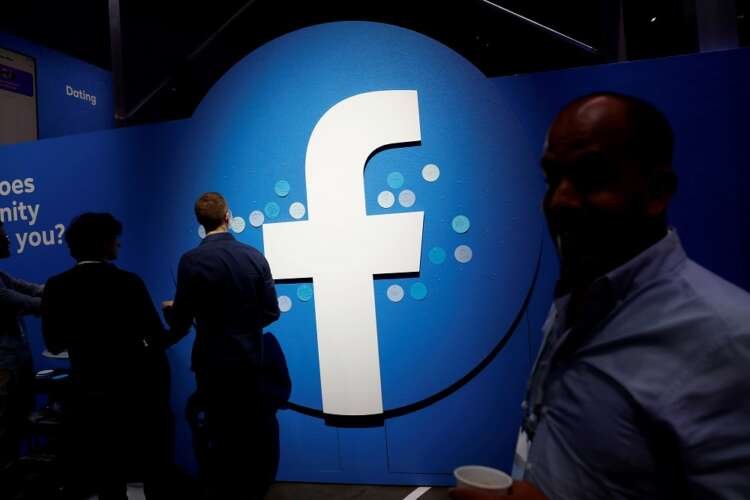
    This image features the Facebook logo alongside text about the company's new measures to combat harmful coordination by real accounts. The article discusses Facebook's aggressive tactics to shut down coordinated groups engaging in harmful activities, reflecting its evolving security approach amidst scrutiny.
    Facebook logo with text highlighting coordinated harm measures - Global Banking & Finance Review
    Why waste money on news and opinion when you can access them for free?

    Take advantage of our newsletter subscription and stay informed on the go!

    Subscribe

    By Elizabeth Culliford and Fanny Potkin

    (Reuters) – Facebook is taking a more aggressive approach to shut down coordinated groups of real-user accounts engaging in certain harmful activities on its platform, using the same strategy its security teams take against campaigns using fake accounts, the company told Reuters.

    The new approach, reported here for the first time, uses the tactics usually taken by Facebook’s security teams for wholesale shutdowns of networks engaged in influence operations that use false accounts to manipulate public debate, such as Russian troll farms.

    It could have major implications for how the social media giant handles political and other coordinated movements breaking its rules, at a time when Facebook’s approach to abuses on its platforms is under heavy scrutiny from global lawmakers and civil society groups.

    Facebook said it now plans to take this same network-level approach with groups of coordinated real accounts that systemically break its rules, through mass reporting, where many users falsely report a target’s content or account to get it shut down, or brigading, a type of online harassment where users might coordinate to target an individual through mass posts or comments.

    The expansion, which a spokeswoman said was in its early stages, means Facebook’s security teams could identify core movements driving such behavior and take more sweeping actions than the company removing posts or individual accounts as it otherwise might.

    In April, BuzzFeed News published a leaked Facebook internal report about the company’s role in the Jan. 6 riot on the U.S. Capitol and its challenges in curbing the fast-growing ‘Stop the Steal’ movement, where one of the findings was Facebook had “little policy around coordinated authentic harm.”(https://bit.ly/2XmbHZN)

    Facebook’s security experts, who are separate from the company’s content moderators and handle threats from adversaries trying to evade its rules, started cracking down on influence operations using fake accounts in 2017, following the 2016 U.S. election in which U.S. intelligence officials concluded Russia had used social media platforms as part of a cyber-influence campaign – a claim Moscow has denied.

    Facebook dubbed this banned activity by the groups of fake accounts “coordinated inauthentic behavior” (CIB), and its security teams started announcing sweeping takedowns in monthly reports. The security teams also handle some specific threats that may not use fake accounts, such as fraud or cyber-espionage networks or overt influence operations like some state media campaigns.

    Sources said teams at the company had long debated how it should intervene at a network level for large movements of real user accounts systemically breaking its rules.

    In July, Reuters reported on the Vietnam army’s online information warfare unit, who engaged in actions including mass reporting of accounts to Facebook but also often used their real names.

    Facebook is under increasing pressure from global regulators, lawmakers and employees to combat wide-ranging abuses on its services. Others have criticized the company over allegations of censorship, anti-conservative bias or inconsistent enforcement.

    An expansion of Facebook’s network disruption models to affect authentic accounts raises further questions about how changes might impact types of public debate, online movements and campaign tactics across the political spectrum.

    High-profile instances of coordinated activity around last year’s U.S. election, from teens and K-pop fans claiming they used TikTok to sabotage a rally for former President Donald Trump in Tulsa, Oklahoma, to political campaigns paying online meme-makers, have also sparked debates on how platforms should define and approach coordinated campaigns.

    (Reporting by Elizabeth Culliford in London and Fanny Potkin in Singapore; Editing by Kenneth Li and Nick Zieminski)

    By Elizabeth Culliford and Fanny Potkin

    (Reuters) – Facebook is taking a more aggressive approach to shut down coordinated groups of real-user accounts engaging in certain harmful activities on its platform, using the same strategy its security teams take against campaigns using fake accounts, the company told Reuters.

    The new approach, reported here for the first time, uses the tactics usually taken by Facebook’s security teams for wholesale shutdowns of networks engaged in influence operations that use false accounts to manipulate public debate, such as Russian troll farms.

    It could have major implications for how the social media giant handles political and other coordinated movements breaking its rules, at a time when Facebook’s approach to abuses on its platforms is under heavy scrutiny from global lawmakers and civil society groups.

    Facebook said it now plans to take this same network-level approach with groups of coordinated real accounts that systemically break its rules, through mass reporting, where many users falsely report a target’s content or account to get it shut down, or brigading, a type of online harassment where users might coordinate to target an individual through mass posts or comments.

    The expansion, which a spokeswoman said was in its early stages, means Facebook’s security teams could identify core movements driving such behavior and take more sweeping actions than the company removing posts or individual accounts as it otherwise might.

    In April, BuzzFeed News published a leaked Facebook internal report about the company’s role in the Jan. 6 riot on the U.S. Capitol and its challenges in curbing the fast-growing ‘Stop the Steal’ movement, where one of the findings was Facebook had “little policy around coordinated authentic harm.”(https://bit.ly/2XmbHZN)

    Facebook’s security experts, who are separate from the company’s content moderators and handle threats from adversaries trying to evade its rules, started cracking down on influence operations using fake accounts in 2017, following the 2016 U.S. election in which U.S. intelligence officials concluded Russia had used social media platforms as part of a cyber-influence campaign – a claim Moscow has denied.

    Facebook dubbed this banned activity by the groups of fake accounts “coordinated inauthentic behavior” (CIB), and its security teams started announcing sweeping takedowns in monthly reports. The security teams also handle some specific threats that may not use fake accounts, such as fraud or cyber-espionage networks or overt influence operations like some state media campaigns.

    Sources said teams at the company had long debated how it should intervene at a network level for large movements of real user accounts systemically breaking its rules.

    In July, Reuters reported on the Vietnam army’s online information warfare unit, who engaged in actions including mass reporting of accounts to Facebook but also often used their real names.

    Facebook is under increasing pressure from global regulators, lawmakers and employees to combat wide-ranging abuses on its services. Others have criticized the company over allegations of censorship, anti-conservative bias or inconsistent enforcement.

    An expansion of Facebook’s network disruption models to affect authentic accounts raises further questions about how changes might impact types of public debate, online movements and campaign tactics across the political spectrum.

    High-profile instances of coordinated activity around last year’s U.S. election, from teens and K-pop fans claiming they used TikTok to sabotage a rally for former President Donald Trump in Tulsa, Oklahoma, to political campaigns paying online meme-makers, have also sparked debates on how platforms should define and approach coordinated campaigns.

    (Reporting by Elizabeth Culliford in London and Fanny Potkin in Singapore; Editing by Kenneth Li and Nick Zieminski)

    More from Top Stories

    Explore more articles in the Top Stories category

    Image for Lessons From the Ring and the Deal Table: How Boxing Shapes Steven Nigro’s Approach to Banking and Life
    Lessons From the Ring and the Deal Table: How Boxing Shapes Steven Nigro’s Approach to Banking and Life
    Image for Joe Kiani in 2025: Capital, Conviction, and a Focused Return to Innovation
    Joe Kiani in 2025: Capital, Conviction, and a Focused Return to Innovation
    Image for Marco Robinson – CLOSE THE DEAL AND SUDDENLY GROW RICH
    Marco Robinson – CLOSE THE DEAL AND SUDDENLY GROW RICH
    Image for Digital Tracing: Turning a regulatory obligation into a commercial advantage
    Digital Tracing: Turning a regulatory obligation into a commercial advantage
    Image for Exploring the Role of Blockchain and the Bitcoin Price Today in Education
    Exploring the Role of Blockchain and the Bitcoin Price Today in Education
    Image for Inside the World’s First Collection Industry Conglomerate: PCA Global’s Platform Strategy
    Inside the World’s First Collection Industry Conglomerate: PCA Global’s Platform Strategy
    Image for Chase Buchanan Private Wealth Management Highlights Key Autumn 2025 Budget Takeaways for Expats
    Chase Buchanan Private Wealth Management Highlights Key Autumn 2025 Budget Takeaways for Expats
    Image for PayLaju Strengthens Its Position as Malaysia’s Trusted Interest-Free Sharia-Compliant Loan Provider
    PayLaju Strengthens Its Position as Malaysia’s Trusted Interest-Free Sharia-Compliant Loan Provider
    Image for A Notable Update for Employee Health Benefits:
    A Notable Update for Employee Health Benefits:
    Image for Creating Equity Between Walls: How Mohak Chauhan is Using Engineering, Finance, and Community Vision to Reengineer Affordable Housing
    Creating Equity Between Walls: How Mohak Chauhan is Using Engineering, Finance, and Community Vision to Reengineer Affordable Housing
    Image for Upcoming Book on Real Estate Investing: Harvard Grace Capital Founder Stewart Heath’s Puts Lessons in Print
    Upcoming Book on Real Estate Investing: Harvard Grace Capital Founder Stewart Heath’s Puts Lessons in Print
    Image for ELECTIVA MARKS A LANDMARK FIRST YEAR WITH MAJOR SENIOR APPOINTMENTS AND EXPANSION MILESTONES
    ELECTIVA MARKS A LANDMARK FIRST YEAR WITH MAJOR SENIOR APPOINTMENTS AND EXPANSION MILESTONES
    View All Top Stories Posts
    Previous Top Stories PostSydney pilots home quarantine as Australia looks to reopen border
    Next Top Stories PostS.Africa says UK climate envoy to visit to discuss helping shift from coal










