Search
00
GBAF Logo
trophy
Top StoriesInterviewsBusinessFinanceBankingTechnologyInvestingTradingVideosAwardsMagazinesHeadlinesTrends

Subscribe to our newsletter

Get the latest news and updates from our team.

Global Banking & Finance Review®

Global Banking & Finance Review® - Subscribe to our newsletter

Company

    GBAF Logo
    • About Us
    • Profile
    • Privacy & Cookie Policy
    • Terms of Use
    • Contact Us
    • Advertising
    • Submit Post
    • Latest News
    • Research Reports
    • Press Release
    • Awards▾
      • About the Awards
      • Awards TimeTable
      • Submit Nominations
      • Testimonials
      • Media Room
      • Award Winners
      • FAQ
    • Magazines▾
      • Global Banking & Finance Review Magazine Issue 79
      • Global Banking & Finance Review Magazine Issue 78
      • Global Banking & Finance Review Magazine Issue 77
      • Global Banking & Finance Review Magazine Issue 76
      • Global Banking & Finance Review Magazine Issue 75
      • Global Banking & Finance Review Magazine Issue 73
      • Global Banking & Finance Review Magazine Issue 71
      • Global Banking & Finance Review Magazine Issue 70
      • Global Banking & Finance Review Magazine Issue 69
      • Global Banking & Finance Review Magazine Issue 66
    Top StoriesInterviewsBusinessFinanceBankingTechnologyInvestingTradingVideosAwardsMagazinesHeadlinesTrends

    Global Banking & Finance Review® is a leading financial portal and online magazine offering News, Analysis, Opinion, Reviews, Interviews & Videos from the world of Banking, Finance, Business, Trading, Technology, Investing, Brokerage, Foreign Exchange, Tax & Legal, Islamic Finance, Asset & Wealth Management.
    Copyright © 2010-2026 GBAF Publications Ltd - All Rights Reserved. | Sitemap | Tags | Developed By eCorpIT

    Editorial & Advertiser disclosure

    Global Banking & Finance Review® is an online platform offering news, analysis, and opinion on the latest trends, developments, and innovations in the banking and finance industry worldwide. The platform covers a diverse range of topics, including banking, insurance, investment, wealth management, fintech, and regulatory issues. The website publishes news, press releases, opinion and advertorials on various financial organizations, products and services which are commissioned from various Companies, Organizations, PR agencies, Bloggers etc. These commissioned articles are commercial in nature. This is not to be considered as financial advice and should be considered only for information purposes. It does not reflect the views or opinion of our website and is not to be considered an endorsement or a recommendation. We cannot guarantee the accuracy or applicability of any information provided with respect to your individual or personal circumstances. Please seek Professional advice from a qualified professional before making any financial decisions. We link to various third-party websites, affiliate sales networks, and to our advertising partners websites. When you view or click on certain links available on our articles, our partners may compensate us for displaying the content to you or make a purchase or fill a form. This will not incur any additional charges to you. To make things simpler for you to identity or distinguish advertised or sponsored articles or links, you may consider all articles or links hosted on our site as a commercial article placement. We will not be responsible for any loss you may suffer as a result of any omission or inaccuracy on the website.

    Home > Top Stories > Europe can learn lessons from 1970s oil shock as rationing looms
    Top Stories

    Europe can learn lessons from 1970s oil shock as rationing looms

    Published by Wanda Rich

    Posted on April 1, 2022

    5 min read

    Last updated: January 20, 2026

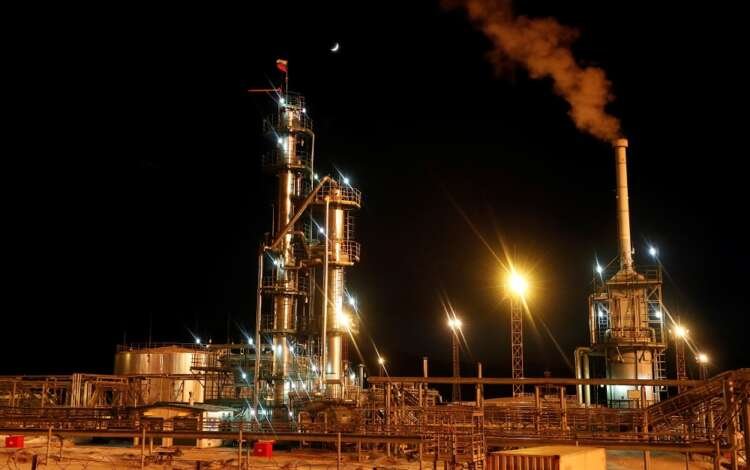
    The image shows a Russian state flag flying above the diesel plant at Yarakta Oil Field in Irkutsk, highlighting the geopolitical tensions affecting Europe's energy supplies during the current crisis.
    Russian state flag on top of a diesel plant at Yarakta Oil Field - Global Banking & Finance Review
    Why waste money on news and opinion when you can access them for free?

    Take advantage of our newsletter subscription and stay informed on the go!

    Subscribe

    By Francesco Canepa

    FRANKFURT (Reuters) – With Russia threatening to cut off the supply of vital gas and oil, European governments are dusting off rationing plans that bring back memories of the 1973 energy crisis.

    Are Europeans heading for car-free Sundays, dimmer lights and what felt like government-mandated bedtime as TV broadcasts ended early – last seen at the time of the Arab embargo?

    Probably not because that, and more recent episodes, show companies are quick to adapt, meaning the hit to the euro area’s economic output may be smaller than 1% on some estimates.

    And governments have also learned that imposing austerity measures like fuel rationing at the pump will yield little if the population doesn’t support them.

    So they are likely to go for something more consensual, such as getting households to turn down their thermostats or ease up on the gas pedal.

    Still, choosing which industries should get their energy supply cut will be a thorny political decision, forcing governments to resort to the kind of ruthlessness normally reserved for wartime.

    DENT TO GROWTH MAY BE SMALL

    While Europe might just about replace its imports of Russian crude with other sources, it’s unlikely to be able to do so with gas any time soon.

    This means a rationing of gas is certain if Russia turns off the taps in retaliation for sweeping economic sanctions.

    But economists estimate the damage to economic growth would be small.

    The European Central Bank puts the hit from a 10% reduction in energy supplies on European companies at about 0.7% of the euro area’s gross value added, a measure of goods and services produced in the bloc.

    This is in line with precedents both in Britain during the 1970s embargo and in Japan after the Fukushima nuclear disaster of 2011.

    Europe’s service-oriented economies are also likely to come off more lightly than manufacturing-heavy China when it went through its own power crunch last year.

    “Past episodes of energy rationing have not been as damaging as one might expect and firms have proved adept at achieving sizeable efficiency gains when required,” Capital Economics wrote.

    For example, pork exporter Danish Crown has started to retrofit some gas-fired production plants with diesel and sales of diesel generators in Denmark rose 300-400% in March.

    Even for Germany, the western European country most reliant on Russian energy, the impact of an 8% cut to oil, gas and coal consumption would lower GDP by 1.4%, according to a paper by the ECONtribute network of economists.

    Of course, there are more pessimistic scenarios. Nomisma Energia estimates the Italian economy, which also depends on Russia for its energy, would suffer a 5.6% hit if gas supplies from Russia fell by roughly half, assuming some gains in efficiency but no switch to alternative sources.

    RATIONING DOESN’T WORK WITHOUT PUBLIC SUPPORT

    Today’s rationing strategies are mostly intended to spare households and concentrate any pain on companies, starting with those that can switch to other energy sources.

    This is a key lesson learned from the 1970s. The two European countries that imposed fuel rationing for the population – Sweden and the Netherlands – had to quickly change course due to public backlash.

    Instead, most governments at the time let the price of fuel rise, automatically depressing demand.

    And they focussed on measures the population saw as more equitable, such as lower speed limits and more frequent public transport.

    “Can rationing work? It’s a function of the public’s willingness to support it,” said Alan Pisarski, who helped shape the U.S. strategy to deal with the 1973 oil embargo.

    He said Europe should focus on convincing people to turn down their heating – a campaign already underway in some countries.

    WAR ECONOMY

    Even drawing a list of which industries should get fuel for longest, as the German government is doing, can be politically difficult, history shows.

    When the oil embargo hit the United States, the senators of the mountainous states of Colorado and New Hampshire fought back at the notion of turning off lifts at ski resorts and sought to deflect the attention to energy used in hot houses for floriculture, Pisarski recalls.

    In Germany, chemical group BASF has already warned of a “complete cessation of operations” if natural gas supply is cut to less than half of current needs.

    In the end, industries that need heat as part of their production process, such as makers of chemicals, metals, glass and paper, are likely to get priority.

    Those on interruptible contracts are likely to be the first to face supply stops and may even have to cut their working week, as happened in China during last year’s rationing.

    “The rationing required by an immediate embargo would basically be comparable with the allocation mechanism of a war economy,” said Kirsten Westphal, a member of the German Institute for International and Security Affairs that advises the government, in an interview with the Clean Energy Wire https://www.cleanenergywire.org/news/russian-energy-embargo-would-force-drastic-rationing-decisions-security-expert.

    (Additional reporting Gavin Jones in Rome, Ludwig Buerger in Frankfurt and Stine Jacobsen in Copenhagen; Editing by Mark Potter)

    More from Top Stories

    Explore more articles in the Top Stories category

    Image for Lessons From the Ring and the Deal Table: How Boxing Shapes Steven Nigro’s Approach to Banking and Life
    Lessons From the Ring and the Deal Table: How Boxing Shapes Steven Nigro’s Approach to Banking and Life
    Image for Joe Kiani in 2025: Capital, Conviction, and a Focused Return to Innovation
    Joe Kiani in 2025: Capital, Conviction, and a Focused Return to Innovation
    Image for Marco Robinson – CLOSE THE DEAL AND SUDDENLY GROW RICH
    Marco Robinson – CLOSE THE DEAL AND SUDDENLY GROW RICH
    Image for Digital Tracing: Turning a regulatory obligation into a commercial advantage
    Digital Tracing: Turning a regulatory obligation into a commercial advantage
    Image for Exploring the Role of Blockchain and the Bitcoin Price Today in Education
    Exploring the Role of Blockchain and the Bitcoin Price Today in Education
    Image for Inside the World’s First Collection Industry Conglomerate: PCA Global’s Platform Strategy
    Inside the World’s First Collection Industry Conglomerate: PCA Global’s Platform Strategy
    Image for Chase Buchanan Private Wealth Management Highlights Key Autumn 2025 Budget Takeaways for Expats
    Chase Buchanan Private Wealth Management Highlights Key Autumn 2025 Budget Takeaways for Expats
    Image for PayLaju Strengthens Its Position as Malaysia’s Trusted Interest-Free Sharia-Compliant Loan Provider
    PayLaju Strengthens Its Position as Malaysia’s Trusted Interest-Free Sharia-Compliant Loan Provider
    Image for A Notable Update for Employee Health Benefits:
    A Notable Update for Employee Health Benefits:
    Image for Creating Equity Between Walls: How Mohak Chauhan is Using Engineering, Finance, and Community Vision to Reengineer Affordable Housing
    Creating Equity Between Walls: How Mohak Chauhan is Using Engineering, Finance, and Community Vision to Reengineer Affordable Housing
    Image for Upcoming Book on Real Estate Investing: Harvard Grace Capital Founder Stewart Heath’s Puts Lessons in Print
    Upcoming Book on Real Estate Investing: Harvard Grace Capital Founder Stewart Heath’s Puts Lessons in Print
    Image for ELECTIVA MARKS A LANDMARK FIRST YEAR WITH MAJOR SENIOR APPOINTMENTS AND EXPANSION MILESTONES
    ELECTIVA MARKS A LANDMARK FIRST YEAR WITH MAJOR SENIOR APPOINTMENTS AND EXPANSION MILESTONES
    View All Top Stories Posts
    Previous Top Stories PostChinese trade with Russia feels the sting of Ukraine war
    Next Top Stories PostUniCredit completes sale of Turkey’s Yapi Kredi