
Top Stories
Euro Set for Biggest 3-day Drop in 2 Years as Oil Prices Soar
Published by Wanda Rich
Posted on March 7, 2022
3 min readLast updated: February 8, 2026
Add as preferred source on Google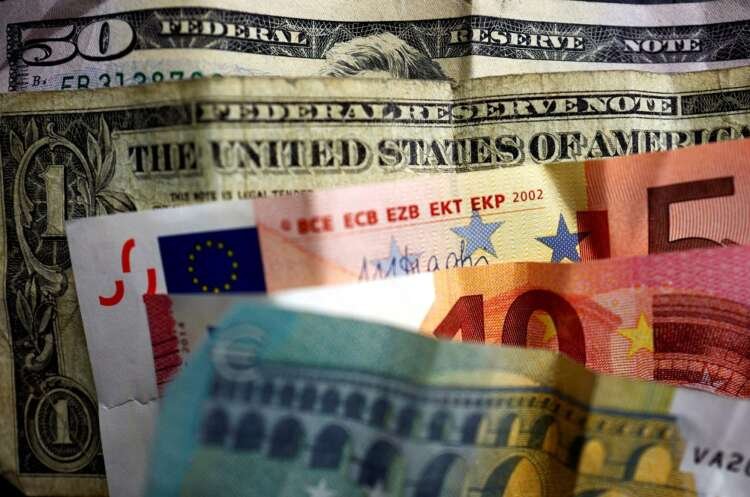
Published by Wanda Rich
Posted on March 7, 2022
3 min readLast updated: February 8, 2026
Add as preferred source on GoogleBy Saikat Chatterjee
LONDON (Reuters) – The euro tanked more than 1% versus the dollar on Monday and was on track for its biggest three-day loss in two years as soaring oil prices stoked fears of a stagflationary shock that could hammer European recovery hopes.
The single currency’s drop was broad-based, with the currency flirting with parity versus the Swiss franc after having briefly dropped below it in early Asian trading. It fell more than 0.5% versus the yen and the Australian dollar.
The conflict in Ukraine and harsh international sanctions on Moscow have sent Russian assets tumbling, while prices of the country’s exports such as precious metals, oil and gas have soared at a time when the global economy was already grappling with inflationary pressures.
Europe is the most vulnerable as it imports as much as 40% of its natural gas from Russia and the single currency has become increasingly correlated with oil prices – the higher oil climbs, the more the euro falls as investors fret about higher inflation and the blow to the economy.
“The euro continues to absorb the most pressure of major currencies on the fallout from the war in Ukraine,” said John Hardy, head of FX strategy at Saxo Bank.
In volatile London trading, the euro fell more than 1% to $1.0806, a May 2020 low. On a cumulative basis, the single currency has weakened nearly 3% versus the greenback in the last three trading sessions, its biggest drop since the pandemic slammed into markets in March 2020.
It is down almost 4% since Russia began what it calls a “special military operation” in Ukraine and is not far from testing its 2020 trough of $1.0636.
‘MELT-UP’
Oil prices soared again on Monday as the risk of a U.S. and European ban on Russian product and delays in Iranian talks sent prices soaring to the highest levels since 2008. [MKTS/GLOB]
“The melt-up in commodity prices ramps up the risk of a stagflationary shock for the euro zone and complicates the policy outlook for the ECB,” said an FX strategist at a European Bank in London.
According to Goldman Sachs, a sustained $20 oil rise shock would lower real economic growth in the euro area by 0.6% and by 0.3% in the United States. But in a more adverse scenario if Russian gas shipments via Ukraine were curtailed, then euro area GDP could fall by as much as 1% from gas alone.
The euro also fell to a 15-month low of 124.39 yen and touched its lowest since mid-2016 against the pound at 82.01 pence. Against the Aussie, the euro has lost more than 10% over about a month.
Derivative markets pointed to more pain for the single currency. Three-month euro risk reversals plunged to its lowest levels since December 2011, indicating a rush to buy euro puts.
Against a basket of its rivals, the dollar gained 0.5% to 99.40, its highest levels since May 2020.
(Reporting by Saikat Chatterjee; Editing by Kirsten Donovan and Alex Richardson)
Stagflation is an economic condition characterized by stagnant economic growth, high unemployment, and high inflation. It poses a challenge for policymakers as measures to combat inflation can worsen unemployment.
The euro is the official currency of the Eurozone, used by 19 of the 27 European Union member states. It is the second most traded currency in the world after the US dollar.
Sanctions are restrictive measures imposed by countries or international organizations to influence a nation's behavior, often in response to violations of international law or human rights.
Foreign exchange, or forex, is the global marketplace for trading national currencies against one another. It is the largest financial market in the world, with a daily trading volume exceeding $6 trillion.
Inflation is the rate at which the general level of prices for goods and services rises, eroding purchasing power. It is typically measured by the Consumer Price Index (CPI).
Explore more articles in the Top Stories category











