Search
00
GBAF Logo
trophy
Top StoriesInterviewsBusinessFinanceBankingTechnologyInvestingTradingVideosAwardsMagazinesHeadlinesTrends

Subscribe to our newsletter

Get the latest news and updates from our team.

Global Banking & Finance Review®

Global Banking & Finance Review® - Subscribe to our newsletter

Company

    GBAF Logo
    • About Us
    • Profile
    • Privacy & Cookie Policy
    • Terms of Use
    • Contact Us
    • Advertising
    • Submit Post
    • Latest News
    • Research Reports
    • Press Release
    • Awards▾
      • About the Awards
      • Awards TimeTable
      • Submit Nominations
      • Testimonials
      • Media Room
      • Award Winners
      • FAQ
    • Magazines▾
      • Global Banking & Finance Review Magazine Issue 79
      • Global Banking & Finance Review Magazine Issue 78
      • Global Banking & Finance Review Magazine Issue 77
      • Global Banking & Finance Review Magazine Issue 76
      • Global Banking & Finance Review Magazine Issue 75
      • Global Banking & Finance Review Magazine Issue 73
      • Global Banking & Finance Review Magazine Issue 71
      • Global Banking & Finance Review Magazine Issue 70
      • Global Banking & Finance Review Magazine Issue 69
      • Global Banking & Finance Review Magazine Issue 66
    Top StoriesInterviewsBusinessFinanceBankingTechnologyInvestingTradingVideosAwardsMagazinesHeadlinesTrends

    Global Banking & Finance Review® is a leading financial portal and online magazine offering News, Analysis, Opinion, Reviews, Interviews & Videos from the world of Banking, Finance, Business, Trading, Technology, Investing, Brokerage, Foreign Exchange, Tax & Legal, Islamic Finance, Asset & Wealth Management.
    Copyright © 2010-2026 GBAF Publications Ltd - All Rights Reserved. | Sitemap | Tags | Developed By eCorpIT

    Editorial & Advertiser disclosure

    Global Banking & Finance Review® is an online platform offering news, analysis, and opinion on the latest trends, developments, and innovations in the banking and finance industry worldwide. The platform covers a diverse range of topics, including banking, insurance, investment, wealth management, fintech, and regulatory issues. The website publishes news, press releases, opinion and advertorials on various financial organizations, products and services which are commissioned from various Companies, Organizations, PR agencies, Bloggers etc. These commissioned articles are commercial in nature. This is not to be considered as financial advice and should be considered only for information purposes. It does not reflect the views or opinion of our website and is not to be considered an endorsement or a recommendation. We cannot guarantee the accuracy or applicability of any information provided with respect to your individual or personal circumstances. Please seek Professional advice from a qualified professional before making any financial decisions. We link to various third-party websites, affiliate sales networks, and to our advertising partners websites. When you view or click on certain links available on our articles, our partners may compensate us for displaying the content to you or make a purchase or fill a form. This will not incur any additional charges to you. To make things simpler for you to identity or distinguish advertised or sponsored articles or links, you may consider all articles or links hosted on our site as a commercial article placement. We will not be responsible for any loss you may suffer as a result of any omission or inaccuracy on the website.

    Home > Top Stories > EU carbon border tax will do little to cut emissions, ADB study says
    Top Stories

    EU carbon border tax will do little to cut emissions, ADB study says

    Published by Uma Rajagopal

    Posted on February 26, 2024

    3 min read

    Last updated: January 30, 2026

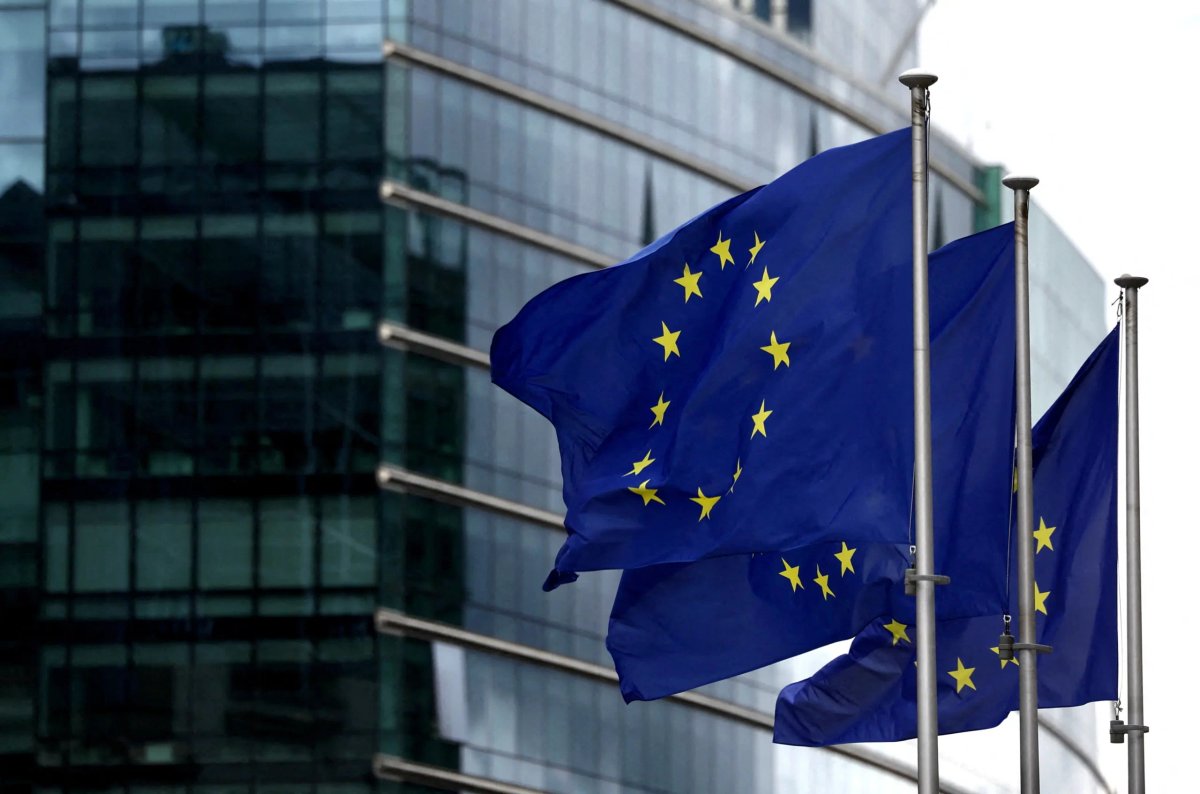
    This image illustrates the implications of the EU carbon border tax as discussed in the ADB study, highlighting its limited effectiveness in reducing emissions and potential effects on developing nations.
    EU carbon border tax impact on emissions and developing countries - Global Banking & Finance Review
    Why waste money on news and opinion when you can access them for free?

    Take advantage of our newsletter subscription and stay informed on the go!

    Subscribe

    Tags:sustainabilityClimate ChangeDeveloping countries

    EU carbon border tax will do little to cut emissions, ADB study says

    By David Stanway

    SINGAPORE (Reuters) -A European Union plan to impose tariffs on high-carbon imports could hurt developing countries in Asia but is unlikely to lead to big reductions in greenhouse gas emissions, the Asian Development Bank (ADB) said in a report published on Monday.

    The Carbon Border Adjustment Mechanism (CBAM) was introduced to address concerns that the outsourcing of manufacturing had put large parts of the EU’s supply chain beyond the reach of its emissions trading scheme (ETS), a situation described as “carbon leakage”.

    It was designed to level the playing field and make foreign suppliers pay the same carbon price as domestic ones, even if they are not subject to an ETS or carbon tax at home.

    ADB said CBAM was expected to cut Asian exports to the EU, particularly from western and southwestern Asia, with steel from India also likely to take a hit.

    But any small reduction in emissions would quickly be offset by the continuing increase in carbon-intensive production throughout Asia, and mechanisms to share emission reduction technology would be more effective, it said.

    “It’s actually a relatively limited policy at the moment,” said Neil Foster-McGregor, ADB’s senior economist. “It only imports into the EU (and) only covers six sectors.

    “The way the scale of production is increasing, even if we do this carbon pricing more broadly across the globe, you’re still going to see rising emissions unless we see a fundamental change in production techniques,” he added.

    CBAM could raise around 14 billion euros ($15.2 billion) in revenue by 2030, and the proceeds should be used to provide climate finance for developing countries to decarbonise manufacturing, Foster-McGregor said.

    One of the aims of CBAM was to incentivise non-EU economies to impose stricter climate policies of their own: if exporting nations can demonstrate that a carbon price has already been paid, the CBAM levy will be reduced.

    India has already discussed the possibility of imposing export taxes on CBAM-covered products sold to Europe, and China is expanding its ETS to cover exporting sectors like steel.

    Both countries have been critical of CBAM, with China warning Europe not to use climate as an excuse to engage in trade protectionism.

    While CBAM serves as a tariff on foreign producers, it will also raise the cost of raw materials such as steel and fertiliser for downstream EU manufacturers, and could even give them an incentive to relocate more production capacity overseas, including Asia, the ADB report warned.

    “While there is a partial offsetting of the carbon leakage in the upstream, there could be new carbon leakage downstream in the EU … They are shooting themselves in the foot,” said Jong Woo Kang, another senior ADB economist, speaking at a briefing on Monday.

    ($1 = 0.9244 euros)

    (Reporting by David Stanway; Editing by Stephen Coates and Jacqueline Wong)

    Frequently Asked Questions about EU carbon border tax will do little to cut emissions, ADB study says

    1What is the Carbon Border Adjustment Mechanism (CBAM)?

    The CBAM is a European Union policy designed to impose tariffs on high-carbon imports to prevent carbon leakage and ensure foreign suppliers pay similar carbon prices as domestic ones.

    2What is carbon leakage?

    Carbon leakage refers to the situation where companies move production to countries with less stringent emissions regulations, potentially undermining climate policies in their home countries.

    3What are greenhouse gas emissions?

    Greenhouse gas emissions are gases that trap heat in the atmosphere, contributing to global warming and climate change. Major sources include fossil fuel combustion, industrial processes, and deforestation.

    4What is climate finance?

    Climate finance refers to financial resources allocated to support mitigation and adaptation efforts to combat climate change, particularly in developing countries.

    5What is the significance of emissions trading schemes (ETS)?

    Emissions trading schemes (ETS) are market-based approaches to controlling pollution by providing economic incentives for reducing emissions. They allow companies to buy and sell emission allowances.

    More from Top Stories

    Explore more articles in the Top Stories category

    Image for Lessons From the Ring and the Deal Table: How Boxing Shapes Steven Nigro’s Approach to Banking and Life
    Lessons From the Ring and the Deal Table: How Boxing Shapes Steven Nigro’s Approach to Banking and Life
    Image for Joe Kiani in 2025: Capital, Conviction, and a Focused Return to Innovation
    Joe Kiani in 2025: Capital, Conviction, and a Focused Return to Innovation
    Image for Marco Robinson – CLOSE THE DEAL AND SUDDENLY GROW RICH
    Marco Robinson – CLOSE THE DEAL AND SUDDENLY GROW RICH
    Image for Digital Tracing: Turning a regulatory obligation into a commercial advantage
    Digital Tracing: Turning a regulatory obligation into a commercial advantage
    Image for Exploring the Role of Blockchain and the Bitcoin Price Today in Education
    Exploring the Role of Blockchain and the Bitcoin Price Today in Education
    Image for Inside the World’s First Collection Industry Conglomerate: PCA Global’s Platform Strategy
    Inside the World’s First Collection Industry Conglomerate: PCA Global’s Platform Strategy
    Image for Chase Buchanan Private Wealth Management Highlights Key Autumn 2025 Budget Takeaways for Expats
    Chase Buchanan Private Wealth Management Highlights Key Autumn 2025 Budget Takeaways for Expats
    Image for PayLaju Strengthens Its Position as Malaysia’s Trusted Interest-Free Sharia-Compliant Loan Provider
    PayLaju Strengthens Its Position as Malaysia’s Trusted Interest-Free Sharia-Compliant Loan Provider
    Image for A Notable Update for Employee Health Benefits:
    A Notable Update for Employee Health Benefits:
    Image for Creating Equity Between Walls: How Mohak Chauhan is Using Engineering, Finance, and Community Vision to Reengineer Affordable Housing
    Creating Equity Between Walls: How Mohak Chauhan is Using Engineering, Finance, and Community Vision to Reengineer Affordable Housing
    Image for Upcoming Book on Real Estate Investing: Harvard Grace Capital Founder Stewart Heath’s Puts Lessons in Print
    Upcoming Book on Real Estate Investing: Harvard Grace Capital Founder Stewart Heath’s Puts Lessons in Print
    Image for ELECTIVA MARKS A LANDMARK FIRST YEAR WITH MAJOR SENIOR APPOINTMENTS AND EXPANSION MILESTONES
    ELECTIVA MARKS A LANDMARK FIRST YEAR WITH MAJOR SENIOR APPOINTMENTS AND EXPANSION MILESTONES
    View All Top Stories Posts
    Previous Top Stories PostRenault unveils new R5 as it taps past success for electric future
    Next Top Stories PostFacing Chinese EV rivals, Europe’s automakers squeeze suppliers on costs