
Top Stories
ECB’s Villeroy: Overly Weak Euro Could Threaten Inflation Goal
Published by Wanda Rich
Posted on May 16, 2022
2 min readLast updated: February 7, 2026
Add as preferred source on Google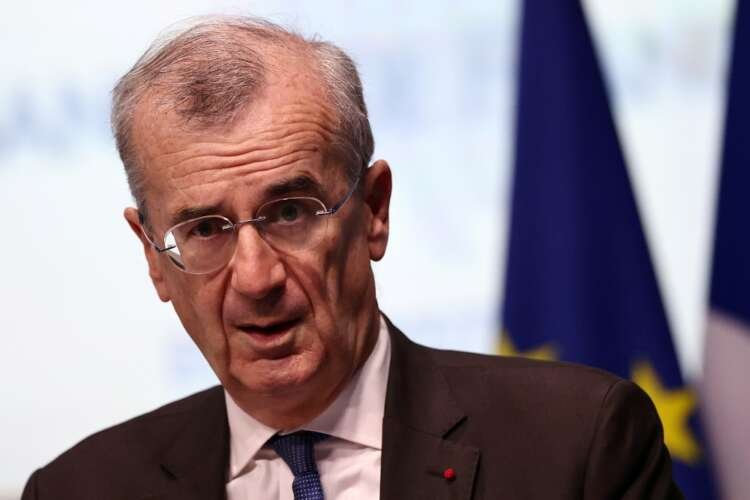
Published by Wanda Rich
Posted on May 16, 2022
2 min readLast updated: February 7, 2026
Add as preferred source on GooglePARIS (Reuters) -The euro’s weakness on currency markets could threaten the European Central Bank’s efforts to steer inflation towards its target, ECB policymaker Francois Villeroy de Galhau said on Monday.
PARIS (Reuters) -The euro’s weakness on currency markets could threaten the European Central Bank’s efforts to steer inflation towards its target, ECB policymaker Francois Villeroy de Galhau said on Monday.
The euro on Thursday hit its lowest against the dollar since 2017. It traded slightly above that early on Monday.
The euro’s weakness makes imported dollar-denominated goods and commodities – such as oil – more expensive, fuelling price pressures that have driven euro zone inflation to record levels.
“Let me stress this: we will carefully monitor developments in the effective exchange rate, as a significant driver of imported inflation,” Villeroy told a conference at the Bank of France, which he also heads.
“A euro that is too weak would go against our price stability objective.”
The U.S. Federal Reserve has tightened monetary policy more aggressively than its euro zone counterpart, though the ECB has signalled it is likely to join other major central banks in raising borrowing in July.
Villeroy said that a decisive ECB governing council meeting could be expected in June followed by an “active summer” on the monetary policy front.
“The pace of the further steps will take into account actual activity and inflation data with some optionality and gradualism,” he said.
Policymakers should “at least move towards the neutral rate”, he added, at which the central bank’s monetary stance is neither stimulating the economy nor holding it back.
Investor concerns about inflation and interest rate increases have triggered a broad selloff in risky assets with cryptocurrencies in particular seeing sharp losses.
Villeroy said that the slump in cryptocurrencies should serve as a wake-up call to global regulators, which have made little progress in controlling such assets despite their strong growth.
“Crypto assets could disrupt the international financial system if they are not regulated, overseen and inter-operable in a consistent and appropriate manner across jurisdictions,” he said.
(Reporting by Leigh Thomas; Editing by Toby Chopra, John Stonestreet and Barbara Lewi
Inflation is the rate at which the general level of prices for goods and services rises, eroding purchasing power. Central banks attempt to limit inflation to maintain economic stability.
Monetary policy refers to the actions taken by a central bank to control the money supply and interest rates to achieve macroeconomic objectives such as controlling inflation and stabilizing currency.
The European Central Bank (ECB) is the central bank for the euro and is responsible for monetary policy within the Eurozone, aiming to maintain price stability and oversee the banking system.
Foreign exchange, or forex, is the global marketplace for trading national currencies against one another. It is essential for international trade and investment.
A central bank is a financial institution that manages a country's currency, money supply, and interest rates. It oversees monetary policy and aims to maintain economic stability.
Explore more articles in the Top Stories category











