
Top Stories
ECB’s Schnabel Can’t Rule Out More Hikes Amid Inflation Risks
Published by Uma Rajagopal
Posted on October 6, 2023
2 min readLast updated: January 31, 2026
Add as preferred source on Google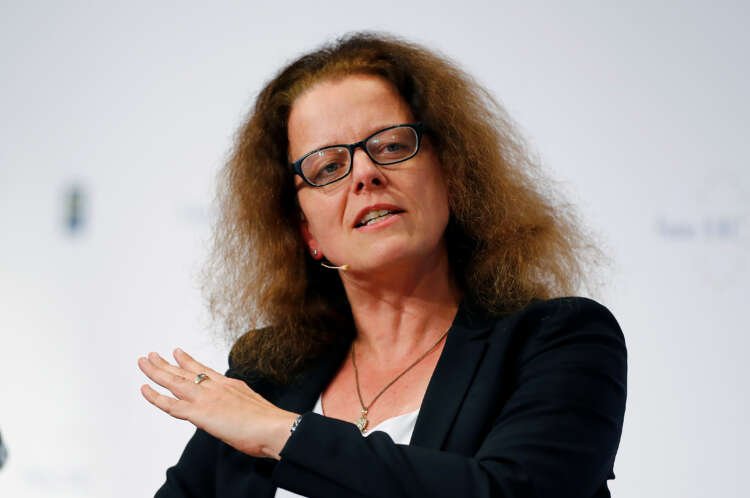
Published by Uma Rajagopal
Posted on October 6, 2023
2 min readLast updated: January 31, 2026
Add as preferred source on GoogleFRANKFURT (Reuters) -The European Central Bank may need to raise interest rates again if wages, profits or new supply snags boost inflation, ECB board member Isabel Schnabel said in an interview published on Friday.
FRANKFURT (Reuters) -The European Central Bank may need to raise interest rates again if wages, profits or new supply snags boost inflation, ECB board member Isabel Schnabel said in an interview published on Friday.
The ECB raised borrowing costs to record highs last month to rein in prices in the euro area, which are still growing at more than twice its 2% target after the bloc was hit by higher energy prices and supply snags last year.
Schnabel said a recent moderation in inflation, which fell to its lowest level in two years at 4.3% in September, was “encouraging” but risks abounded, from stronger-than-expected wages or profits to new disruption to supply.
“I still see upside risks to inflation,” Schnabel told Croatian newspaper Jutarnji list. “If they materialise, further interest rate hikes could be necessary at some point.”
The ECB pushed the rate it pays on banks’ deposits to the highest in its 25-year history at 4.0% last month in a bid to cool lending and, with it, consumption and investment.
While this was working as expected, or even more strongly, it also left the 20 central banks of euro zone countries on the hook for billions of euros in interest payments to their domestic banks.
Some policymakers have therefore been pushing to raise the proportion of unremunerated reserve requirements that banks must hold as part of their next stage of their fight against inflation.
But Schnabel played down the chances of such a move in the near term.
“We are currently discussing the design of our future operational framework for monetary policy implementation,” she said. “As long as we do not know the role that minimum reserve requirements will play in this new framework, we should be cautious about making any far-reaching decisions.”
(Reporting By Aleksandar Vasovic in BelgradeWriting by Francesco Canepa in FrankfurtEditing by Christina Fincher and Toby Chopra)
Monetary policy refers to the actions taken by a central bank to manage the money supply and interest rates to achieve macroeconomic objectives like controlling inflation and stabilizing currency.
Inflation is the rate at which the general level of prices for goods and services rises, eroding purchasing power. It is typically measured by the Consumer Price Index (CPI).
Interest rates are the cost of borrowing money or the return on savings, expressed as a percentage. They are influenced by monetary policy and economic conditions.
The European Central Bank (ECB) is the central bank for the euro, responsible for monetary policy in the Eurozone, aiming to maintain price stability and oversee the banking system.
Upside risks to inflation refer to factors that could lead to higher inflation rates than expected, such as rising wages, increased consumer demand, or supply chain disruptions.
Explore more articles in the Top Stories category











