
Top Stories
ECB’s Knot Says Inflation Warnings Not yet Priced In
Published by Jessica Weisman-Pitts
Posted on October 10, 2022
2 min readLast updated: February 3, 2026
Add as preferred source on Google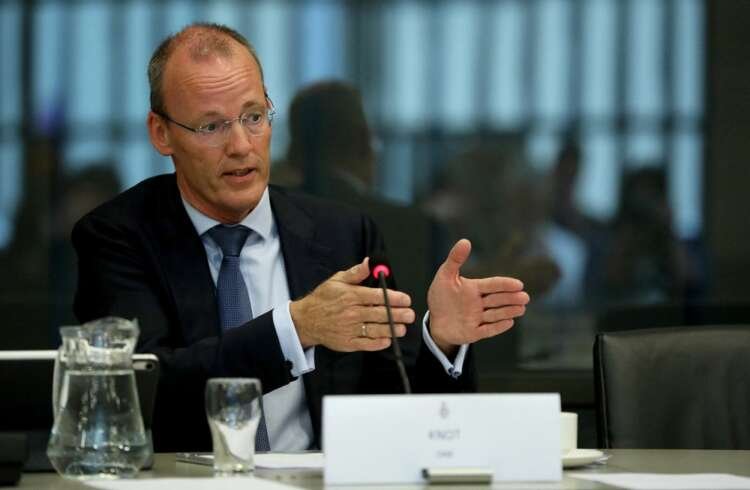
Published by Jessica Weisman-Pitts
Posted on October 10, 2022
2 min readLast updated: February 3, 2026
Add as preferred source on GoogleAMSTERDAM (Reuters) -European Central Bank (ECB) governing council member Klaas Knot said on Monday that markets seem to be underestimating the risk that inflation will be higher than models are predicting.
Knot said there is a significant chance inflation in 2024 will be higher than the 2.3% the ECB has guided for, but that markets did not seem to have priced in this risk yet.
“The ECB has repeatedly said risks for the inflation outlook are tilted to the upside,” Knot told reporters. “But I don’t know how much attention is given to that warning.”
Knot said government support for households to help with rising energy prices can fuel inflation in the years to come.
“If support such as given in Germany and the Netherlands becomes the standard, inflation and interest rates will rise further,” the president of the Dutch central bank said.
Germany was criticized last week by other EU countries for announcing a package of around 200 billion euros ($194 billion) to shield consumers from rising energy costs in 2023 and 2024.
A Dutch plan to spend around 23 billion euros on an energy price cap next year amounts to roughly the same per capita.
Knot said it was clear the ECB would announce a significant rate hike again at its meeting at the end of the month.
“All recent data make it clear that this is not the time for us to slow down. But it is too early say how big that step needs to be.”
($1 = 1.0305 euros)
(Reporting by Bart Meijer; Editing by Mark Heinrich and Alexander Smith)
Inflation is the rate at which the general level of prices for goods and services rises, eroding purchasing power. It is typically measured as an annual percentage increase.
The European Central Bank (ECB) is the central bank for the eurozone, responsible for monetary policy and maintaining price stability within the euro area.
Interest rates are the cost of borrowing money or the return on savings, typically expressed as a percentage of the principal amount over a specific period.
Monetary policy refers to the actions taken by a central bank to manage the money supply and interest rates to achieve macroeconomic objectives such as controlling inflation and stabilizing the currency.
A significant rate hike refers to a substantial increase in interest rates set by a central bank, aimed at controlling inflation or stabilizing the economy.
Explore more articles in the Top Stories category











