
Top Stories
ECB Must Avoid Unnecessary Rise in Real Interest Rates – Visco
Published by Uma Rajagopal
Posted on February 12, 2023
2 min readLast updated: February 2, 2026
Add as preferred source on Google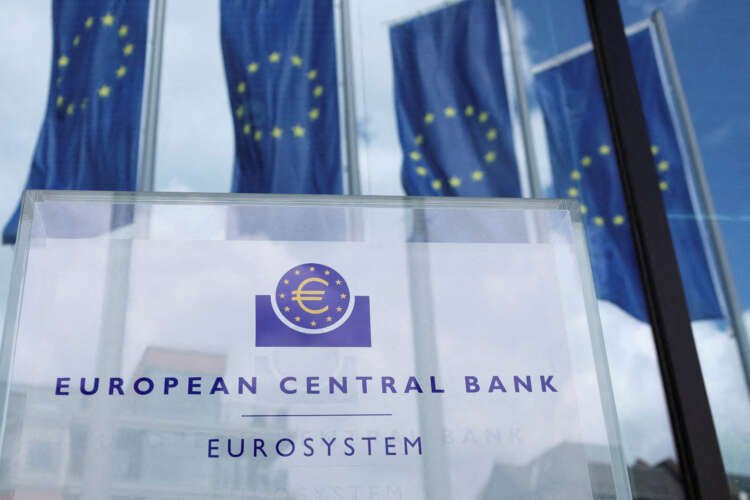
Published by Uma Rajagopal
Posted on February 12, 2023
2 min readLast updated: February 2, 2026
Add as preferred source on GoogleROME (Reuters) -The European Central Bank (ECB) must avoid pushing real interest rates too high, given the level of private and public debt in the euro area, a top Italian policymaker said on Saturday.
ECB Governing Council member Ignazio Visco, who is also the Bank of Italy’s governor, added he did not believe a recession was inevitable in order to reduce inflation.
The ECB has raised interest rates by 3 percentage points since July and promised a 50 basis-point hike for March.
“Today, disinflation is obviously needed, but given the levels of private and public debts that prevail in the euro area, we must be careful to avoid engineering an unnecessary and excessive rise in real interest rates,” Visco told the Warwick Economics Summit.
“Indeed, I am convinced that the credibility of our actions is preserved not by flexing our muscles in the face of inflation, but by continually showing wisdom and balance.”
The ECB has kept its options open about subsequent steps after March, raising doubts among investors about the extent of further increases.
Investors and economists have focused on a peak in the deposit rate of between 3.25% and 3.5%, which suggests just one or two moves after the March hike and an end by mid-year.
Asked how far interest rates could rise, Visco replied: “We don’t know”.
Politicians in Italy have expressed concerns about the impact of rising interest rates given the country’s huge debts.
Visco said ECB rates must continue to rise “in a progressive but measured way, on the basis of the incoming data and their use in the assessment of the inflation outlook”.
Inflation has dropped by around 2 percentage points since its peak in October, and further falls are likely as natural gas prices retreat.
But underlying price growth appears to be stubbornly high leading to fears that inflation could get stuck at levels above the ECB’s 2% target, partly due to rapid nominal wages growth.
“I see no compelling reasons for inflation not to return to target, notwithstanding the still abundant (and excessive) liquidity present in the economic system,” Visco said.
Looking at the persistence of inflation in many countries during the 1970s, Visco said big improvements in monetary policymaking and changes in European economies made that “very unlikely” to be repeated.
(Reporting by Giselda VagnoniEditing by Mark Potter)
Monetary policy refers to the actions taken by a central bank to manage the money supply and interest rates to achieve macroeconomic objectives such as controlling inflation and maintaining employment.
Interest rates are the cost of borrowing money or the return on savings, expressed as a percentage of the principal amount. They are influenced by central bank policies and economic conditions.
Inflation is the rate at which the general level of prices for goods and services rises, eroding purchasing power. It is often measured by the Consumer Price Index (CPI).
The European Central Bank (ECB) is the central bank for the euro and administers monetary policy within the Eurozone, aiming to maintain price stability and oversee the banking system.
Debt sustainability refers to a country's ability to manage its debt without requiring debt relief or accumulating further debt. It involves ensuring that debt levels remain manageable relative to economic growth.
Explore more articles in the Top Stories category











