Search
00
GBAF Logo
trophy
Top StoriesInterviewsBusinessFinanceBankingTechnologyInvestingTradingVideosAwardsMagazinesHeadlinesTrends

Subscribe to our newsletter

Get the latest news and updates from our team.

Global Banking & Finance Review®

Global Banking & Finance Review® - Subscribe to our newsletter

Company

    GBAF Logo
    • About Us
    • Profile
    • Privacy & Cookie Policy
    • Terms of Use
    • Contact Us
    • Advertising
    • Submit Post
    • Latest News
    • Research Reports
    • Press Release
    • Awards▾
      • About the Awards
      • Awards TimeTable
      • Submit Nominations
      • Testimonials
      • Media Room
      • Award Winners
      • FAQ
    • Magazines▾
      • Global Banking & Finance Review Magazine Issue 79
      • Global Banking & Finance Review Magazine Issue 78
      • Global Banking & Finance Review Magazine Issue 77
      • Global Banking & Finance Review Magazine Issue 76
      • Global Banking & Finance Review Magazine Issue 75
      • Global Banking & Finance Review Magazine Issue 73
      • Global Banking & Finance Review Magazine Issue 71
      • Global Banking & Finance Review Magazine Issue 70
      • Global Banking & Finance Review Magazine Issue 69
      • Global Banking & Finance Review Magazine Issue 66
    Top StoriesInterviewsBusinessFinanceBankingTechnologyInvestingTradingVideosAwardsMagazinesHeadlinesTrends

    Global Banking & Finance Review® is a leading financial portal and online magazine offering News, Analysis, Opinion, Reviews, Interviews & Videos from the world of Banking, Finance, Business, Trading, Technology, Investing, Brokerage, Foreign Exchange, Tax & Legal, Islamic Finance, Asset & Wealth Management.
    Copyright © 2010-2026 GBAF Publications Ltd - All Rights Reserved. | Sitemap | Tags | Developed By eCorpIT

    Editorial & Advertiser disclosure

    Global Banking & Finance Review® is an online platform offering news, analysis, and opinion on the latest trends, developments, and innovations in the banking and finance industry worldwide. The platform covers a diverse range of topics, including banking, insurance, investment, wealth management, fintech, and regulatory issues. The website publishes news, press releases, opinion and advertorials on various financial organizations, products and services which are commissioned from various Companies, Organizations, PR agencies, Bloggers etc. These commissioned articles are commercial in nature. This is not to be considered as financial advice and should be considered only for information purposes. It does not reflect the views or opinion of our website and is not to be considered an endorsement or a recommendation. We cannot guarantee the accuracy or applicability of any information provided with respect to your individual or personal circumstances. Please seek Professional advice from a qualified professional before making any financial decisions. We link to various third-party websites, affiliate sales networks, and to our advertising partners websites. When you view or click on certain links available on our articles, our partners may compensate us for displaying the content to you or make a purchase or fill a form. This will not incur any additional charges to you. To make things simpler for you to identity or distinguish advertised or sponsored articles or links, you may consider all articles or links hosted on our site as a commercial article placement. We will not be responsible for any loss you may suffer as a result of any omission or inaccuracy on the website.

    Home > Top Stories > ECB can cut carbon footprint by shedding bonds of biggest polluters
    Top Stories

    ECB can cut carbon footprint by shedding bonds of biggest polluters

    Published by Jessica Weisman-Pitts

    Posted on January 16, 2023

    4 min read

    Last updated: February 2, 2026

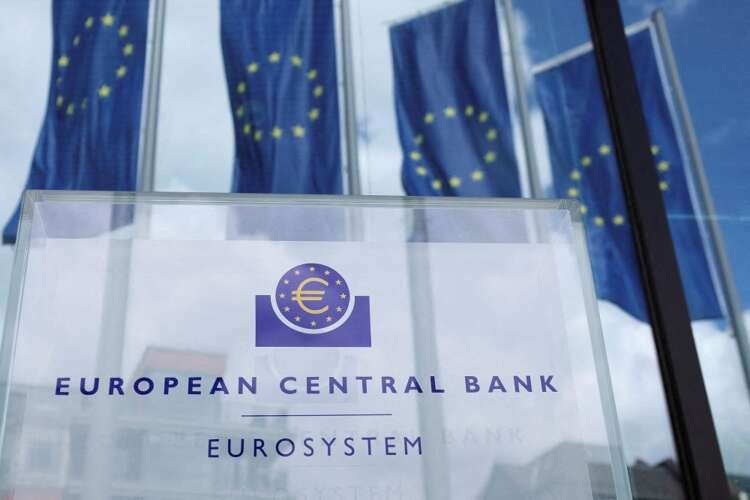
    The image shows European flags in front of the European Central Bank (ECB) building in Frankfurt, highlighting the ECB's potential actions to reduce its carbon footprint by reshuffling its corporate bond portfolio towards greener assets.
    European flags in front of the ECB building, symbolizing climate policy in finance - Global Banking & Finance Review
    Why waste money on news and opinion when you can access them for free?

    Take advantage of our newsletter subscription and stay informed on the go!

    Subscribe

    Tags:sustainabilityClimate Changecorporate bondsfinancial stabilityEuropean Central Bank

    By Virginia Furness and Francesco Canepa

    LONDON (Reuters) -The European Central Bank could radically cut the carbon footprint of its corporate bond portfolio by selling just 50 billion euros ($54.30 billion) of polluting companies’ debt, research shows, but analysts say this would risk big market distortions.

    The ECB’s green ambitions are in the spotlight after board member Isabel Schnabel this week said the bank must step up efforts to become more climate friendly.

    But other central bank policymakers, including from the ECB and U.S. Federal Reserve, have said tackling climate change is for governments not central bankers.

    And analysts fear such action by the ECB could go against central banks’ mission of maintaining market stability.

    Schnabel, head of the ECB’s market operations, said the ECB was meant to tilt its corporate bond holdings towards greener assets via new purchases but new bond buys have been stopped and reinvestment will soon be wound down as part of its inflation fight.

    Schnabel said the ECB needed now to consider a reshuffling of its 345-billion-euro corporate bond portfolio towards greener issuers.

    She faced immediate pushback from ECB policymaker Pierre Wunsch, who said it was for governments to fight climate change. But her comments got market watchers running the numbers.

    Analysis from sustainable finance think tank Anthropocene Fixed Income Institute (AFII) showed the ECB could cut the carbon footprint associated with its corporate bond holdings by 87% if it sold just 48.3 billion euros of debt from the 25 top polluters.

    These included oil and gas companies such as Shell, TotalEnergies, Repsol and BP.

    “This is an extremely high concentration of carbon in a few names,” said AFII founder Ulf Erlandsson, adding the total emissions they account for is substantial in the context of annual global CO2 emissions of around 30-40 giga tonnes.

    Financial institutions worldwide are looking to reduce the climate-damaging greenhouse gases emitted into the atmosphere by the companies they lend to, as part of efforts to cap global warming, yet central banks have been more cautious.

    U.S. Fed chair Jerome Powell has said the bank’s regulatory powers give it a narrow role to ensure financial institutions “appropriately manage” the risks they face from climate change. “We are not, and will not be, a ‘climate policymaker'”, he said.

    But ECB President Christine Lagarde has made greening monetary policy one of her objectives. The Bank of England set out plans to “green” its corporate bond portfolio in 2021 but these were soon overtaken by a decision to unwind all holdings as part of its fight against inflation.

    HURDLES

    While calculating the carbon footprint of the ECB’s portfolio is challenging, AFII estimates it to be around 438 million tonnes of CO2 annually – more than Italy or France emitted in 2017, based on European Union data.

    The ECB does not disclose how much it owns of any individual bond so AFII’s estimate is based on the assumption that it holds an average of 27% of each of the outstanding bond of Corporate Sector Purchase Programme- eligible issuers.

    Some analysts say that any ECB selling of so-called “brown bonds” — those issued by highly polluting companies in sectors like utilities and energy — would distort the market.

    Sylvain Broyer, chief economist for Europe, the Middle East and Africa at S&P Global Ratings, said it would lead to “massive repricing” of corporate debt and go against the ECB’s focus of maintaining market stability.

    Another objection is that selling the bonds would penalise high-emitting companies that are looking to become more environmentally friendly and need financial backing to do so.

    The ECB is already addressing that problem by giving companies climate scores that are based not just on their current performance but also on their goals and climate disclosures.

    The ECB uses those scores to steer its bond purchases towards greener issuers.

    Larissa de Barros Fritz, fixed income strategist at ABN Amro, estimated any move by the ECB to sell brown to buy green bonds could mean spread widening of 7-15 basis points for bonds that the ECB would no longer buy.

    For Trisha Taneja, global head of ESG for the origination and advisory division at Deutsche Bank, excluding the most polluting companies altogether would also make the ECB’s portfolio too unbalanced.

    “[This] is why… the approach should be in a tilt towards credible transition strategy, rather than towards current climate performance,” she said.

    ($1 = 0.9209 euros)

    (Editing by Simon Jessop and Jane Merriman)

    Frequently Asked Questions about ECB can cut carbon footprint by shedding bonds of biggest polluters

    1What is a corporate bond?

    A corporate bond is a debt security issued by a corporation to raise capital, promising to pay back the principal along with interest to bondholders.

    2What is carbon footprint?

    A carbon footprint is the total amount of greenhouse gases emitted directly or indirectly by an individual, organization, event, or product, typically measured in carbon dioxide equivalents.

    3What is the European Central Bank?

    The European Central Bank (ECB) is the central bank for the euro and administers monetary policy within the Eurozone, aiming to maintain price stability.

    4What is market stability?

    Market stability refers to a condition where financial markets operate smoothly without excessive volatility, ensuring confidence among investors and participants.

    5What is green monetary policy?

    Green monetary policy involves integrating environmental sustainability into central banking practices, such as prioritizing investments in eco-friendly projects and reducing carbon emissions.

    More from Top Stories

    Explore more articles in the Top Stories category

    Image for Lessons From the Ring and the Deal Table: How Boxing Shapes Steven Nigro’s Approach to Banking and Life
    Lessons From the Ring and the Deal Table: How Boxing Shapes Steven Nigro’s Approach to Banking and Life
    Image for Joe Kiani in 2025: Capital, Conviction, and a Focused Return to Innovation
    Joe Kiani in 2025: Capital, Conviction, and a Focused Return to Innovation
    Image for Marco Robinson – CLOSE THE DEAL AND SUDDENLY GROW RICH
    Marco Robinson – CLOSE THE DEAL AND SUDDENLY GROW RICH
    Image for Digital Tracing: Turning a regulatory obligation into a commercial advantage
    Digital Tracing: Turning a regulatory obligation into a commercial advantage
    Image for Exploring the Role of Blockchain and the Bitcoin Price Today in Education
    Exploring the Role of Blockchain and the Bitcoin Price Today in Education
    Image for Inside the World’s First Collection Industry Conglomerate: PCA Global’s Platform Strategy
    Inside the World’s First Collection Industry Conglomerate: PCA Global’s Platform Strategy
    Image for Chase Buchanan Private Wealth Management Highlights Key Autumn 2025 Budget Takeaways for Expats
    Chase Buchanan Private Wealth Management Highlights Key Autumn 2025 Budget Takeaways for Expats
    Image for PayLaju Strengthens Its Position as Malaysia’s Trusted Interest-Free Sharia-Compliant Loan Provider
    PayLaju Strengthens Its Position as Malaysia’s Trusted Interest-Free Sharia-Compliant Loan Provider
    Image for A Notable Update for Employee Health Benefits:
    A Notable Update for Employee Health Benefits:
    Image for Creating Equity Between Walls: How Mohak Chauhan is Using Engineering, Finance, and Community Vision to Reengineer Affordable Housing
    Creating Equity Between Walls: How Mohak Chauhan is Using Engineering, Finance, and Community Vision to Reengineer Affordable Housing
    Image for Upcoming Book on Real Estate Investing: Harvard Grace Capital Founder Stewart Heath’s Puts Lessons in Print
    Upcoming Book on Real Estate Investing: Harvard Grace Capital Founder Stewart Heath’s Puts Lessons in Print
    Image for ELECTIVA MARKS A LANDMARK FIRST YEAR WITH MAJOR SENIOR APPOINTMENTS AND EXPANSION MILESTONES
    ELECTIVA MARKS A LANDMARK FIRST YEAR WITH MAJOR SENIOR APPOINTMENTS AND EXPANSION MILESTONES
    View All Top Stories Posts
    Previous Top Stories PostDavos 2023: What you need to know about the WEF on Monday
    Next Top Stories PostBritain’s Sainsbury’s partners with Just Eat for home delivery