
Top Stories
Dollar Eases as Biden Ends Reelection Bid; Yuan Steady After Rate Cut
Published by Uma Rajagopal
Posted on July 22, 2024
2 min readLast updated: January 29, 2026
Add as preferred source on Google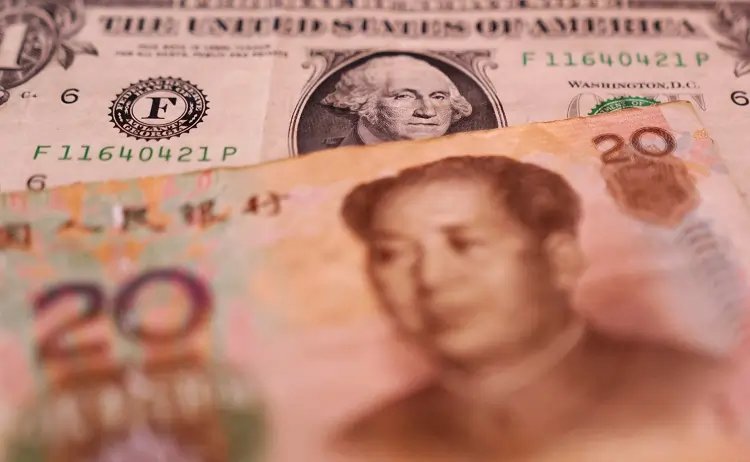
Published by Uma Rajagopal
Posted on July 22, 2024
2 min readLast updated: January 29, 2026
Add as preferred source on GoogleBy Kevin Buckland
TOKYO (Reuters) – The dollar eased on Monday in the initial reaction to U.S. President Joe Biden’s decision to end his reelection campaign, clearing the way for another Democrat to challenge Donald Trump.
China’s yuan was largely unfazed by the central bank’s decision to cut a key interest rate.
The U.S. currency slipped 0.08% to 157.38 yen early in the Asian day, while the euro gained 0.11% to $1.0895.
Biden announced he was exiting the race on Sunday, and endorsed Vice President Kamala Harris to replace him as the Democratic candidate in the November election.
Former President Trump, the Republican nominee, sits well ahead in betting markets following Biden’s disatrous debate performance last month and a surge in questions about his mental competence.
Commonwealth Bank of Australia strategist Joseph Capurso warned it was too early to read too much in the dollar’s reaction.
The bottom line is what the polls show this week,” Capurso said, explaining that a decline in odds for a Trump win should see the dollar weaken, and vice versa.
“Harris might be a stronger candidate, but is it enough to turn the polls?”
The British pound gained 0.15% to $1.2931.
The Australian dollar added 0.08% to $0.6691.
Meanwhile, the dollar was steady at 7.2881 yuan in offshore trading after the People’s Bank of China cut the seven-day reverse repo rate to 1.7% from 1.8%, saying the move would improve open market operations and support the real economy.
(Reporting by Kevin Buckland; Editing by Lincoln Feast.)
Foreign currency refers to any currency that is not the domestic currency of a particular country. It is used in international trade and investment, allowing businesses and individuals to conduct transactions across borders.
Interest rates are the percentage charged on borrowed money or paid on savings. They influence economic activity by affecting consumer spending, borrowing, and investment decisions.
Financial markets are platforms where buyers and sellers engage in the trade of assets such as stocks, bonds, currencies, and derivatives. They play a crucial role in the economy by facilitating capital allocation.
Currency hedging is a risk management strategy used to protect against fluctuations in exchange rates. It involves using financial instruments to offset potential losses in currency value.
Economic growth refers to the increase in the production of goods and services in an economy over time. It is typically measured by the rise in Gross Domestic Product (GDP).
Explore more articles in the Top Stories category











