
Top Stories
Digital Identity and Financial Security: Are We Ready for a Password-Free Future?
Published by Jessica Weisman-Pitts
Posted on March 25, 2025
12 min readLast updated: February 26, 2026
Add as preferred source on Google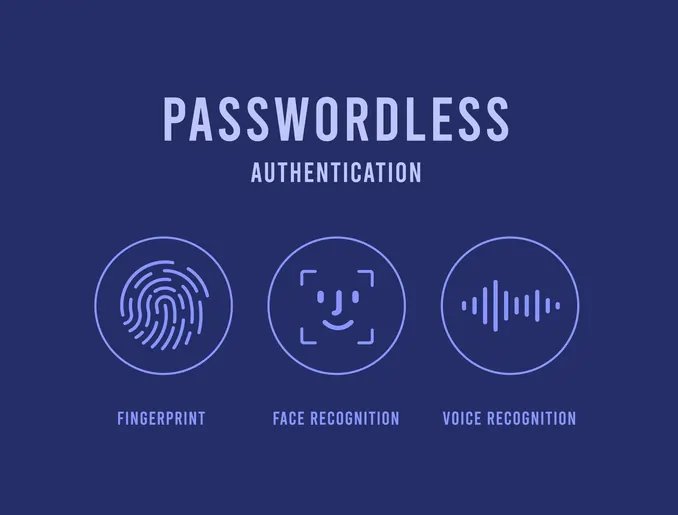
Published by Jessica Weisman-Pitts
Posted on March 25, 2025
12 min readLast updated: February 26, 2026
Add as preferred source on GoogleThe password has been our digital gatekeeper for decades. But like a rusty old lock that's starting to fail, it's showing its age. The financial sector now stands at a crossroads, facing a future where passwords could become as obsolete as paper bankbooks.
The password has been our digital gatekeeper for decades. But like a rusty old lock that's starting to fail, it's showing its age. The financial sector now stands at a crossroads, facing a future where passwords could become as obsolete as paper bankbooks.
According to Fortune Business Insights, the global passwordless authentication market is projected to grow from $21.58 billion to $60.34 billion by 2032, reflecting a compound annual growth rate of 15.8%. But numbers only tell part of the story. The real question is: Are we ready to trust our financial lives to a password-free future?
The Breaking Point: Why Passwords Are Failing Us
Passwords were never designed to handle the complexities of modern digital life. What once served as a simple safeguard has become a significant liability. According to Syniverse, 50% of users require at least two attempts just to create a password, leading to increased frustration and higher abandonment rates for financial institutions.
The issue extends beyond convenience to critical security concerns. Research indicates that over 80% of organizational data breaches are caused by weak or stolen passwords. Cybercriminals have industrialized credential theft, utilizing phishing kits, credential-stuffing tools, and dark web marketplaces to exploit outdated password systems.
Consumers are now expected to manage numerous unique, complex passwords, change them regularly, and avoid reuse—a task that is both impractical and insecure. In the financial sector, where trust and security are paramount, relying on this outdated model is no longer viable.
The Rise of Passwordless Authentication
Passwordless authentication is no longer a futuristic concept — it’s here, and adoption is accelerating faster than many predicted. According to the FIDO Alliance, passwordless sign-ins using passkeys are now supported across more than 7 billion online accounts globally.
This is more than just a trend; it marks a fundamental shift in how we think about digital access and identity. Passwordless authentication removes the need for traditional passwords altogether, replacing them with secure, user-friendly alternatives. These include:
When using a passkey, a private key remains securely on your device, while only a public key is shared with the service provider. This design prevents attackers from stealing login credentials — even in the event of a server breach. PayPal explains how passkeys enable a safer, more seamless authentication experience.
Real-world adoption further validates this momentum. Tech giants like Apple, Google, and Microsoft have pledged support for passwordless authentication across their platforms. Financial service providers such as PayPal and Intuit have already begun integrating passkeys into their user authentication systems, reporting higher security and improved user experience.
Momentum is also building across platforms. Microsoft now allows users to sign in to consumer accounts using passkeys across Windows, Google, and Apple ecosystems. Apple has enabled users to create and store passkeys for secure sign-ins on websites and apps without relying on passwords.
With broad compatibility and growing trust from both users and providers, passwordless authentication is quickly becoming the industry standard — and financial institutions are taking notice.
The Financial Sector's Digital Identity Revolution
Banks and financial institutions are no longer just adopting passwordless solutions — they’re helping to define what the future of digital identity looks like.
As the threat landscape becomes more sophisticated, financial services firms are moving beyond traditional username-password models and embracing identity as a security perimeter. In this new paradigm, verifying who a user is — and how they access services — is just as important as safeguarding the transaction itself.
A report from Technology Record notes that financial institutions are turning to identity-centric approaches, incorporating biometrics, behavioral analytics, and contextual risk signals to create more seamless and secure user experiences. These systems aim to strike a balance between zero-trust security and user convenience, especially as consumers demand faster, frictionless access to digital banking services.
The shift is also being driven by the massive scale of digital interactions. According to Juniper Research, global digital identity verification checks will reach 86 billion in 2025, a 17% increase from the previous year. This surge reflects growing demand for high-assurance authentication across banking, fintech, and payment platforms.
This isn’t just about how people log in — it’s about how banks verify trust in real time. From onboarding to transaction approval, financial institutions are reimagining the digital identity lifecycle as a fluid, adaptive process, not a one-time checkpoint.
Those leading this transformation aren’t just deploying new technology — they’re reshaping the definition of digital trust in finance.
The Role of Artificial Intelligence and Modern Security
The integration of artificial intelligence (AI) into passwordless authentication is transforming cybersecurity. AI serves as both a defensive asset and a potential threat vector. As identity-based attacks become more sophisticated, organizations must adapt swiftly. According to SC World, the future of identity security involves countering AI-driven cyber threats, including machine identity exploits and deepfake-enabled fraud.
For financial institutions, the stakes are particularly high. Traditional authentication systems often lack the agility to respond to dynamic, real-time threats. AI-powered, passwordless frameworks offer a solution by detecting behavioral anomalies and adjusting risk profiles instantaneously. Microsoft highlights how User and Entity Behavior Analytics (UEBA) can identify unusual activities, enhancing threat detection capabilities.
The financial implications of outdated authentication models are significant. IBM's 2024 Cost of a Data Breach Report reveals that the global average cost of a data breach has reached $4.88 million, marking a 10% increase from the previous year. This underscores the urgent need for more adaptive and resilient authentication systems.
By integrating biometric authentication with AI-driven analytics and contextual decision-making, passwordless platforms offer a more intelligent and secure approach to identity management. Financial institutions adopting these technologies are not only safeguarding user data but also establishing a foundation for enduring digital trust.
Challenges in the Passwordless Landscape
Despite the growing momentum behind passwordless authentication, the transition is far from seamless. Financial institutions must navigate a complex web of technical, regulatory, and security-related hurdles as they move away from legacy systems.
Security remains a critical concern. While passwordless systems eliminate traditional credential theft, they are not immune to compromise. According to the Forbes Technology Council, even modern passwordless factors — such as biometrics or digital tokens — can be targeted by attackers. Tokens may be intercepted, biometric data can be spoofed with deepfakes, and sophisticated phishing attacks can still manipulate user behavior.
Another major obstacle is infrastructure. Many financial institutions still operate on legacy core banking systems that were never designed to support biometric data or cryptographic identity keys. As noted in a recent Bob’s Guide financial report, integrating modern authentication methods into aging tech stacks often requires extensive and costly overhauls — particularly when balancing compliance, system compatibility, and customer experience.
Then there’s the challenge of data privacy. Passwordless methods frequently rely on biometric identifiers or device-linked credentials. While this reduces password fatigue, it raises new questions: Where is this sensitive data stored? How is it protected? Who controls it? Ensuring that biometric and identity data are encrypted, anonymized, and ethically handled is now a non-negotiable requirement for earning user trust and regulatory approval.
Ultimately, the promise of passwordless authentication is real — but realizing that promise requires a deliberate, strategic, and security-first approach to transformation.
The Trust Equation: Consumer Perspectives
The success of passwordless authentication hinges not only on technological advancements but also on consumer trust. Without user confidence in the security and usability of these systems, widespread adoption remains elusive.
According to a study by PYMNTS, 24% of U.S. consumers consider encryption the most critical factor in evaluating the security of apps and platforms. Furthermore, nearly half of users believe passwordless logins mitigate fraud risks — a clear sign that consumers are not only aware of the shift but increasingly expect more secure, seamless options.
The financial sector is responding. A report from OneSpan notes that 78% of U.S. consumers now prefer digital or mobile banking channels, providing the perfect environment to roll out passwordless solutions. With customers already accustomed to digital platforms, device-based authentication and biometrics are more likely to be embraced — especially if they reduce friction and increase perceived security.
Still, the scars from traditional credential-based systems remain. A GoodFirms study found that 30% of users have experienced a security breach due to weak passwords, underlining the risks tied to outdated authentication. These failures aren’t just technical — they’re deeply personal, eroding user trust and highlighting the need for systems that don’t rely on flawed memory-based security.
Ultimately, passwordless authentication isn’t just a matter of convenience — it’s about restoring confidence. Consumers want systems that feel effortless, but they also need to know those systems are resilient. Replacing passwords with something more intuitive, secure, and trustworthy is the foundation of that trust.
The Biometric Revolution
Biometric authentication has emerged as one of the most promising pillars of passwordless security. From fingerprint and facial recognition to voice ID and behavioral biometrics, these technologies offer convenience, speed, and a high degree of user assurance. For financial institutions, they represent a crucial step toward delivering secure, frictionless customer experiences.
Yet as adoption accelerates, so do the risks.
According to the Banking Journal, voice biometrics in particular are increasingly vulnerable to deepfake technology, which can mimic tone, cadence, and speech patterns with alarming accuracy. Fraudsters are already leveraging AI-generated voices to bypass authentication checks — raising serious concerns about the future of biometric security.
Real-world implementations highlight both the promise and pitfalls of biometric systems. HSBC offers a “Voice ID” feature, allowing customers to access their accounts by saying, “My voice is my password.” Similarly, Wells Fargo uses voiceprint technology for secure phone authentication. These examples show how major banks are embracing biometrics to streamline customer experience and reduce friction in authentication.
But vulnerabilities persist. In a widely circulated VICE experiment, a journalist was able to access his own bank account using an AI-generated clone of his voice. The demonstration exposed how current voice verification systems — without liveness detection or secondary verification — can be susceptible to deepfake manipulation.
This challenge underscores a broader reality: while biometrics offer a stronger front door, they’re not infallible. Implementation must go beyond simply deploying facial or voice recognition; it must include multi-layered defense strategies, such as real-time liveness detection, behavioral biometrics, and contextual risk assessment.
An analysis by Eastern Peak highlights the growing role of biometrics in banking, while also pointing out key hurdles. These include accessibility limitations, privacy concerns, and variability in device quality — all of which can impact the consistency and effectiveness of biometric systems across a diverse user base.
To navigate this revolution, financial institutions must strike a delicate balance: ensuring security while maintaining ease of use. That means rigorously testing biometric systems, educating users, and incorporating fallback methods that don’t compromise security. The promise of biometrics is powerful — but without careful, ethical implementation, it risks becoming just another vulnerable surface in the fight for digital trust.
Embracing the Inevitable Transformation
The passwordless future is rapidly approaching. OneSpan's latest projections suggest that by 2025, more than half of the workforce and over 20% of customer authentication transactions will be passwordless. This transformation is supported by a robust market growth trajectory, with Globe Newswire reporting that the global passwordless authentication market reached $923.3 million in 2024 and is poised for significant expansion.
The question isn't whether we're moving to a passwordless future – it's how smoothly we'll make the transition. With the passwordless authentication market growing at a CAGR of 15.8%, the financial sector is placing a decisive bet on this technology. Yet the transition extends beyond mere market projections.
The banking industry stands at the forefront of this revolution, with 80% of consumers actively taking measures to protect their online privacy. This heightened awareness, combined with 78% of US consumers preferring digital banking channels, creates a perfect storm for passwordless adoption.
Financial institutions must recognize that success in this transition requires more than technological implementation. It demands a fundamental shift in how we think about digital identity and trust. The Digital Trust Index 2025 reveals that nearly one in five consumers have experienced data compromises in the past year, underlining the urgency of this transformation.
The path forward requires a delicate balance between innovation and security, between convenience and protection. Financial institutions that succeed will be those that not only implement robust passwordless solutions but also invest in educating their customers and building trust in these new systems. As we move through 2025 and beyond, the financial sector's ability to navigate this transformation will define not just the future of authentication, but the future of digital finance itself.
The password-free future isn't just coming – it's already here. The question now is whether we're ready to embrace it fully and responsibly. For the financial sector, this isn't just an opportunity to enhance security; it's a chance to redefine the relationship between people and their digital financial lives. The success of this transition will depend not on the technology alone, but on our collective willingness to imagine and implement a more secure, more convenient, and more human-centered approach to digital identity.
Explore more articles in the Top Stories category











