
Top Stories
Czech Central Bank Chief: Another Rate Hike Is Likely, by 75 Bps or More
Published by Wanda Rich
Posted on June 6, 2022
2 min readLast updated: February 6, 2026
Add as preferred source on Google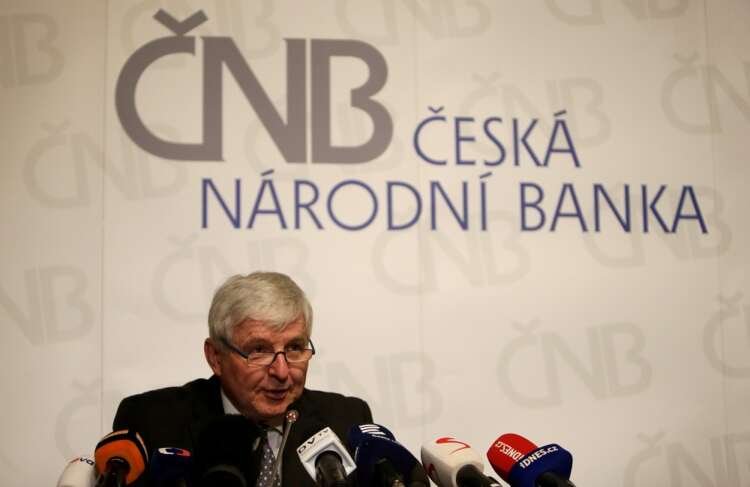
Published by Wanda Rich
Posted on June 6, 2022
2 min readLast updated: February 6, 2026
Add as preferred source on GooglePRAGUE (Reuters) – The Czech National Bank looks likely to raise interest rates again at its June 22 meeting as developments in economy are still inflationary, Governor Jiri Rusnok was quoted as saying on Monday.
PRAGUE (Reuters) – The Czech National Bank looks likely to raise interest rates again at its June 22 meeting as developments in economy are still inflationary, Governor Jiri Rusnok was quoted as saying on Monday.
The Czech central bank has raised its main two-week repo rate by 550 basis points to 5.75% over the past year as it looked to tame soaring inflation driven by high energy prices, and also solid domestic demand, and to keep inflation expectations anchored.
“It all points to us having to go higher still (with rates). Our forecast expected higher rates than what we chose at the last policy meeting. And the development is, unfortunately, inflationary,” Rusnok told news website www.aktualne.cz.
Although he said that he did not want to anticipate anything, Rusnok said that another strong hike looked needed, namely to prop up the crown exchange rate which the bank counts on to deliver part of the tightening.
“So far, we know that the crown is weaker than what our scenario counted on. Hence, we cannot limit ourselves by any ceiling. So, (the hike) looks like three quarters of a percentage point or more,” Rusnok said in the interview.
Rusnok’s term expires at the end of June, and he is going to be replaced by current board member Ales Michl, who has been opposing the central bank’s tightening cycle.
President Milos Zeman has yet to pick three names to the seven-seat board by July, by which he might sway the majority at the board towards Michl’s stance.
(Reporting by Robert Muller; Editing by Kim Coghill)
A central bank is a financial institution responsible for managing a country's currency, money supply, and interest rates. It also oversees the banking system and implements monetary policy.
Inflation is the rate at which the general level of prices for goods and services rises, eroding purchasing power. It is typically measured as an annual percentage increase.
The repo rate is the interest rate at which a central bank lends money to commercial banks, often used to control inflation and stabilize the economy.
Monetary policy refers to the actions taken by a central bank to manage the money supply and interest rates to achieve macroeconomic objectives such as controlling inflation and promoting economic growth.
The exchange rate is the value of one currency for the purpose of conversion to another. It indicates how much of one currency you need to spend to buy another currency.
Explore more articles in the Top Stories category











