Search
00
GBAF Logo
trophy
Top StoriesInterviewsBusinessFinanceBankingTechnologyInvestingTradingVideosAwardsMagazinesHeadlinesTrends

Subscribe to our newsletter

Get the latest news and updates from our team.

Global Banking and Finance Review

Global Banking & Finance Review

Company

    GBAF Logo
    • About Us
    • Profile
    • Privacy & Cookie Policy
    • Terms of Use
    • Contact Us
    • Advertising
    • Submit Post
    • Latest News
    • Research Reports
    • Press Release
    • Awards▾
      • About the Awards
      • Awards TimeTable
      • Submit Nominations
      • Testimonials
      • Media Room
      • Award Winners
      • FAQ
    • Magazines▾
      • Global Banking & Finance Review Magazine Issue 79
      • Global Banking & Finance Review Magazine Issue 78
      • Global Banking & Finance Review Magazine Issue 77
      • Global Banking & Finance Review Magazine Issue 76
      • Global Banking & Finance Review Magazine Issue 75
      • Global Banking & Finance Review Magazine Issue 73
      • Global Banking & Finance Review Magazine Issue 71
      • Global Banking & Finance Review Magazine Issue 70
      • Global Banking & Finance Review Magazine Issue 69
      • Global Banking & Finance Review Magazine Issue 66
    Top StoriesInterviewsBusinessFinanceBankingTechnologyInvestingTradingVideosAwardsMagazinesHeadlinesTrends

    Global Banking & Finance Review® is a leading financial portal and online magazine offering News, Analysis, Opinion, Reviews, Interviews & Videos from the world of Banking, Finance, Business, Trading, Technology, Investing, Brokerage, Foreign Exchange, Tax & Legal, Islamic Finance, Asset & Wealth Management.
    Copyright © 2010-2025 GBAF Publications Ltd - All Rights Reserved.

    ;
    Editorial & Advertiser disclosure

    Global Banking and Finance Review is an online platform offering news, analysis, and opinion on the latest trends, developments, and innovations in the banking and finance industry worldwide. The platform covers a diverse range of topics, including banking, insurance, investment, wealth management, fintech, and regulatory issues. The website publishes news, press releases, opinion and advertorials on various financial organizations, products and services which are commissioned from various Companies, Organizations, PR agencies, Bloggers etc. These commissioned articles are commercial in nature. This is not to be considered as financial advice and should be considered only for information purposes. It does not reflect the views or opinion of our website and is not to be considered an endorsement or a recommendation. We cannot guarantee the accuracy or applicability of any information provided with respect to your individual or personal circumstances. Please seek Professional advice from a qualified professional before making any financial decisions. We link to various third-party websites, affiliate sales networks, and to our advertising partners websites. When you view or click on certain links available on our articles, our partners may compensate us for displaying the content to you or make a purchase or fill a form. This will not incur any additional charges to you. To make things simpler for you to identity or distinguish advertised or sponsored articles or links, you may consider all articles or links hosted on our site as a commercial article placement. We will not be responsible for any loss you may suffer as a result of any omission or inaccuracy on the website.

    Home > Banking > COVID-19 has Accelerated the Need for Platform Banking Solutions in Europe
    Banking

    COVID-19 has Accelerated the Need for Platform Banking Solutions in Europe

    COVID-19 has Accelerated the Need for Platform Banking Solutions in Europe

    Published by linker 5

    Posted on December 7, 2020

    Featured image for article about Banking

    By John Mitchell, CEO at Episode Six.

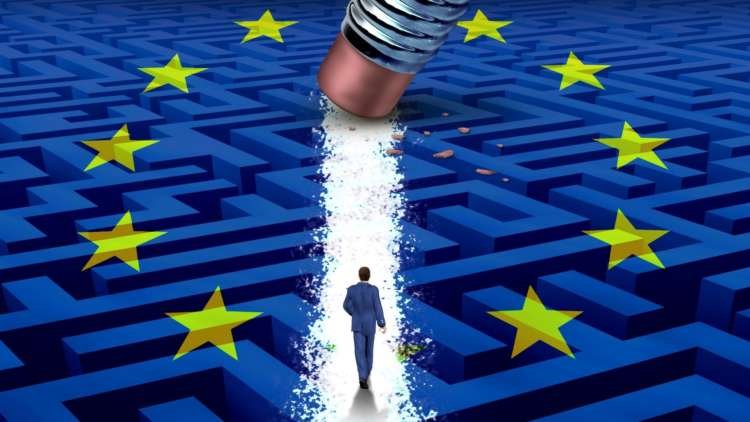
    Home to roughly “four-thousand fintech firms that have incubated disruptive propositions,” the European Union boasts one of the most dynamic fintech ecosystems in the world, according to consultants McKinsey & Company. Fintech ranking platform Findexable’s “Global Fintech Index 2020” lists Europe as second only to the United States in terms of the number of fintech hubs that reside within its borders.

    Some of the best-known fintech unicorns throughout the region include Dutch digital payments company Adyen, Italian paytech company Nexi, Dutch neobank Klarna and British merchant payments gateway Checkout. With a valuation of $22 billion, Adyen is arguably the regional ecosystem’s biggest success story.

    Adding to the strength of the European fintech ecosystem, 2019 was a record year for fintech funding with $58.1 billion in institutional investment secured, according to consultants KPMG International. While 2020 has seen its share of challenges, the space continues to be ripe for innovations that drive digital transformation.

    More than talented entrepreneurs with visionary ideas, the European fintech community has thrived in large part due to progressive regulations enacted by EU legislators over the last five years. From the bloc-wide General Data Protection Regulation and Payment Systems Directive (PSD2) to the U.K.’s Open Banking Initiative, the EU is ahead of the U.S. when it comes to fintech regulation and data oversight in general.

    Europe’s “commitment to regulatory coordination” is one the region’s key strengths, according to Findexable. PSD2, in particular, is essential to the EU’s effective fintech governance. Enacted into law in January 2018, PSD2 is designed to promote “modern, efficient and cheap payment services and to enhance protection for European consumers and businesses,” according to the European Commission’s press release.

    Specifically, PSD2 prohibits surcharging at the point of sale and online, opens the EU payment market to new entrants, mandates strong consumer data provisions and mitigates customer liability for non-authorized payments. As the EU’s governing legislative body, the commission’s innovation-friendly approach to regulation has thus propelled the open-banking revolution forward.

    Blueprint for Fintech Innovation

    A paradigm shift driving financial institutions’ (FIs) migration to agile, cloud-native architectures, open-banking systems leverage an interoperable and ever-increasing array of application programming interfaces (APIs) and artificial intelligence (AI) technologies to deliver products and services to financial consumers more efficiently.

    In practice, open banking allows consumers access to many products and services related to their financial needs. For example, it enables consumers to open a bank account, pass Know Your Customer (KYC) screening remotely, get pre-approved for a loan and obtain financing within minutes. Consider that, not too long ago, customer onboarding for some FIs could drag on for weeks or even months in some cases.

    Instant and low-fee, cross-border remittance payments are another example of innovation made possible by open-banking fintech. Low-fee, mobile investment apps like Robinhood, eToro and Acorns, which have democratized retail investing for millennials and rising zoomers, also owe their lineage to open innovation in financial services.

    Still, other open-banking applications have emerged in the form of mobile wallets, contactless payments enabled by near-field-communications (NFC) and ‘pay-with-points,’ retail loyalty programs. The fintech universe, European and otherwise, is only expanding with technologists unveiling new and innovative solutions with ever-increasing frequency.

    From an architectural standpoint, open banking hinges on six primary themes. These tenets include cloud data storage, seamless integration of new software-as-a-service (SaaS) applications via APIs, automation, secure data exchange, AI-powered analytics and personalized consumer experiences based on insights mined from those analytics.

    Collectively, this hexagonal foundation has laid out the blueprint for the next phase of fintech innovation. Enter banking-as-a-service (BaaS).

    Pump up the BaaS 

    According to Business Insider, BaaS is an “end-to-end process that allows fintechs and other third parties to connect with banks’ systems directly via APIs so they can build banking offerings on top of the providers’ regulated infrastructure.” This industry is projected to reach $1 trillion by 2024.

    BaaS enables banks to innovate without having to rip out their IT rails, which typically consist of legacy systems first rolled out in the 1980s. This technical debt, or the cost of potential business interruption that can result from replacing antiquated infrastructures with new systems, often hinders organizations from innovating. But BaaS enables traditional institutions to partner with fintechs so that financial technologists can use APIs to access bank data and innovate new applications and services for the institution in virtual cloud environments.

    In a 2019 IBM survey titled, “Banking on the platform economy”, researchers found that “as many as 79% of banking executives globally say that adoption of platform business

    models will help them achieve sustainable differentiation and competitive advantage with benefits across multiple dimensions.” Specifically, IBM survey participants cited “profitability, innovation and access to markets as the top-three areas where platform models can drive advantage.”

    No matter the market – Europe, APAC, LatAm or the U.S. – BaaS offers a great deal of opportunity by providing the ability to connect and scale. Looking ahead, offerings will continue to expand and complement FI’s existing products, bringing them into the 21st century.

    BaaS After COVID

    In the wake of the COVID-19 pandemic, McKinsey believes there’s “no going back” to the way things were for the European banking industry, according to a report authored in May. Europe’s banks will “likely face a prolonged period of economic pressure, and banks’ actions in the coming months will set their performance trajectory for the years ahead,” writes McKinsey.

    The pandemic has brought on a wave of change through digital transformation, and what better way for banks to meet the fast-evolving needs of their customers than through establishing innovative partnerships. For years there has been resistance by larger players to partner with fintechs due to wanting to maintain control of technology and keep it in-house. The challenge now is legacy technology is making it harder for banks to transform at a rapid pace.

    Partnerships with fintechs are arguably more beneficial now than ever before, and the relationship is symbiotic. Banks gain access to new technology and the ability to innovate more quickly, and fintechs gain access to a new pool of customers.

    In Europe, the push toward digital banking caused by ongoing lockdowns and social-distancing mandates compels institutions to focus more on fintech innovation. Beyond acquiring fintech startups that may have seen their valuations slashed in a disrupted business cycle, partnering with BaaS platforms and other innovative technologies will be critical in the brave new world of digital finance.

    Related Posts
    DeFi and banking are converging. Here’s what banks can do.
    DeFi and banking are converging. Here’s what banks can do.
    Are Neo Banks Offering Better Metal Debit Cards Than Traditional Banks?
    Are Neo Banks Offering Better Metal Debit Cards Than Traditional Banks?
    Banking at the Intersection: From Nashville to Cannes, A Strategic Call to Action
    Banking at the Intersection: From Nashville to Cannes, A Strategic Call to Action
    Driving Efficiency and Profit Through Customer-Centric Banking
    Driving Efficiency and Profit Through Customer-Centric Banking
    How Ecosystem Partnerships Are Redefining Deposit Products
    How Ecosystem Partnerships Are Redefining Deposit Products
    CIBC Private Banking wins four 2025 Global Banking & Finance Awards
    CIBC Private Banking wins four 2025 Global Banking & Finance Awards
    How Banks Can Put AI to Work Now and Prove ROI in 90 Days
    How Banks Can Put AI to Work Now and Prove ROI in 90 Days
    Top 5 AI quality assurance framework providers for Banks and Financial Services firms.
    Top 5 AI quality assurance framework providers for Banks and Financial Services firms.
    The Unbanked Paradox: How Banking Access Creates Economic Resilience
    The Unbanked Paradox: How Banking Access Creates Economic Resilience
    Hyper-Personalised Banking - Shaping the Future of Finance
    Hyper-Personalised Banking - Shaping the Future of Finance
    The End of Voice Trust: How AI Deepfakes Are Forcing Banks to Rethink Authentication
    The End of Voice Trust: How AI Deepfakes Are Forcing Banks to Rethink Authentication
    Predicting and Preventing Customer Churn in Retail Banking
    Predicting and Preventing Customer Churn in Retail Banking

    Why waste money on news and opinions when you can access them for free?

    Take advantage of our newsletter subscription and stay informed on the go!

    Subscribe

    Previous Banking PostWhy banks must be the future of funding and more for SMEs
    Next Banking PostA quarter of banking customers noted an improvement in customer service over lockdown, research shows

    More from Banking

    Explore more articles in the Banking category

    Growth and Impact: Banreservas Leads Dominican Republic Economic Expansion

    Growth and Impact: Banreservas Leads Dominican Republic Economic Expansion

    Turning Insight into Impact: Making AI and Analytics Work in Retail Banking

    Turning Insight into Impact: Making AI and Analytics Work in Retail Banking

    KeyBank Embraces Next-Generation AI Platform to Transform Fraud and Financial Crime Prevention

    KeyBank Embraces Next-Generation AI Platform to Transform Fraud and Financial Crime Prevention

    Understanding Association Banking: Financial Solutions for Community Success

    Understanding Association Banking: Financial Solutions for Community Success

    Applying Symbiosis for advantage in APAC banking

    Applying Symbiosis for advantage in APAC banking

    AmBank Islamic Berhad Earns Triple Recognition for Excellence in Islamic Banking

    AmBank Islamic Berhad Earns Triple Recognition for Excellence in Islamic Banking

    FinTok Strategy: How Banks Are Reaching Gen Z Through Social Media

    FinTok Strategy: How Banks Are Reaching Gen Z Through Social Media

    Rethinking Retail Banking Sustainability: Why the ATM is an Asset in the Sustainable Transition

    Rethinking Retail Banking Sustainability: Why the ATM is an Asset in the Sustainable Transition

    How private banks can survive the neo-broker revolution

    How private banks can survive the neo-broker revolution

    Next-Gen Bank Branches: The Evolution from Transaction Hubs to Experience Centers

    Next-Gen Bank Branches: The Evolution from Transaction Hubs to Experience Centers

    The Banking Talent Crunch: How Financial Institutions Are Competing for Digital-Native Skills

    The Banking Talent Crunch: How Financial Institutions Are Competing for Digital-Native Skills

    Beyond Interest: How Banks Are Reimagining Revenue in the Digital Age

    Beyond Interest: How Banks Are Reimagining Revenue in the Digital Age

    View All Banking Posts