Search
00
GBAF Logo
trophy
Top StoriesInterviewsBusinessFinanceBankingTechnologyInvestingTradingVideosAwardsMagazinesHeadlinesTrends

Subscribe to our newsletter

Get the latest news and updates from our team.

Global Banking and Finance Review

Global Banking & Finance Review

Company

    GBAF Logo
    • About Us
    • Profile
    • Privacy & Cookie Policy
    • Terms of Use
    • Contact Us
    • Advertising
    • Submit Post
    • Latest News
    • Research Reports
    • Press Release
    • Awards▾
      • About the Awards
      • Awards TimeTable
      • Submit Nominations
      • Testimonials
      • Media Room
      • Award Winners
      • FAQ
    • Magazines▾
      • Global Banking & Finance Review Magazine Issue 79
      • Global Banking & Finance Review Magazine Issue 78
      • Global Banking & Finance Review Magazine Issue 77
      • Global Banking & Finance Review Magazine Issue 76
      • Global Banking & Finance Review Magazine Issue 75
      • Global Banking & Finance Review Magazine Issue 73
      • Global Banking & Finance Review Magazine Issue 71
      • Global Banking & Finance Review Magazine Issue 70
      • Global Banking & Finance Review Magazine Issue 69
      • Global Banking & Finance Review Magazine Issue 66
    Top StoriesInterviewsBusinessFinanceBankingTechnologyInvestingTradingVideosAwardsMagazinesHeadlinesTrends

    Global Banking & Finance Review® is a leading financial portal and online magazine offering News, Analysis, Opinion, Reviews, Interviews & Videos from the world of Banking, Finance, Business, Trading, Technology, Investing, Brokerage, Foreign Exchange, Tax & Legal, Islamic Finance, Asset & Wealth Management.
    Copyright © 2010-2025 GBAF Publications Ltd - All Rights Reserved.

    Editorial & Advertiser disclosure

    Global Banking and Finance Review is an online platform offering news, analysis, and opinion on the latest trends, developments, and innovations in the banking and finance industry worldwide. The platform covers a diverse range of topics, including banking, insurance, investment, wealth management, fintech, and regulatory issues. The website publishes news, press releases, opinion and advertorials on various financial organizations, products and services which are commissioned from various Companies, Organizations, PR agencies, Bloggers etc. These commissioned articles are commercial in nature. This is not to be considered as financial advice and should be considered only for information purposes. It does not reflect the views or opinion of our website and is not to be considered an endorsement or a recommendation. We cannot guarantee the accuracy or applicability of any information provided with respect to your individual or personal circumstances. Please seek Professional advice from a qualified professional before making any financial decisions. We link to various third-party websites, affiliate sales networks, and to our advertising partners websites. When you view or click on certain links available on our articles, our partners may compensate us for displaying the content to you or make a purchase or fill a form. This will not incur any additional charges to you. To make things simpler for you to identity or distinguish advertised or sponsored articles or links, you may consider all articles or links hosted on our site as a commercial article placement. We will not be responsible for any loss you may suffer as a result of any omission or inaccuracy on the website.

    Home > Top Stories > Could a biometric COVID-19 passport revitalise the economy?
    Top Stories

    Could a biometric COVID-19 passport revitalise the economy?

    Could a biometric COVID-19 passport revitalise the economy?

    Published by linker 5

    Posted on December 11, 2020

    Featured image for article about Top Stories

    By Vince Graziani, CEO, IDEX Biometrics ASA

    With the news of a COVID-19 vaccine imminent, the end of the pandemic’s stronghold seems to finally be in sight. However, this doesn’t mean that the next 12 months will instantly return to life before lockdown. Inevitably, technology will play a vital role in guiding our re-entry into an altered world.

    The virus itself will of course still be in play next year. As such, most global futureproofing strategies revolve more around mitigation and living in our new normal, than eliminating the virus altogether. This has manifested in the concept of a global COVID-19 passport which would confirm our immunity and allow us to move, work, communicate, consume, exercise and interact more freely in the new normal. And now, after much discussion it seems the idea is nearing practical fruition.

    Facilitating freedom through technology

    In the UK, the notion of a ‘freedom pass’ has been put forward. It suggests those who could prove, via two negative tests, that they do not have the virus, would enjoy the luxury of fewer social distancing restrictions. The idea is those people would only then encounter others with that same level of proof and authentication.

    The hosting, storage and presentability of that ‘green light’ is where digitisation comes in. In China, citizens have been using a QR code-based movement passport since the virus outbreak. Again, members of the population are only allowed to carry out their normal routines – whether it’s entering a shopping mall or restaurant, or even getting on the subway – if they display a code with confirmation of their virus-free status.

    As such, the return of large gatherings at work or in leisure settings, like concerts or sporting venues, has been facilitated in the knowledge that nobody present is likely to spread the virus. The knock-on effect of this solution being introduced more widely is the potential for a rejuvenated population released from lockdown, and a boost to vital economic sectors – such as hospitality, events and retail.

    Bringing a COVID-19 passport into practice

    Many organisations are also exploring how the idea of a ‘coronavirus passport’ could be used to help their industries return to a level of normal operation once vaccinations start taking place.

    In the past month, seven major airlines including Lufthansa, Virgin Atlantic, JetBlue and United Airlines have signed onto the World Economic Fund’s CommonPass programme which calls for global digital proof of vaccination tied to ID documents ahead of travel.

    Ticketmaster too has suggested plans to provide technology for event organisers to demand proof of vaccination from fans attending a concert or sporting event. Its concept uses a smartphone app to verify a fan’s vaccination status or whether they’ve tested negative for a 72-hour window.

    Another layer of personal data

    In theory, it’s a logical way to accelerate post-lockdown life, but it does require the public –   who are already cautious about storing personal details in digital applications – to add an extra layer of data to their footprint.

    Consumers are frequently asked to authenticate their identity with financial institutions, retailers, government departments and healthcare providers for numerous access and confirmation purposes. The prospect of adding even more login credentials, personal details and – now – health-related data to their digital footprint is unsettling for many.

    So, while almost all sides agree an effective coronavirus passport is a good idea, this begs another question. What form should the passport take to best allay people’s privacy fears, while also providing security, convenience and confidence in the solution?

    Biometrics can support health and security

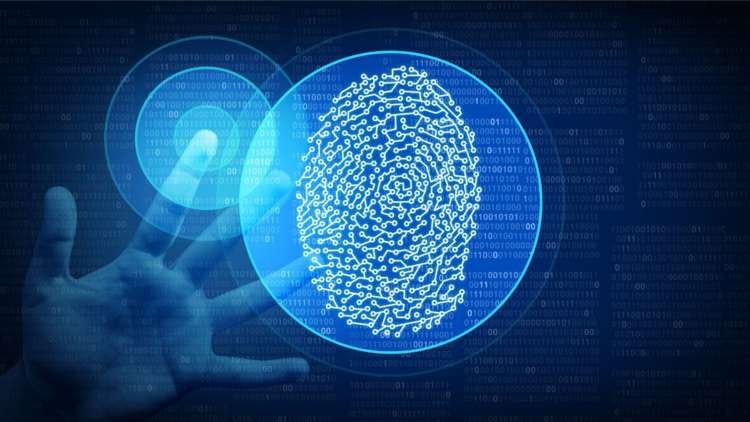
    The answer can be found in a digital identity powered by fingerprint biometric authentication technology. The prime objective of a COVID-19 passport is to unequivocally tie the individual to their immunity information, there is no better way to do so than by physically connecting those two aspects though the unique fingerprint.

    Fingerprint authentication is an immediate and undeniable verification of the individual person. Many of us unlock our smartphones in that exact way, as a drastically improved method to authenticate identity.

    In a COVID-19 context, fingerprint biometrics can be incorporated into a singular, unified digital ID to unquestionably prove that people have been either tested negative or, even more ideally looking forward, have received the coronavirus vaccine. As these immunisations become commonplace, the rush to prove your safeness will require proof, and this is an ideal way to do so without compromising any other personal details.

    That necessary level of privacy comes from the end-to-end encryption of fingerprint biometric authentication which completely safeguards a user’s physical card and personal data. In a biometric card, the owner’s fingerprint image is immediately transformed into an abstract biometric template, which is matched and stored in the secure element of the EMV chip. Therefore, fingerprint data is held securely on the card, not in a shared database and cannot be subject to a data breach.

    Authorising with a fingerprint further assures that there can be no doubt of the link between each person and the information they’re presenting. In essence, an individual’s coronavirus clearance can be tied to a reliable form of authentication that can be used anywhere, on any device and mitigates the likelihood of fraud.

    A safe transition to the new normal

    The result of such a biometric digital identity is an ecosystem of universal trust and confidence. Businesses, venues, events and vendors can proceed in the knowledge that they are preventing guests from infection spikes while allowing them to rebuild their business and grow revenues. Meanwhile, the general population can look to re-enter society with reliable proof of their individual health and assurance of their digital security.

    2020 has been a year of restrictions and limitations for all. The introduction of a fingerprint biometric COVID-19 passport will allow us to reopen society. That has the potential to revitalise the economy and begin the transition back to everything we have missed over the past year.

    Related Posts
    Chase Buchanan Private Wealth Management Highlights Key Autumn 2025 Budget Takeaways for Expats
    Chase Buchanan Private Wealth Management Highlights Key Autumn 2025 Budget Takeaways for Expats
    PayLaju Strengthens Its Position as Malaysia’s Trusted Interest-Free Sharia-Compliant Loan Provider
    PayLaju Strengthens Its Position as Malaysia’s Trusted Interest-Free Sharia-Compliant Loan Provider
    A Notable Update for Employee Health Benefits:
    A Notable Update for Employee Health Benefits:
    Creating Equity Between Walls: How Mohak Chauhan is Using Engineering, Finance, and Community Vision to Reengineer Affordable Housing
    Creating Equity Between Walls: How Mohak Chauhan is Using Engineering, Finance, and Community Vision to Reengineer Affordable Housing
    Upcoming Book on Real Estate Investing: Harvard Grace Capital Founder Stewart Heath’s Puts Lessons in Print
    Upcoming Book on Real Estate Investing: Harvard Grace Capital Founder Stewart Heath’s Puts Lessons in Print
    ELECTIVA MARKS A LANDMARK FIRST YEAR WITH MAJOR SENIOR APPOINTMENTS AND EXPANSION MILESTONES
    ELECTIVA MARKS A LANDMARK FIRST YEAR WITH MAJOR SENIOR APPOINTMENTS AND EXPANSION MILESTONES
    Hebbia Processes One Billion Pages as Financial Institutions Deploy AI Infrastructure at Unprecedented Scale
    Hebbia Processes One Billion Pages as Financial Institutions Deploy AI Infrastructure at Unprecedented Scale
    Beyond Governance Fatigue: Making ESG Integration Work in Financial Markets
    Beyond Governance Fatigue: Making ESG Integration Work in Financial Markets
    Why I-9 Verification Matters for Financial Institutions: Building a Culture of Compliance and Trust
    Why I-9 Verification Matters for Financial Institutions: Building a Culture of Compliance and Trust
    Curvestone AI partners with The White Rose Finance Group to enhance compliance file reviews
    Curvestone AI partners with The White Rose Finance Group to enhance compliance file reviews
    LinkedIn Influence in 2025: Insights from Stevo Jokic on Building Authority and Trust
    LinkedIn Influence in 2025: Insights from Stevo Jokic on Building Authority and Trust
    Should You Take the Dealer’s Bike Insurance or Buy Online Yourself? Here’s the Real Difference
    Should You Take the Dealer’s Bike Insurance or Buy Online Yourself? Here’s the Real Difference

    Why waste money on news and opinions when you can access them for free?

    Take advantage of our newsletter subscription and stay informed on the go!

    Subscribe

    More from Top Stories

    Explore more articles in the Top Stories category

    ID-Pal Unveils ID-Detect Enhancements to Counter Surge in Digital Manipulation and Deepfakes

    ID-Pal Unveils ID-Detect Enhancements to Counter Surge in Digital Manipulation and Deepfakes

    TRUST TAKES THE LEAD: HALF OF UK SHOPPERS HAVE ABANDONED ONLINE PURCHASES OVER SECURITY CONCERNS

    TRUST TAKES THE LEAD: HALF OF UK SHOPPERS HAVE ABANDONED ONLINE PURCHASES OVER SECURITY CONCERNS

    Why Choose Premium Driver Service in Miami Over Rideshare Apps for Business Travel and Special Events?

    Why Choose Premium Driver Service in Miami Over Rideshare Apps for Business Travel and Special Events?

    Over 30 Million Users Benefit From Ant International’s Bettr Credit Tech Solutions

    Over 30 Million Users Benefit From Ant International’s Bettr Credit Tech Solutions

    Side-Hustle Economics: How Part-Time Service Work Can Strengthen Your Financial Plan

    Side-Hustle Economics: How Part-Time Service Work Can Strengthen Your Financial Plan

    London to Host Major Summit on “New Horizons” for Islamic Economy in the UK

    London to Host Major Summit on “New Horizons” for Islamic Economy in the UK

    BLOXX Launches World’s First Home Equity Subscription, Creating a New Residential Asset Class

    BLOXX Launches World’s First Home Equity Subscription, Creating a New Residential Asset Class

    LiaFi Addresses Gap Between Business Transaction and Savings Accounts

    LiaFi Addresses Gap Between Business Transaction and Savings Accounts

    Ant Group Chairman Eric Jing Outlines Strategy for Inclusive AI, Collaboration on Tokenised Settlement

    Ant Group Chairman Eric Jing Outlines Strategy for Inclusive AI, Collaboration on Tokenised Settlement

    Deeply Cultivating the Syndicated Loan and Cross-Border Financing Fields: Empowering Chinese Banks’ Global Expansion with Professional Excellence

    Deeply Cultivating the Syndicated Loan and Cross-Border Financing Fields: Empowering Chinese Banks’ Global Expansion with Professional Excellence

    Ant International’s Antom Launches AI‑Powered MSME App for Finance and Business Operations

    Ant International’s Antom Launches AI‑Powered MSME App for Finance and Business Operations

    A Gateway for U.S. Capital: Inside Kazakhstan’s Expanding Financial Hub

    A Gateway for U.S. Capital: Inside Kazakhstan’s Expanding Financial Hub

    View All Top Stories Posts
    Previous Top Stories PostSo you want to make real change…
    Next Top Stories PostReducing the risk of online fraud using IP decisioning data