Search
00
GBAF Logo
trophy
Top StoriesInterviewsBusinessFinanceBankingTechnologyInvestingTradingVideosAwardsMagazinesHeadlinesTrends

Subscribe to our newsletter

Get the latest news and updates from our team.

Global Banking and Finance Review

Global Banking & Finance Review

Company

    GBAF Logo
    • About Us
    • Profile
    • Privacy & Cookie Policy
    • Terms of Use
    • Contact Us
    • Advertising
    • Submit Post
    • Latest News
    • Research Reports
    • Press Release
    • Awards▾
      • About the Awards
      • Awards TimeTable
      • Submit Nominations
      • Testimonials
      • Media Room
      • Award Winners
      • FAQ
    • Magazines▾
      • Global Banking & Finance Review Magazine Issue 79
      • Global Banking & Finance Review Magazine Issue 78
      • Global Banking & Finance Review Magazine Issue 77
      • Global Banking & Finance Review Magazine Issue 76
      • Global Banking & Finance Review Magazine Issue 75
      • Global Banking & Finance Review Magazine Issue 73
      • Global Banking & Finance Review Magazine Issue 71
      • Global Banking & Finance Review Magazine Issue 70
      • Global Banking & Finance Review Magazine Issue 69
      • Global Banking & Finance Review Magazine Issue 66
    Top StoriesInterviewsBusinessFinanceBankingTechnologyInvestingTradingVideosAwardsMagazinesHeadlinesTrends

    Global Banking & Finance Review® is a leading financial portal and online magazine offering News, Analysis, Opinion, Reviews, Interviews & Videos from the world of Banking, Finance, Business, Trading, Technology, Investing, Brokerage, Foreign Exchange, Tax & Legal, Islamic Finance, Asset & Wealth Management.
    Copyright © 2010-2025 GBAF Publications Ltd - All Rights Reserved.

    Editorial & Advertiser disclosure

    Global Banking and Finance Review is an online platform offering news, analysis, and opinion on the latest trends, developments, and innovations in the banking and finance industry worldwide. The platform covers a diverse range of topics, including banking, insurance, investment, wealth management, fintech, and regulatory issues. The website publishes news, press releases, opinion and advertorials on various financial organizations, products and services which are commissioned from various Companies, Organizations, PR agencies, Bloggers etc. These commissioned articles are commercial in nature. This is not to be considered as financial advice and should be considered only for information purposes. It does not reflect the views or opinion of our website and is not to be considered an endorsement or a recommendation. We cannot guarantee the accuracy or applicability of any information provided with respect to your individual or personal circumstances. Please seek Professional advice from a qualified professional before making any financial decisions. We link to various third-party websites, affiliate sales networks, and to our advertising partners websites. When you view or click on certain links available on our articles, our partners may compensate us for displaying the content to you or make a purchase or fill a form. This will not incur any additional charges to you. To make things simpler for you to identity or distinguish advertised or sponsored articles or links, you may consider all articles or links hosted on our site as a commercial article placement. We will not be responsible for any loss you may suffer as a result of any omission or inaccuracy on the website.

    Home > Banking > China’s July new yuan loans expected to nearly halve from June: Reuters Poll
    Banking

    China’s July new yuan loans expected to nearly halve from June: Reuters Poll

    China’s July new yuan loans expected to nearly halve from June: Reuters Poll

    Published by maria gbaf

    Posted on August 10, 2021

    Featured image for article about Banking

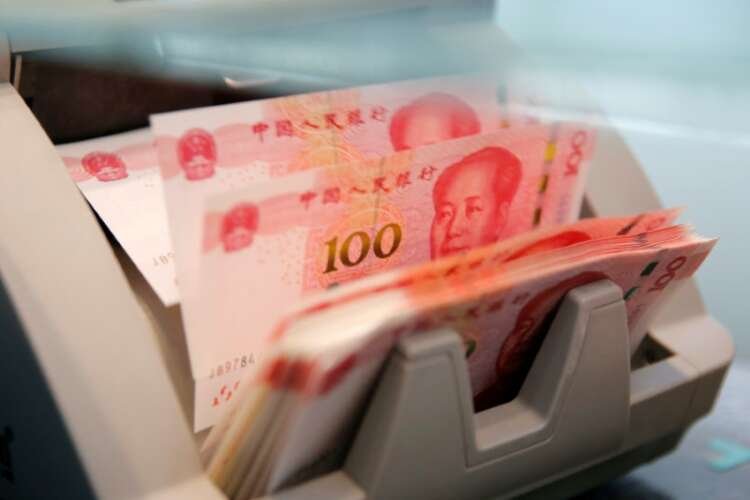
    BEIJING (Reuters) – China’s new yuan loans are expected to fall back in July after record lending in the first six months, a Reuters poll showed, but are still likely to be higher than a year earlier, as the central bank seeks to underpin the country’s economic recovery.

    Chinese banks are estimated to have issued 1.20 trillion yuan ($185.29 billion) in net new yuan loans last month, down from 2.12 trillion yuan in June, according to the median estimate in the survey of 29 economists.

    That would be higher than 992.7 billion yuan issued the same month a year earlier.

    Chinese banks doled out a record 12.76 trillion yuan in new loans in the first half of 2021, even as the People’s Bank of China (PBOC) sought to cool broad credit growth to rein in debt risks.

    China is poised to quicken spending on infrastructure projects while the central bank supports with modest easing steps, as risks from the Delta variant and floods threaten to slow its recovery, policy insiders and analysts said.

    Last month, a meeting of the Politburo, a top-decision making body of the ruling Communist Party, pledged to maintain an accommodative stance in the face of an uneven domestic recovery and global uncertainty.

    Effective July 15, the PBOC cut the reserve requirement ratio (RRR) for banks, releasing around 1 trillion yuan in long-term liquidity. Analysts expect another RRR cut this year.

    Annual outstanding yuan loans were expected to grow by 12.3% for July, the same as in June, the poll showed. Broad M2 money supply growth in July was seen at 8.7%, up from 8.6% the previous month.

    Net local government special bond issuance reached 1.01 trillion yuan in the first half, accounting for 28% of the annual quota, finance ministry data showed.

    Any acceleration in government bond issuance could help boost total social financing (TSF), a broad measure of credit and liquidity. TSF growth slowed to 11% in June from a near three-year high of 13.7% in October 2020.

    In July, TSF is expected to fall to 1.70 trillion yuan from 3.67 trillion yuan in June.

    ($1 = 6.4755 Chinese yuan)

    (Reporting by Judy Hua and Kevin Yao; Editing by Jacqueline Wong)

    BEIJING (Reuters) – China’s new yuan loans are expected to fall back in July after record lending in the first six months, a Reuters poll showed, but are still likely to be higher than a year earlier, as the central bank seeks to underpin the country’s economic recovery.

    Chinese banks are estimated to have issued 1.20 trillion yuan ($185.29 billion) in net new yuan loans last month, down from 2.12 trillion yuan in June, according to the median estimate in the survey of 29 economists.

    That would be higher than 992.7 billion yuan issued the same month a year earlier.

    Chinese banks doled out a record 12.76 trillion yuan in new loans in the first half of 2021, even as the People’s Bank of China (PBOC) sought to cool broad credit growth to rein in debt risks.

    China is poised to quicken spending on infrastructure projects while the central bank supports with modest easing steps, as risks from the Delta variant and floods threaten to slow its recovery, policy insiders and analysts said.

    Last month, a meeting of the Politburo, a top-decision making body of the ruling Communist Party, pledged to maintain an accommodative stance in the face of an uneven domestic recovery and global uncertainty.

    Effective July 15, the PBOC cut the reserve requirement ratio (RRR) for banks, releasing around 1 trillion yuan in long-term liquidity. Analysts expect another RRR cut this year.

    Annual outstanding yuan loans were expected to grow by 12.3% for July, the same as in June, the poll showed. Broad M2 money supply growth in July was seen at 8.7%, up from 8.6% the previous month.

    Net local government special bond issuance reached 1.01 trillion yuan in the first half, accounting for 28% of the annual quota, finance ministry data showed.

    Any acceleration in government bond issuance could help boost total social financing (TSF), a broad measure of credit and liquidity. TSF growth slowed to 11% in June from a near three-year high of 13.7% in October 2020.

    In July, TSF is expected to fall to 1.70 trillion yuan from 3.67 trillion yuan in June.

    ($1 = 6.4755 Chinese yuan)

    (Reporting by Judy Hua and Kevin Yao; Editing by Jacqueline Wong)

    Related Posts
    CIBC wins two Global Banking and Finance Awards for student banking
    CIBC wins two Global Banking and Finance Awards for student banking
    DeFi and banking are converging. Here’s what banks can do.
    DeFi and banking are converging. Here’s what banks can do.
    Are Neo Banks Offering Better Metal Debit Cards Than Traditional Banks?
    Are Neo Banks Offering Better Metal Debit Cards Than Traditional Banks?
    Banking at the Intersection: From Nashville to Cannes, A Strategic Call to Action
    Banking at the Intersection: From Nashville to Cannes, A Strategic Call to Action
    Driving Efficiency and Profit Through Customer-Centric Banking
    Driving Efficiency and Profit Through Customer-Centric Banking
    How Ecosystem Partnerships Are Redefining Deposit Products
    How Ecosystem Partnerships Are Redefining Deposit Products
    CIBC Private Banking wins four 2025 Global Banking & Finance Awards
    CIBC Private Banking wins four 2025 Global Banking & Finance Awards
    How Banks Can Put AI to Work Now and Prove ROI in 90 Days
    How Banks Can Put AI to Work Now and Prove ROI in 90 Days
    Top 5 AI quality assurance framework providers for Banks and Financial Services firms.
    Top 5 AI quality assurance framework providers for Banks and Financial Services firms.
    The Unbanked Paradox: How Banking Access Creates Economic Resilience
    The Unbanked Paradox: How Banking Access Creates Economic Resilience
    Hyper-Personalised Banking - Shaping the Future of Finance
    Hyper-Personalised Banking - Shaping the Future of Finance
    The End of Voice Trust: How AI Deepfakes Are Forcing Banks to Rethink Authentication
    The End of Voice Trust: How AI Deepfakes Are Forcing Banks to Rethink Authentication

    Why waste money on news and opinions when you can access them for free?

    Take advantage of our newsletter subscription and stay informed on the go!

    Subscribe

    Previous Banking PostMacquarie invests $1.4 billion in Britain’s Southern Water
    Next Banking PostGermany drops probe of former Deutsche Bank board member over Wirecard

    More from Banking

    Explore more articles in the Banking category

    Predicting and Preventing Customer Churn in Retail Banking

    Predicting and Preventing Customer Churn in Retail Banking

    Growth and Impact: Banreservas Leads Dominican Republic Economic Expansion

    Growth and Impact: Banreservas Leads Dominican Republic Economic Expansion

    Turning Insight into Impact: Making AI and Analytics Work in Retail Banking

    Turning Insight into Impact: Making AI and Analytics Work in Retail Banking

    KeyBank Embraces Next-Generation AI Platform to Transform Fraud and Financial Crime Prevention

    KeyBank Embraces Next-Generation AI Platform to Transform Fraud and Financial Crime Prevention

    Understanding Association Banking: Financial Solutions for Community Success

    Understanding Association Banking: Financial Solutions for Community Success

    Applying Symbiosis for advantage in APAC banking

    Applying Symbiosis for advantage in APAC banking

    AmBank Islamic Berhad Earns Triple Recognition for Excellence in Islamic Banking

    AmBank Islamic Berhad Earns Triple Recognition for Excellence in Islamic Banking

    FinTok Strategy: How Banks Are Reaching Gen Z Through Social Media

    FinTok Strategy: How Banks Are Reaching Gen Z Through Social Media

    Rethinking Retail Banking Sustainability: Why the ATM is an Asset in the Sustainable Transition

    Rethinking Retail Banking Sustainability: Why the ATM is an Asset in the Sustainable Transition

    How private banks can survive the neo-broker revolution

    How private banks can survive the neo-broker revolution

    Next-Gen Bank Branches: The Evolution from Transaction Hubs to Experience Centers

    Next-Gen Bank Branches: The Evolution from Transaction Hubs to Experience Centers

    The Banking Talent Crunch: How Financial Institutions Are Competing for Digital-Native Skills

    The Banking Talent Crunch: How Financial Institutions Are Competing for Digital-Native Skills

    View All Banking Posts