Search
00
GBAF Logo
trophy
Top StoriesInterviewsBusinessFinanceBankingTechnologyInvestingTradingVideosAwardsMagazinesHeadlinesTrends

Subscribe to our newsletter

Get the latest news and updates from our team.

Global Banking and Finance Review

Global Banking & Finance Review

Company

    GBAF Logo
    • About Us
    • Profile
    • Privacy & Cookie Policy
    • Terms of Use
    • Contact Us
    • Advertising
    • Submit Post
    • Latest News
    • Research Reports
    • Press Release
    • Awards▾
      • About the Awards
      • Awards TimeTable
      • Submit Nominations
      • Testimonials
      • Media Room
      • Award Winners
      • FAQ
    • Magazines▾
      • Global Banking & Finance Review Magazine Issue 79
      • Global Banking & Finance Review Magazine Issue 78
      • Global Banking & Finance Review Magazine Issue 77
      • Global Banking & Finance Review Magazine Issue 76
      • Global Banking & Finance Review Magazine Issue 75
      • Global Banking & Finance Review Magazine Issue 73
      • Global Banking & Finance Review Magazine Issue 71
      • Global Banking & Finance Review Magazine Issue 70
      • Global Banking & Finance Review Magazine Issue 69
      • Global Banking & Finance Review Magazine Issue 66
    Top StoriesInterviewsBusinessFinanceBankingTechnologyInvestingTradingVideosAwardsMagazinesHeadlinesTrends

    Global Banking & Finance Review® is a leading financial portal and online magazine offering News, Analysis, Opinion, Reviews, Interviews & Videos from the world of Banking, Finance, Business, Trading, Technology, Investing, Brokerage, Foreign Exchange, Tax & Legal, Islamic Finance, Asset & Wealth Management.
    Copyright © 2010-2025 GBAF Publications Ltd - All Rights Reserved.

    ;
    Editorial & Advertiser disclosure

    Global Banking and Finance Review is an online platform offering news, analysis, and opinion on the latest trends, developments, and innovations in the banking and finance industry worldwide. The platform covers a diverse range of topics, including banking, insurance, investment, wealth management, fintech, and regulatory issues. The website publishes news, press releases, opinion and advertorials on various financial organizations, products and services which are commissioned from various Companies, Organizations, PR agencies, Bloggers etc. These commissioned articles are commercial in nature. This is not to be considered as financial advice and should be considered only for information purposes. It does not reflect the views or opinion of our website and is not to be considered an endorsement or a recommendation. We cannot guarantee the accuracy or applicability of any information provided with respect to your individual or personal circumstances. Please seek Professional advice from a qualified professional before making any financial decisions. We link to various third-party websites, affiliate sales networks, and to our advertising partners websites. When you view or click on certain links available on our articles, our partners may compensate us for displaying the content to you or make a purchase or fill a form. This will not incur any additional charges to you. To make things simpler for you to identity or distinguish advertised or sponsored articles or links, you may consider all articles or links hosted on our site as a commercial article placement. We will not be responsible for any loss you may suffer as a result of any omission or inaccuracy on the website.

    Home > Banking > Central banks double down in fight against ‘galloping’ inflation
    Banking

    Central banks double down in fight against ‘galloping’ inflation

    Central banks double down in fight against ‘galloping’ inflation

    Published by Wanda Rich

    Posted on June 9, 2022

    Featured image for article about Banking

    LONDON (Reuters) – Major central banks are racing to ditch post-pandemic stimulus and picking up the pace of interest rate hikes to get on top of surging inflation.

    The Reserve Bank of Australia on Tuesday became the latest to deliver a hawkish surprise with a half-point rate hike, following in the footsteps of the United States, Canada and New Zealand.

    And the more cautious European Central Bank on Thursday ended a long-running stimulus scheme and signalled a series of rate hikes.

    Here’s where policymakers stand on the path out of the pandemic-era stimulus, ranked in terms of hawkishness.

    1) NORWAY

    Norway’s Norges Bank was the big developed economy to kick off a rate-hiking cycle last year and has raised rates three times since September. It is expected to increase its 0.75% rate again on June 23 and plans seven more moves by end-2023.

    2) NEW ZEALAND

    The Reserve Bank of New Zealand is also one of the world’s most hawkish central banks, raising the official cash rate by 50 basis points (bps) to 2% on May 25, a level not seen since 2016. That was its fifth straight rate hike.

    It projected rates to double to 4% over the coming year and stay there until 2024. New Zealand inflation reached a three-decade high of 6.9% in the year to Q1, versus a 1-3% target.

    3) CANADA

    The Bank of Canada delivered a second consecutive 50-bps rate increase to 1.5% on June 1, and said it would “act more forcefully” if needed.

    With April inflation at 6.8%, Governor Tiff Macklem has not ruled out a 75-bps or larger increase and says rates could go above the 2%-3% neutral range for a period.

    Deputy BoC governor Paul Beaudry has warned of “galloping” inflation and markets price an unprecedented third consecutive 50-bps increase in July.

    4) BRITAIN

    The Bank of England has raised rates four times since December, including last month’s quarter-point move. Its 1% key rate is at the highest since 2009.

    Another rate hike is anticipated on June 16 and markets see rates ending 2022 above 2%. But Britain’s deteriorating economic outlook is making some policymakers cautious.

    5) UNITED STATES

    The Federal Reserve is set for half-point rate increases in June, July, and perhaps even beyond as jobs data show no sign the U.S. economy is buckling under high inflation and rising borrowing costs.

    The key Fed funds rate is expected to rise to a 1.25%-1.50% range on June 15 and markets see it going to 2.75%-3% by year-end.

    The Fed is also reducing its $9 trillion stash of assets accumulated during the pandemic.

    6) AUSTRALIA

    With the economy recovering smartly and inflation at a 20-year high of 5.1%, the Reserve Bank of Australia raised rates by a surprise 50 bps on June 6. It was the RBA’s second straight move after insisting for months policy tightening was way off.

    Money markets now price in chances of another 50 bps rise in July and see the current 0.85% rate touching 1.5% by August.

    7) SWEDEN

    A late-comer to the inflation battle, Sweden’s Riksbank raised rates to 0.25% in April in a quarter-point move. With inflation at 6.4%, versus its 2% target, the Riksbank may now opt for bigger moves.

    Having said as recently as February that rates would not rise until 2024, the Riksbank expects to hike two or three more times this year.

    8) EURO ZONE

    Record-high 8.1% inflation has turned the dovish European Central Bank into a hawk.

    It said on Thursday that bond buys will end on July 1, rates will rise by 25 bps later that month and again in September. It last lifted rates in 2011.

    Markets moved to price in 143 bps of tightening by the end of this year versus 138 bps before the ECB statement, meaning the key -0.50% deposit rate is set to exit negative territory soon.

    9) SWITZERLAND

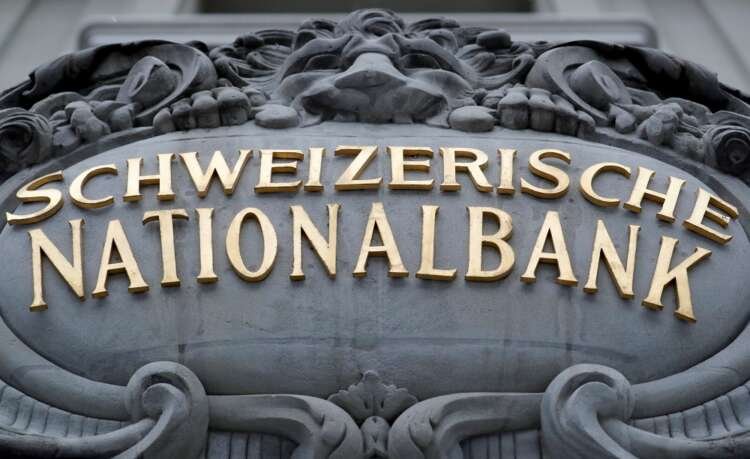
    The Swiss National Bank is under pressure to raise its -0.75% interest rate, the world’s lowest. Inflation is approaching 14-year highs at 2.9% and price rises have been outside the SNB’s annual 0%-2% target range since February.

    SNB officials insist the inflation surge is temporary. But rate-setter Andrea Maechler reckons the SNB will “not hesitate” to tighten policy if inflation rates remain stubbornly high, shining a spotlight on the SNB’s June 16 meeting.

    10) JAPAN

    That leaves the Bank of Japan as the holdout dove.

    BOJ boss Haruhiko Kuroda says the top priority is to support the economy, stressing unwavering commitment to maintaining “powerful” monetary stimulus.

    Japan’s core consumer prices in April rose 2.1% from a year earlier, exceeding the BOJ’s 2% target for the first time in seven years. Still, BOJ officials have repeatedly stressed that such cost-push inflation will prove temporary and won’t prompt a tighter monetary policy.

    (Reporting by Sujata Rao and Dhara Ranasinghe; additional reporting by Tommy Wilkes, Saikat Chatterjee and Yoruk Bahceli; editing by Emelia Sithole-Matarise)

    Related Posts
    DeFi and banking are converging. Here’s what banks can do.
    DeFi and banking are converging. Here’s what banks can do.
    Are Neo Banks Offering Better Metal Debit Cards Than Traditional Banks?
    Are Neo Banks Offering Better Metal Debit Cards Than Traditional Banks?
    Banking at the Intersection: From Nashville to Cannes, A Strategic Call to Action
    Banking at the Intersection: From Nashville to Cannes, A Strategic Call to Action
    Driving Efficiency and Profit Through Customer-Centric Banking
    Driving Efficiency and Profit Through Customer-Centric Banking
    How Ecosystem Partnerships Are Redefining Deposit Products
    How Ecosystem Partnerships Are Redefining Deposit Products
    CIBC Private Banking wins four 2025 Global Banking & Finance Awards
    CIBC Private Banking wins four 2025 Global Banking & Finance Awards
    How Banks Can Put AI to Work Now and Prove ROI in 90 Days
    How Banks Can Put AI to Work Now and Prove ROI in 90 Days
    Top 5 AI quality assurance framework providers for Banks and Financial Services firms.
    Top 5 AI quality assurance framework providers for Banks and Financial Services firms.
    The Unbanked Paradox: How Banking Access Creates Economic Resilience
    The Unbanked Paradox: How Banking Access Creates Economic Resilience
    Hyper-Personalised Banking - Shaping the Future of Finance
    Hyper-Personalised Banking - Shaping the Future of Finance
    The End of Voice Trust: How AI Deepfakes Are Forcing Banks to Rethink Authentication
    The End of Voice Trust: How AI Deepfakes Are Forcing Banks to Rethink Authentication
    Predicting and Preventing Customer Churn in Retail Banking
    Predicting and Preventing Customer Churn in Retail Banking

    Why waste money on news and opinions when you can access them for free?

    Take advantage of our newsletter subscription and stay informed on the go!

    Subscribe

    Previous Banking PostBanks Will Need New Cybersecurity Muscles to Protect Consumers in the Metaverse
    Next Banking PostFS innovation means looking beyond company boundaries

    More from Banking

    Explore more articles in the Banking category

    Growth and Impact: Banreservas Leads Dominican Republic Economic Expansion

    Growth and Impact: Banreservas Leads Dominican Republic Economic Expansion

    Turning Insight into Impact: Making AI and Analytics Work in Retail Banking

    Turning Insight into Impact: Making AI and Analytics Work in Retail Banking

    KeyBank Embraces Next-Generation AI Platform to Transform Fraud and Financial Crime Prevention

    KeyBank Embraces Next-Generation AI Platform to Transform Fraud and Financial Crime Prevention

    Understanding Association Banking: Financial Solutions for Community Success

    Understanding Association Banking: Financial Solutions for Community Success

    Applying Symbiosis for advantage in APAC banking

    Applying Symbiosis for advantage in APAC banking

    AmBank Islamic Berhad Earns Triple Recognition for Excellence in Islamic Banking

    AmBank Islamic Berhad Earns Triple Recognition for Excellence in Islamic Banking

    FinTok Strategy: How Banks Are Reaching Gen Z Through Social Media

    FinTok Strategy: How Banks Are Reaching Gen Z Through Social Media

    Rethinking Retail Banking Sustainability: Why the ATM is an Asset in the Sustainable Transition

    Rethinking Retail Banking Sustainability: Why the ATM is an Asset in the Sustainable Transition

    How private banks can survive the neo-broker revolution

    How private banks can survive the neo-broker revolution

    Next-Gen Bank Branches: The Evolution from Transaction Hubs to Experience Centers

    Next-Gen Bank Branches: The Evolution from Transaction Hubs to Experience Centers

    The Banking Talent Crunch: How Financial Institutions Are Competing for Digital-Native Skills

    The Banking Talent Crunch: How Financial Institutions Are Competing for Digital-Native Skills

    Beyond Interest: How Banks Are Reimagining Revenue in the Digital Age

    Beyond Interest: How Banks Are Reimagining Revenue in the Digital Age

    View All Banking Posts