
Top Stories
Cash Was Our Past, Contactless Is Our Present, Contextual Payments Are the Future
Published by linker 5
Posted on November 25, 2020
8 min readLast updated: January 21, 2026
Add as preferred source on Google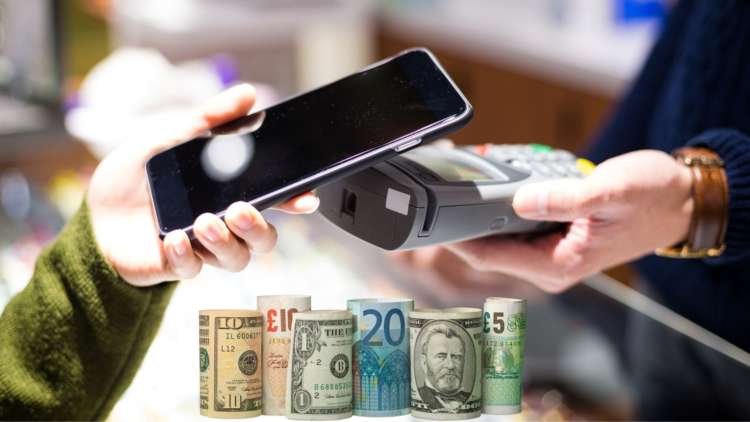
Published by linker 5
Posted on November 25, 2020
8 min readLast updated: January 21, 2026
Add as preferred source on GoogleBy Jason Jeffreys, founder of FETCH
$6tn in the next five years, this is how much the world will spend through contactless payments, according to analyst firm Juniper Research. For many of us who have discovered and since relied heavily on contactless payments since its introduction in 2007, either through card, phone, or watch, or those of us who have taken a stroll down a covid-era high-street to see shop windows adorned with “card payment only” signs, this is hardly a surprise. Even the Church of England in 2018 equipped 16,000 religious sites with terminals to allow for contactless donations. So what is behind this rise? And what is next?
The switch from cash to contactless is a transformation of payments that is driven by four key factors: speed, security, accessibility, and hygiene. While businesses and customers alike have felt the immense benefits of the cash to contactless transition, the next iteration goes further by digitally transforming the entire transaction process. It’s that potential which pushed me to launch FETCH – technology that allows customers to order and pay from their phone, anywhere. By exploring the benefits already felt by our contactless present, I hope to show you why I’m excited to be part of the contextual payments future.
Speed
Aldi is all about low prices and this is achieved with efficiency – that is why their checkout staff are trained to scan as fast as possible, it’s why their barcodes are huge, and it’s why you can’t keep up. It’s all in the name of efficiency and cost saving, and contactless payments make this possible.
While increasing the rate of transactions has a direct impact on money through the till, there is an increase in the perceived speed which does wonders to get customers back through the door. Shoppers may have spent an hour or more in-store but their direct interactions with the shop and staff were quick and timely and that’s the experience they remember and the impression they build of the brand.
Aldi are not alone in realising this and while it is easy to point to the impact that contactless has had on the retail sector, its revolution has slowly crept into hospitality – an industry notoriously late at adopting new technologies.
High-street coffee shops rely on getting as many people as possible through the doors and back out again. They want as little disruption to your day as possible but more importantly, they want to process as many payments per hour as possible. Cash transactions are slow in comparison to a single tap, so for the coffee shops, this means fewer transactions per hour and money lost. For businesses in this sector who rely on periodic rushes, measuring performance per hour is a necessity and maximising revenue over these short windows is so important.
For reasons obvious to anyone who has been to a crowded hospitality venue, stood at a crowded bar or waited for waiting staff during a busy dinner rush, the businesses in this space already running on contextual ordering systems like FETCH have all reported a vastly improved staff and customer experience in hospitality venues. While it may be difficult to spot how these benefits can be felt in retail, this reality is not bound to fiction or the distant future – it’s being pioneered already in retail by Amazon.
In a well documented glimpse into the future of shopping, Amazon’s latest Seattle store removes the transaction element completely. Instead, you put your items in your trolley as you go round the shop, and the sensors and cameras accurately and automatically recognise the items, keeping a track and total, before taking payment automatically and digitally through your Amazon account once you walk the trolley back out of the store. Can you imagine standing in a supermarket queue to pay once you’ve experienced the ease, simplicity and effortlessness of that?
Accessibility
Smartphones have got smarter and they have revolutionised the way we get through the day. From how we discover, connect, and socialise, to how we organise, learn, navigate and search for answers – rarely an hour goes by where we aren’t using our phones for something.
As time moved on they only grew to become more capable, responsible for managing more aspects of our lives, and it was only a matter of time before they were capable of handling secure contactless payments. The leap for people to trust their smartphones with just one additional task was tiny.
When you couple this with debit and credit cards being enabled with contactless technology by default, the rise of wearables, and e-commerce growing massively, the results are clear – people are more trusting of online payments, are more familiar with buying in this way, and have more ways of making contactless purchases, than ever before.
In fact, a Mastercard survey in 2016 indicated that Brits carry less than £5 in cash on average, with 14% of people surveyed carrying no cash at all, and 1 in 10 replacing wallets and purses altogether, opting for a simple card in the pocket instead. Figures which have no doubt grown even starker since 2016.
When we take this into consideration with 99% of 16-24 year olds, 98% of 25-34 year olds, and 95% of 35-54 year olds all being smartphone owners, we begin to see the inevitability of contextual payments as the next iteration and how the response to contextual payments will be positive and welcome; something FETCH clients and the vast majority of their customers can all attest to.
Security
Cashless payments means no cash in the till or on-site; no chance of mistakenly accepting fraudulent notes or coins; no trips to the bank to deposit or withdraw cash for the till; the end of time spent counting money every day, and the end of discrepancies which occur from this.
It limits the levels of theft, switches businesses over to an accurate, secure and efficient system, and gives business owners their time back. It makes tax returns, financial planning and forecasting and more all possible, easier and quicker and in short, it makes businesses stronger.

Jason Jeffreys
Contextual payments go further by offering really insightful data of what happens before and after people decide to part with their money; for example, how long they spend browsing before ordering, what they look at, what they’ve missed, when they order next and more. This means you are informed and can redesign and improve the user journey so it works better for you and your customers, all based on accurate, relevant and timely data.
As contactless payments evolve to contextual ordering, it’s important to choose a system that easily integrates with the wider business and your systems so you can continue to access the benefits of contactless. That’s why from day 1 of building FETCH I put so much emphasis on ensuring it integrates with one of the biggest and most popular POS systems in hospitality.
Hygiene
Initial adoption has long been the biggest barrier to widespread, sustained use of new technologies and going cash-free is no exception.
Given that the coronavirus thrives and passes through human contact and shared surfaces, going cash-free and contactless was a small, easy and obvious change to implement for businesses to become covid-secure and safer for customers and staff.
FETCH and other contextual payment systems are being used to go beyond this, to keep staff and visitors safe by limiting human contact beyond just payments. In our case, we have allowed hospitality customers to continue to browse, place their orders and pay, just as before, but without the need for repeated human contact at every single stage.
Given the health imperative and coercion from governments, local authorities and health bodies to switch to contact-free operations, businesses who may have once been years away from this change are laying down the infrastructure today out of necessity and it will be no surprise if contactless becomes a staple long after the coronavirus has left.
Post-coronavirus, contextual ordering offers businesses the chance to let the technology take care of these minor tasks, giving staff the space to instead dedicate their time, talent and energy towards elevating the overall experience. It’s the health imperative that acts as the gateway to this.
What does this transition mean for businesses? With visible consideration and effort put into hygiene, you are making your customers feel safe and cared for; by making transactions quick and painfree, you are giving your customers time to spend on the experience they came out for in the first place. In the process, you have created the ideal conditions for consumers to spend money and given them the confidence to do so.
I’ll end with the picture UK Finance data has painted through multiple annual payments reports: in 2006, 62% of all payments in the UK were made using cash; three years later it dropped to 58%; in 2016 the proportion had fallen to 40%; and just two years after that, cash formed just 28% of all UK payments. With a pre-covid prediction envisaging that by 2028 fewer than 1 in 10 payments will be made by cash, the widespread, covid-induced encouragement, adoption and enforcement of cashless policies in retail and hospitality has surely brought that many years forward.
Contextual ordering is the next inevitable iteration and if you were one of the few who reaped the benefits of going contactless early, you have the chance to be ahead of the curve once more. A welcome future for a multitude of industries is being set around us today.
Explore more articles in the Top Stories category











