Search
00
GBAF Logo
trophy
Top StoriesInterviewsBusinessFinanceBankingTechnologyInvestingTradingVideosAwardsMagazinesHeadlinesTrends

Subscribe to our newsletter

Get the latest news and updates from our team.

Global Banking & Finance Review®

Global Banking & Finance Review® - Subscribe to our newsletter

Company

    GBAF Logo
    • About Us
    • Profile
    • Privacy & Cookie Policy
    • Terms of Use
    • Contact Us
    • Advertising
    • Submit Post
    • Latest News
    • Research Reports
    • Press Release
    • Awards▾
      • About the Awards
      • Awards TimeTable
      • Submit Nominations
      • Testimonials
      • Media Room
      • Award Winners
      • FAQ
    • Magazines▾
      • Global Banking & Finance Review Magazine Issue 79
      • Global Banking & Finance Review Magazine Issue 78
      • Global Banking & Finance Review Magazine Issue 77
      • Global Banking & Finance Review Magazine Issue 76
      • Global Banking & Finance Review Magazine Issue 75
      • Global Banking & Finance Review Magazine Issue 73
      • Global Banking & Finance Review Magazine Issue 71
      • Global Banking & Finance Review Magazine Issue 70
      • Global Banking & Finance Review Magazine Issue 69
      • Global Banking & Finance Review Magazine Issue 66
    Top StoriesInterviewsBusinessFinanceBankingTechnologyInvestingTradingVideosAwardsMagazinesHeadlinesTrends

    Global Banking & Finance Review® is a leading financial portal and online magazine offering News, Analysis, Opinion, Reviews, Interviews & Videos from the world of Banking, Finance, Business, Trading, Technology, Investing, Brokerage, Foreign Exchange, Tax & Legal, Islamic Finance, Asset & Wealth Management.
    Copyright © 2010-2026 GBAF Publications Ltd - All Rights Reserved. | Sitemap | Tags | Developed By eCorpIT

    Editorial & Advertiser disclosure

    Global Banking & Finance Review® is an online platform offering news, analysis, and opinion on the latest trends, developments, and innovations in the banking and finance industry worldwide. The platform covers a diverse range of topics, including banking, insurance, investment, wealth management, fintech, and regulatory issues. The website publishes news, press releases, opinion and advertorials on various financial organizations, products and services which are commissioned from various Companies, Organizations, PR agencies, Bloggers etc. These commissioned articles are commercial in nature. This is not to be considered as financial advice and should be considered only for information purposes. It does not reflect the views or opinion of our website and is not to be considered an endorsement or a recommendation. We cannot guarantee the accuracy or applicability of any information provided with respect to your individual or personal circumstances. Please seek Professional advice from a qualified professional before making any financial decisions. We link to various third-party websites, affiliate sales networks, and to our advertising partners websites. When you view or click on certain links available on our articles, our partners may compensate us for displaying the content to you or make a purchase or fill a form. This will not incur any additional charges to you. To make things simpler for you to identity or distinguish advertised or sponsored articles or links, you may consider all articles or links hosted on our site as a commercial article placement. We will not be responsible for any loss you may suffer as a result of any omission or inaccuracy on the website.

    Home > Top Stories > Carbon Neutral and Net Zero: The New Disrupter-in-Chief
    Top Stories

    Carbon Neutral and Net Zero: The New Disrupter-in-Chief

    Published by Jessica Weisman-Pitts

    Posted on June 22, 2022

    4 min read

    Last updated: February 6, 2026

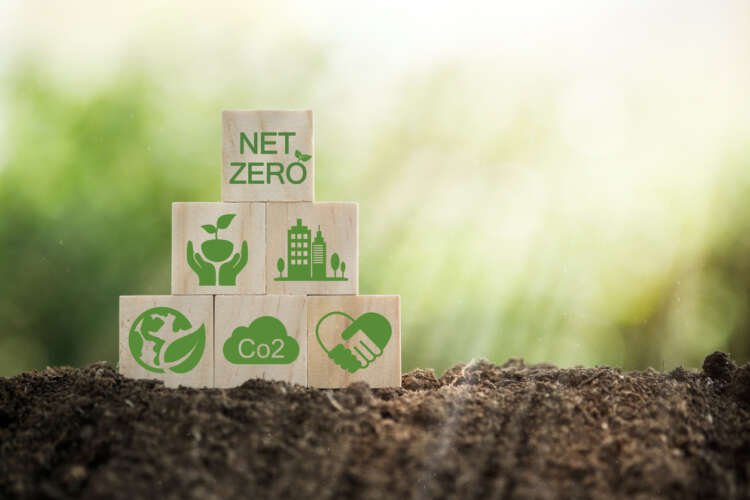
    An illustration depicting a green net icon symbolizes the banking industry's shift towards carbon neutrality and net zero goals. This image underscores the importance of environmental responsibility in financial services, aligning with the article's focus on climate crisis disruptions.
    Illustration of a green net icon representing carbon neutrality and net zero initiatives in banking - Global Banking & Finance Review
    Why waste money on news and opinion when you can access them for free?

    Take advantage of our newsletter subscription and stay informed on the go!

    Subscribe

    Tags:sustainabilityinnovationfinancial servicesClimate Changetechnology

    By Jason Matteson, Director of Product Strategy, Iceotope

    When we think of market disruptors we typically think of a ride-sharing service like Uber or streaming services like Netflix or Amazon for just about everything else. The term “market disruptor” isn’t limited to products or services but can also include people and ideas. Sometimes it can even be a societal change that forces companies and organizations to reassess how they do business. The climate crisis is creating one such disruption.

    Across the financial services industry, global banks and other financial institutions are announcing carbon neutral and net zero initiatives. In simple terms, carbon neutral is the balancing of carbon emissions, i.e. any carbon that is produced is balanced by the carbon that is removed, while net zero is ensuring that no carbon was emitted from the beginning of the process, full stop. All of the Big Six US banks have announced a variation of carbon neutral and net zero plans in the last 18 months. In addition, the UN-backed Net Zero Banking Alliance was created in 2021. It brings together more than 100 banks from 40 countries to align their lending and investment portfolios with net-zero emissions by 2050. The banks agree to set targets that “identify carbon reductions across priority economic sectors“.

    The challenge comes in how to make those targets a reality. One place for financial institutions to begin is in their data center. For any organization looking to meet 2030 carbon neutral targets, decisions being made about data center infrastructure today will have a direct impact on the ability to meet those targets at the end of the decade. Servers, storage devices, network systems, etc. typically have a three to five year life cycle. Primarily this is to reduce risk and improve performance, but very quickly, the need to meet carbon neutral requirements will come into play. By 2023, data center administrators are going to be trying to figure out what architectures will be required, how their data centers have to be modified to support the next generation, and which technologies will allow them to meet these sustainability goals and objectives.

    The good news is there are solutions banks can incorporate today that will make a difference. One solution is precision immersion liquid cooling. Air cooling technologies have traditionally been the default standard for data centers. However, the limits to air cooling are quickly being reached and air cooling is emerging as a larger portion of a data center’s power consumption. Liquid cooling techniques circulate small volumes of a harmless dielectric compound across the surface of the server. This removes nearly 100% of the heat generated by the electronic components. It also eliminates the requirement for server fans and air-cooling infrastructure. As a result, liquid cooling has the ability to reduce infrastructure energy use by 40%, water consumption by 90% and improve pPUE to as low as 1.03.

    What happens within the data center, is only one area of concern for financial institutions, however. The Greenhouse Gas (GHG) Protocol is a widely used international accounting tool that divides an organization’s emissions into three different scopes. Scope 1 is direct emissions from owned or controlled sources or what the company produces themselves. Scope 2 is indirect emissions from the generation of purchased electricity, steam, heating and cooling consumed by the reporting company. Scope 3 is all other indirect emissions that occur in a company’s value chain. According to Fortune magazine Scope 3 presents the biggest challenge for the financial services industry. “For banks, the most crucial aspect of reaching ‘net zero’ isn’t achieving carbon neutrality in their own operations, known as Scope 1 and Scope 2 emissions, but rather ensuring the businesses they finance are carbon neutral too.” The upside is that we are likely to see real, long-term changes occur once investments get tied to these emissions targets.

    In some regards, we may be on the cusp of a perfect storm. Carbon neutral and net zero are driving the push towards more sustainable infrastructure. New rules and regulations are likely to be introduced by governments around the world to give these initiatives further weight. Financial applications, like risk compliance and fraud detection, are pushing the limits of existing technologies and intersecting with these initiatives, opening the door even further for new alternatives, like liquid cooling. All of this requires bold leadership and now is the time for new approaches and new results.

    Frequently Asked Questions about Carbon Neutral and Net Zero: The New Disrupter-in-Chief

    1What is carbon neutral?

    Carbon neutral refers to balancing carbon emissions produced with an equivalent amount of carbon removed from the atmosphere, resulting in a net-zero carbon footprint.

    2What is net zero?

    Net zero means that a company or organization ensures that no carbon emissions are released into the atmosphere, effectively eliminating their carbon footprint.

    3What is the Greenhouse Gas (GHG) Protocol?

    The GHG Protocol is an international accounting tool that categorizes an organization's emissions into three scopes: direct emissions, indirect emissions from energy consumption, and all other indirect emissions.

    4What are Scope 1, 2, and 3 emissions?

    Scope 1 emissions are direct emissions from owned sources, Scope 2 are indirect emissions from purchased energy, and Scope 3 includes all other indirect emissions in a company's value chain.

    5What is precision immersion liquid cooling?

    Precision immersion liquid cooling is a technology that uses a dielectric liquid to cool servers, significantly reducing energy use and water consumption compared to traditional air cooling.

    More from Top Stories

    Explore more articles in the Top Stories category

    Image for Lessons From the Ring and the Deal Table: How Boxing Shapes Steven Nigro’s Approach to Banking and Life
    Lessons From the Ring and the Deal Table: How Boxing Shapes Steven Nigro’s Approach to Banking and Life
    Image for Joe Kiani in 2025: Capital, Conviction, and a Focused Return to Innovation
    Joe Kiani in 2025: Capital, Conviction, and a Focused Return to Innovation
    Image for Marco Robinson – CLOSE THE DEAL AND SUDDENLY GROW RICH
    Marco Robinson – CLOSE THE DEAL AND SUDDENLY GROW RICH
    Image for Digital Tracing: Turning a regulatory obligation into a commercial advantage
    Digital Tracing: Turning a regulatory obligation into a commercial advantage
    Image for Exploring the Role of Blockchain and the Bitcoin Price Today in Education
    Exploring the Role of Blockchain and the Bitcoin Price Today in Education
    Image for Inside the World’s First Collection Industry Conglomerate: PCA Global’s Platform Strategy
    Inside the World’s First Collection Industry Conglomerate: PCA Global’s Platform Strategy
    Image for Chase Buchanan Private Wealth Management Highlights Key Autumn 2025 Budget Takeaways for Expats
    Chase Buchanan Private Wealth Management Highlights Key Autumn 2025 Budget Takeaways for Expats
    Image for PayLaju Strengthens Its Position as Malaysia’s Trusted Interest-Free Sharia-Compliant Loan Provider
    PayLaju Strengthens Its Position as Malaysia’s Trusted Interest-Free Sharia-Compliant Loan Provider
    Image for A Notable Update for Employee Health Benefits:
    A Notable Update for Employee Health Benefits:
    Image for Creating Equity Between Walls: How Mohak Chauhan is Using Engineering, Finance, and Community Vision to Reengineer Affordable Housing
    Creating Equity Between Walls: How Mohak Chauhan is Using Engineering, Finance, and Community Vision to Reengineer Affordable Housing
    Image for Upcoming Book on Real Estate Investing: Harvard Grace Capital Founder Stewart Heath’s Puts Lessons in Print
    Upcoming Book on Real Estate Investing: Harvard Grace Capital Founder Stewart Heath’s Puts Lessons in Print
    Image for ELECTIVA MARKS A LANDMARK FIRST YEAR WITH MAJOR SENIOR APPOINTMENTS AND EXPANSION MILESTONES
    ELECTIVA MARKS A LANDMARK FIRST YEAR WITH MAJOR SENIOR APPOINTMENTS AND EXPANSION MILESTONES
    View All Top Stories Posts
    Previous Top Stories PostWorld Well-being Week – Did We Learn Anything About Mental Health From The Pandemic?
    Next Top Stories PostJuul e-cigarettes to be ordered off U.S. shelves – WSJ