Search
00
GBAF Logo
trophy
Top StoriesInterviewsBusinessFinanceBankingTechnologyInvestingTradingVideosAwardsMagazinesHeadlinesTrends

Subscribe to our newsletter

Get the latest news and updates from our team.

Global Banking & Finance Review®

Global Banking & Finance Review® - Subscribe to our newsletter

Company

    GBAF Logo
    • About Us
    • Profile
    • Privacy & Cookie Policy
    • Terms of Use
    • Contact Us
    • Advertising
    • Submit Post
    • Latest News
    • Research Reports
    • Press Release
    • Awards▾
      • About the Awards
      • Awards TimeTable
      • Submit Nominations
      • Testimonials
      • Media Room
      • Award Winners
      • FAQ
    • Magazines▾
      • Global Banking & Finance Review Magazine Issue 79
      • Global Banking & Finance Review Magazine Issue 78
      • Global Banking & Finance Review Magazine Issue 77
      • Global Banking & Finance Review Magazine Issue 76
      • Global Banking & Finance Review Magazine Issue 75
      • Global Banking & Finance Review Magazine Issue 73
      • Global Banking & Finance Review Magazine Issue 71
      • Global Banking & Finance Review Magazine Issue 70
      • Global Banking & Finance Review Magazine Issue 69
      • Global Banking & Finance Review Magazine Issue 66
    Top StoriesInterviewsBusinessFinanceBankingTechnologyInvestingTradingVideosAwardsMagazinesHeadlinesTrends

    Global Banking & Finance Review® is a leading financial portal and online magazine offering News, Analysis, Opinion, Reviews, Interviews & Videos from the world of Banking, Finance, Business, Trading, Technology, Investing, Brokerage, Foreign Exchange, Tax & Legal, Islamic Finance, Asset & Wealth Management.
    Copyright © 2010-2026 GBAF Publications Ltd - All Rights Reserved. | Sitemap | Tags | Developed By eCorpIT

    Editorial & Advertiser disclosure

    Global Banking & Finance Review® is an online platform offering news, analysis, and opinion on the latest trends, developments, and innovations in the banking and finance industry worldwide. The platform covers a diverse range of topics, including banking, insurance, investment, wealth management, fintech, and regulatory issues. The website publishes news, press releases, opinion and advertorials on various financial organizations, products and services which are commissioned from various Companies, Organizations, PR agencies, Bloggers etc. These commissioned articles are commercial in nature. This is not to be considered as financial advice and should be considered only for information purposes. It does not reflect the views or opinion of our website and is not to be considered an endorsement or a recommendation. We cannot guarantee the accuracy or applicability of any information provided with respect to your individual or personal circumstances. Please seek Professional advice from a qualified professional before making any financial decisions. We link to various third-party websites, affiliate sales networks, and to our advertising partners websites. When you view or click on certain links available on our articles, our partners may compensate us for displaying the content to you or make a purchase or fill a form. This will not incur any additional charges to you. To make things simpler for you to identity or distinguish advertised or sponsored articles or links, you may consider all articles or links hosted on our site as a commercial article placement. We will not be responsible for any loss you may suffer as a result of any omission or inaccuracy on the website.

    Home > Top Stories > Capital markets stuck in ‘no man’s land’ as bankers miss out on fees
    Top Stories

    Capital markets stuck in ‘no man’s land’ as bankers miss out on fees

    Published by Uma Rajagopal

    Posted on December 21, 2022

    4 min read

    Last updated: February 2, 2026

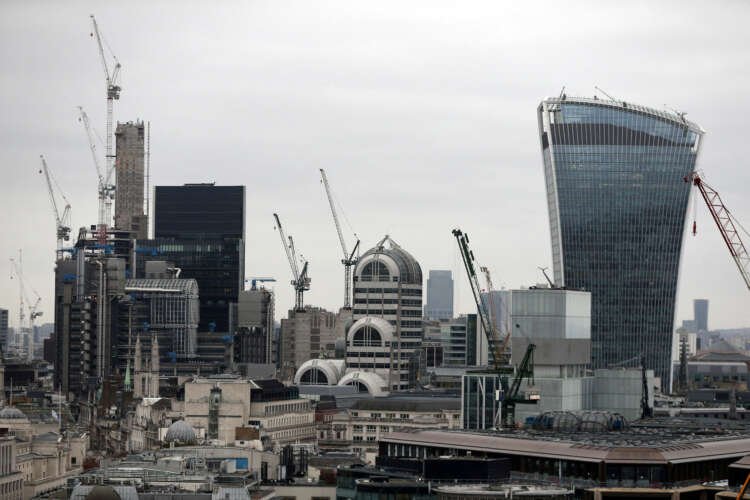
    The image captures the iconic London skyline, representing the financial district where investment bankers face challenges in capital markets amid economic uncertainty and declining IPO activity.
    London skyline showcasing the City of London, illustrating banking and finance - Global Banking & Finance Review
    Why waste money on news and opinion when you can access them for free?

    Take advantage of our newsletter subscription and stay informed on the go!

    Subscribe

    Tags:equityCapital MarketsInvestment Bankingfinancial crisismonetary policy

    By Pablo Mayo Cerqueiro and Echo Wang

    LONDON/NEW YORK (Reuters) -Investment bankers are bracing for another tough year ahead after losing out on lucrative fees from arranging initial public offerings (IPOs) and other share sales, as questions around monetary policy and a looming recession dampen hopes for a near-term rebound.

    Banks have executed $517 billion worth of equity capital markets (ECM) transactions to date in 2022, the lowest level since the early 2000s and a 66% drop from last year’s deal bonanza, according to Dealogic data.

    “ECM activity tends to be higher in periods of distress or where growth is strong, and today we’re in no man’s land,” said Gareth McCartney, who co-leads UBS’s global franchise.

    The IPO market all but ground to a halt this year, as Russia’s invasion of Ukraine and interest rate hikes from central banks weighed on the broader economy.

    Barring exceptions such as Porsche’s blockbuster 9.4 billion euro ($9.97 billion) offering in September, most major flotations, including those of Swiss dermatology specialist Galderma and SoftBank Group Corp-owned chip designer Arm, were deferred until market conditions improve.

    “We’re entering a new recessionary world we haven’t seen in a while,” said Valery Barrier, co-head of EMEA ECM at Citi. “We’re going to see more primary capital being raised, more convertible bonds to cheapen the cost of financing and non-core shareholding being sold.”

    As the cost of debt continues to rise, bankers expect companies to turn to equity solutions as a way to manage their balance sheets and protect their corporate ratings. Recent examples of such deals include French videogame developer Ubisoft’s 470 million euro convertible bond and Credit Suisse’s 4 billion Swiss franc cash call.

    Banks are hoping that a recent pickup in block trades and capital raising will spill over into the new year and pave the way for future IPOs.

    “Volatility has come down, so markets have the ingredients for issuance to pick up,” said Alex Watkins, co-head of ECM at JPMorgan for EMEA.

    RATE HIKES DAMPEN SENTIMENT

    Global equities slid last week following a string of hawkish announcements from major central banks. But some investors are betting that interest rates will start to plateau sooner than policymakers have indicated, as inflation shows signs of peaking.

    A return by long-only investors to capital markets deals is seen as key for any recovery, after a year in which hedge funds have taken a lead role as buyers of new issuance.

    “It’s fair to say that at times throughout 2022 the accelerated book build (ABB) activity has seen proportionately more participation from hedge funds,” said Antonio Limones, head of EMEA Equity syndicate at Credit Suisse. “But long-only demand has started to increase.”

    Some market participants are waiting to see where valuations settle before they commit to new deals, said Gerry Keefe, head of global banking for the Americas at HSBC.

    The structure of transactions will also be a crucial factor in the success of future IPOs, particularly for private equity-backed companies that carry large amounts of debt.

    “What you’ll probably see is deals come to market that are heavily de-risked, following in the footsteps of Mobileye in the U.S.,” said Lawrence Jamieson, head of EMEA ECM at Barclays. The world’s biggest private equity firms, which were forced to postpone the floats of several dozen IPO-ready portfolio companies this year, are expected to remain circumspect for the next few quarters. “The question is whether we’re going to see private equity investors getting comfortable with selling at lower valuations,” said James Palmer, head of EMEA ECM at Bank of America. “A lot of this will come down to an assessment of the investment’s return profile, as well as overall relevant fund dynamics.”

    A bright spot for IPOs has been the Middle East, where privately held and state-backed businesses are turning to markets for capital and liquidity – such companies have raised more cash this year through new listings than Europe and Africa combined.

    Earlier this month, Saudi oil refiner Luberef priced its $1.3 billion share offer at the top of the initial price range on the back of strong investor demand. Restaurant operator Americana also pulled off a $1.8 billion dual listing in November.

    However, a longer road to recovery awaits the rest of the world.

    “When the stock market is going like this, people typically don’t buy new issuance,” said Joshua Bonnie, co-head of Simpson Thacher & Bartlett’s global capital markets practice.

    ($1 = 0.9427 euro)

    (Reporting by Pablo Mayo Cerqueiro in London and Echo Wang in New York; Editing by Anirban Sen, Lisa Shumaker, Pamela Barbaglia and Matthew Lewis)

    Frequently Asked Questions about Capital markets stuck in ‘no man’s land’ as bankers miss out on fees

    1What is an IPO?

    An Initial Public Offering (IPO) is the process through which a private company offers shares to the public for the first time, allowing it to raise capital from public investors.

    2What are equity capital markets?

    Equity capital markets refer to the segment of the financial market where companies raise capital by issuing shares to investors, typically through IPOs and secondary offerings.

    3What is monetary policy?

    Monetary policy is the process by which a central bank manages the supply of money and interest rates to achieve macroeconomic objectives such as controlling inflation and stabilizing currency.

    4What is a recession?

    A recession is a significant decline in economic activity across the economy, lasting more than a few months, typically visible in GDP, income, employment, manufacturing, and retail sales.

    5What are convertible bonds?

    Convertible bonds are a type of debt security that allows the bondholder to convert the bond into a predetermined number of shares of the issuing company, usually at the bondholder's discretion.

    More from Top Stories

    Explore more articles in the Top Stories category

    Image for Lessons From the Ring and the Deal Table: How Boxing Shapes Steven Nigro’s Approach to Banking and Life
    Lessons From the Ring and the Deal Table: How Boxing Shapes Steven Nigro’s Approach to Banking and Life
    Image for Joe Kiani in 2025: Capital, Conviction, and a Focused Return to Innovation
    Joe Kiani in 2025: Capital, Conviction, and a Focused Return to Innovation
    Image for Marco Robinson – CLOSE THE DEAL AND SUDDENLY GROW RICH
    Marco Robinson – CLOSE THE DEAL AND SUDDENLY GROW RICH
    Image for Digital Tracing: Turning a regulatory obligation into a commercial advantage
    Digital Tracing: Turning a regulatory obligation into a commercial advantage
    Image for Exploring the Role of Blockchain and the Bitcoin Price Today in Education
    Exploring the Role of Blockchain and the Bitcoin Price Today in Education
    Image for Inside the World’s First Collection Industry Conglomerate: PCA Global’s Platform Strategy
    Inside the World’s First Collection Industry Conglomerate: PCA Global’s Platform Strategy
    Image for Chase Buchanan Private Wealth Management Highlights Key Autumn 2025 Budget Takeaways for Expats
    Chase Buchanan Private Wealth Management Highlights Key Autumn 2025 Budget Takeaways for Expats
    Image for PayLaju Strengthens Its Position as Malaysia’s Trusted Interest-Free Sharia-Compliant Loan Provider
    PayLaju Strengthens Its Position as Malaysia’s Trusted Interest-Free Sharia-Compliant Loan Provider
    Image for A Notable Update for Employee Health Benefits:
    A Notable Update for Employee Health Benefits:
    Image for Creating Equity Between Walls: How Mohak Chauhan is Using Engineering, Finance, and Community Vision to Reengineer Affordable Housing
    Creating Equity Between Walls: How Mohak Chauhan is Using Engineering, Finance, and Community Vision to Reengineer Affordable Housing
    Image for Upcoming Book on Real Estate Investing: Harvard Grace Capital Founder Stewart Heath’s Puts Lessons in Print
    Upcoming Book on Real Estate Investing: Harvard Grace Capital Founder Stewart Heath’s Puts Lessons in Print
    Image for ELECTIVA MARKS A LANDMARK FIRST YEAR WITH MAJOR SENIOR APPOINTMENTS AND EXPANSION MILESTONES
    ELECTIVA MARKS A LANDMARK FIRST YEAR WITH MAJOR SENIOR APPOINTMENTS AND EXPANSION MILESTONES
    View All Top Stories Posts
    Previous Top Stories PostSlovak prime minister says 2023 state budget will be approved in time
    Next Top Stories PostSiemens Gamesa names Luijendijk CEO of onshore wind unit