
Top Stories
Britain’s Car Output Drops 6% as Supply Woes Persist
Published by Uma Rajagopal
Posted on October 27, 2022
2 min readLast updated: February 3, 2026
Add as preferred source on Google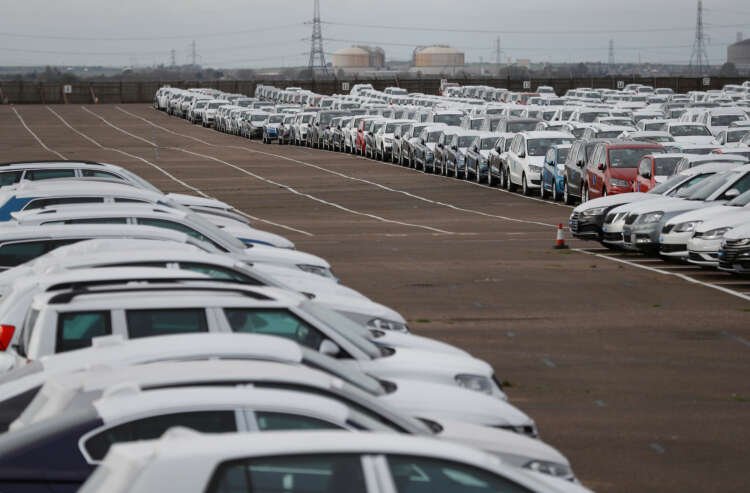
Published by Uma Rajagopal
Posted on October 27, 2022
2 min readLast updated: February 3, 2026
Add as preferred source on Google(Reuters) – British car production dropped 6% in September, an industry body said on Thursday, as the sector continues to bear the brunt of high energy costs, supply-chain snags and component shortages.
(Reuters) – British car production dropped 6% in September, an industry body said on Thursday, as the sector continues to bear the brunt of high energy costs, supply-chain snags and component shortages.
The Society of Motor Manufacturers and Traders (SMMT) said 63,125 units were made in Britain in September, nearly half of the levels seen in 2019, before the pandemic hit.
Battery electric vehicle (BEV) production grew 16.6% in the month, the SMMT said.
The global exports value of electric vehicles, which represents more than a third of all UK car exports, surged to 7.9 billion pounds ($9.13 billion) from 1.3 billion pounds over the last five years.
In September, SMMT said energy costs have emerged as the single biggest concern for British automotive manufacturers, which have collectively racked up more than 300 million pounds in bills during the year to August.
“In the week the UK gets a new prime minister, the sector is calling on the government to work together to create a competitive business environment for UK automotive manufacturing,” SMMT said.
Britain’s new Prime Minister Rishi Sunak, who replaced Liz Truss after her brief stint, takes on an economy facing recession at a time when the Bank of England is raising interest rates to tame double-digit inflation.
“Stability, combined with a plan that tackles critical skills shortages, delivers regulatory certainty and brings down the cost of energy in the long-term can help put the UK at the forefront of next-generation automotive manufacturing,” SMMT Chief Executive Mike Hawes said in a statement.
($1 = 0.8655 pounds)
(Reporting by Amna Karimi in Bengaluru; Editing by Devika Syamnath)
Battery electric vehicle (BEV) production refers to the manufacturing of vehicles that are powered entirely by electric batteries, without any internal combustion engine. This production has been increasing as demand for sustainable transportation grows.
Supply-chain snags are disruptions or delays in the supply chain process that can affect the production and distribution of goods. These can be caused by various factors, including shortages of components or logistical challenges.
Energy costs refer to the expenses associated with the consumption of energy, such as electricity and fuel. High energy costs can significantly impact manufacturing and operational expenses for businesses.
The Society of Motor Manufacturers and Traders (SMMT) is a trade association in the UK that represents the interests of the automotive industry, providing support and advocacy for its members.
Electric vehicle exports are significant as they represent a growing segment of the automotive market. The increase in exports indicates a rising demand for electric vehicles globally, contributing to economic growth.
Explore more articles in the Top Stories category











