Search
00
GBAF Logo
trophy
Top StoriesInterviewsBusinessFinanceBankingTechnologyInvestingTradingVideosAwardsMagazinesHeadlinesTrends

Subscribe to our newsletter

Get the latest news and updates from our team.

Global Banking & Finance Review®

Global Banking & Finance Review® - Subscribe to our newsletter

Company

    GBAF Logo
    • About Us
    • Profile
    • Privacy & Cookie Policy
    • Terms of Use
    • Contact Us
    • Advertising
    • Submit Post
    • Latest News
    • Research Reports
    • Press Release
    • Awards▾
      • About the Awards
      • Awards TimeTable
      • Submit Nominations
      • Testimonials
      • Media Room
      • Award Winners
      • FAQ
    • Magazines▾
      • Global Banking & Finance Review Magazine Issue 79
      • Global Banking & Finance Review Magazine Issue 78
      • Global Banking & Finance Review Magazine Issue 77
      • Global Banking & Finance Review Magazine Issue 76
      • Global Banking & Finance Review Magazine Issue 75
      • Global Banking & Finance Review Magazine Issue 73
      • Global Banking & Finance Review Magazine Issue 71
      • Global Banking & Finance Review Magazine Issue 70
      • Global Banking & Finance Review Magazine Issue 69
      • Global Banking & Finance Review Magazine Issue 66
    Top StoriesInterviewsBusinessFinanceBankingTechnologyInvestingTradingVideosAwardsMagazinesHeadlinesTrends

    Global Banking & Finance Review® is a leading financial portal and online magazine offering News, Analysis, Opinion, Reviews, Interviews & Videos from the world of Banking, Finance, Business, Trading, Technology, Investing, Brokerage, Foreign Exchange, Tax & Legal, Islamic Finance, Asset & Wealth Management.
    Copyright © 2010-2026 GBAF Publications Ltd - All Rights Reserved. | Sitemap | Tags | Developed By eCorpIT

    Editorial & Advertiser disclosure

    Global Banking & Finance Review® is an online platform offering news, analysis, and opinion on the latest trends, developments, and innovations in the banking and finance industry worldwide. The platform covers a diverse range of topics, including banking, insurance, investment, wealth management, fintech, and regulatory issues. The website publishes news, press releases, opinion and advertorials on various financial organizations, products and services which are commissioned from various Companies, Organizations, PR agencies, Bloggers etc. These commissioned articles are commercial in nature. This is not to be considered as financial advice and should be considered only for information purposes. It does not reflect the views or opinion of our website and is not to be considered an endorsement or a recommendation. We cannot guarantee the accuracy or applicability of any information provided with respect to your individual or personal circumstances. Please seek Professional advice from a qualified professional before making any financial decisions. We link to various third-party websites, affiliate sales networks, and to our advertising partners websites. When you view or click on certain links available on our articles, our partners may compensate us for displaying the content to you or make a purchase or fill a form. This will not incur any additional charges to you. To make things simpler for you to identity or distinguish advertised or sponsored articles or links, you may consider all articles or links hosted on our site as a commercial article placement. We will not be responsible for any loss you may suffer as a result of any omission or inaccuracy on the website.

    Home > Banking > Boom for banks as M&A and pandemic boost corporate FX needs
    Banking

    Boom for banks as M&A and pandemic boost corporate FX needs

    Published by maria gbaf

    Posted on September 17, 2021

    8 min read

    Last updated: January 20, 2026

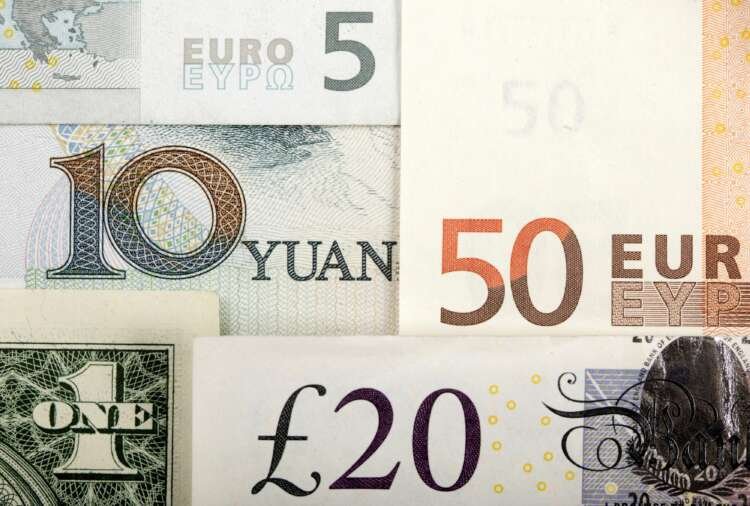
    The image depicts a corporate treasurer reviewing financial data related to currency hedging strategies. This surge in corporate FX needs, driven by M&A activity and pandemic pressures, highlights banks' growing role in foreign exchange markets.
    A corporate treasurer analyzing currency exposure data for hedging - Global Banking & Finance Review
    Why waste money on news and opinion when you can access them for free?

    Take advantage of our newsletter subscription and stay informed on the go!

    Subscribe

    By Saikat Chatterjee and Tommy Wilkes

    LONDON (Reuters) – A boom in corporate dealmaking, surging input costs and a focus on short-term cash flows in the pandemic have sent companies rushing to hedge their currency exposures this year, giving a boost to banks that sell foreign exchange products.

    Corporate treasurers say the pandemic, which sent revenues tanking in 2020 before this year’s sharp rebound, has encouraged many to hedge currency risks more frequently.

    Relentless supply chain pressures, and a sharp rise in raw material and other input costs that are mostly denominated in U.S. dollars, are reasons for companies to lock in prices too.

    And a surge in mergers and acquisitions as the recovery takes hold is also lifting corporate demand for foreign currencies. Global dealmaking is running at a record high this year, with $3.9 trillion of deals already transacted by early September, according to Refinitiv data.

    Multinational firms are among those to have increased their foreign exchange (FX) market activity.

    A corporate treasurer at one FTSE 100 firm said its auditors had told the company to hedge its exposures more effectively and “ensure that we only hedge the visible stream of revenues”.

    This has resulted in more volumes and smaller deal sizes, a development seen widely – treasurers say the average hedging deal among other large British firms has shrunk to between $5 million and $10 million, from $20 million pre-pandemic.

    “Corporate hedging activity has gone up in recent months because (companies’) time horizons to hedge their FX exposure have shortened,” said Naresh Aggarwal, policy director at the London-based Association of Corporate Treasurers.

    REVENUE BOOST

    It is proving a boon for banks’ currency trading desks, offsetting a recent drop in revenues from investor clients.

    Activity by financial market players, including asset managers and hedge funds, surged last year as the pandemic uncertainty boosted FX volatility, but in this year’s calmer market, they have cut back trading.

    Instead, banks are benefiting from the jump in activity from firms scrambling to hedge, borrow more or expand overseas. JP Morgan, UBS and Deutsche Bank are the top three banks by market share in the $6.6 trillion a day currency markets, according to a Euromoney survey.

    Data on market-wide foreign exchange volumes has a lag, but the most recent figures point to a jump in corporate turnover.

    Corporate activity on London’s foreign exchange markets averaged $117 billion a day in April, up 16.1% from six months earlier, according to the latest Bank of England data.

    The growth in “non financial institutions” volumes, a proxy for corporate activity, slightly outpaced market-wide growth of 15.6%, the data covering trading in the world’s biggest foreign exchange centre showed.

    Deutsche Bank’s global head of FX, Russell Lascala, said year-to-date FX revenues earned from the bank’s corporate client base were up significantly on 2019 levels and helping offset reduced investor trading, though he declined to give numbers.

    Fierce competition for financial clients’ business has squeezed bank profit margins. By contrast, corporations can provide stickier and more profitable business.

    Lascala said Deutsche Bank was pricing unusual but more profitable trades for companies “almost on a daily basis.”

    “Corporates are doing more business, they need to hedge more, they are expanding, they are borrowing, and doing many cross-border deals. In previous crises it was very different, they were not as strong and were playing defence,” he said.

    The 12 biggest investment banks globally earned $28 billion in revenues from trading commodities, bonds and currencies in the first quarter of 2021, up 15% from a year earlier, according to Coalition Greenwich data. That was the biggest first quarter revenue for the banks in the past six years.

    SMEs

    Small and medium-sized enterprises (SMEs) have also ramped up FX trading.

    Laurent Descout, CEO of payments firm Neo, said turnover had picked up for his cross-border business after a slow start.

    The company had cleared $1 billion of transactions by the end of August, much of it within the last few months, Descout said, adding that firms were eschewing more complex currency option products for ‘vanilla’ tools such as forward contracts.

    The supply chain disruptions, signs of rising inflation and uncertainty about the strength of the economic recovery should keep corporate FX hedging volumes elevated.

    Descout expects to see treasurers locking in FX rates for the “next 12-24 months to support medium-term cash flow and protect margins”.

    (Reporting by Saikat Chatterjee and Tommy Wilkes; Additional reporting by Kate Holton; Editing by Sujata Rao and Mark Potter)

    By Saikat Chatterjee and Tommy Wilkes

    LONDON (Reuters) – A boom in corporate dealmaking, surging input costs and a focus on short-term cash flows in the pandemic have sent companies rushing to hedge their currency exposures this year, giving a boost to banks that sell foreign exchange products.

    Corporate treasurers say the pandemic, which sent revenues tanking in 2020 before this year’s sharp rebound, has encouraged many to hedge currency risks more frequently.

    Relentless supply chain pressures, and a sharp rise in raw material and other input costs that are mostly denominated in U.S. dollars, are reasons for companies to lock in prices too.

    And a surge in mergers and acquisitions as the recovery takes hold is also lifting corporate demand for foreign currencies. Global dealmaking is running at a record high this year, with $3.9 trillion of deals already transacted by early September, according to Refinitiv data.

    Multinational firms are among those to have increased their foreign exchange (FX) market activity.

    A corporate treasurer at one FTSE 100 firm said its auditors had told the company to hedge its exposures more effectively and “ensure that we only hedge the visible stream of revenues”.

    This has resulted in more volumes and smaller deal sizes, a development seen widely – treasurers say the average hedging deal among other large British firms has shrunk to between $5 million and $10 million, from $20 million pre-pandemic.

    “Corporate hedging activity has gone up in recent months because (companies’) time horizons to hedge their FX exposure have shortened,” said Naresh Aggarwal, policy director at the London-based Association of Corporate Treasurers.

    REVENUE BOOST

    It is proving a boon for banks’ currency trading desks, offsetting a recent drop in revenues from investor clients.

    Activity by financial market players, including asset managers and hedge funds, surged last year as the pandemic uncertainty boosted FX volatility, but in this year’s calmer market, they have cut back trading.

    Instead, banks are benefiting from the jump in activity from firms scrambling to hedge, borrow more or expand overseas. JP Morgan, UBS and Deutsche Bank are the top three banks by market share in the $6.6 trillion a day currency markets, according to a Euromoney survey.

    Data on market-wide foreign exchange volumes has a lag, but the most recent figures point to a jump in corporate turnover.

    Corporate activity on London’s foreign exchange markets averaged $117 billion a day in April, up 16.1% from six months earlier, according to the latest Bank of England data.

    The growth in “non financial institutions” volumes, a proxy for corporate activity, slightly outpaced market-wide growth of 15.6%, the data covering trading in the world’s biggest foreign exchange centre showed.

    Deutsche Bank’s global head of FX, Russell Lascala, said year-to-date FX revenues earned from the bank’s corporate client base were up significantly on 2019 levels and helping offset reduced investor trading, though he declined to give numbers.

    Fierce competition for financial clients’ business has squeezed bank profit margins. By contrast, corporations can provide stickier and more profitable business.

    Lascala said Deutsche Bank was pricing unusual but more profitable trades for companies “almost on a daily basis.”

    “Corporates are doing more business, they need to hedge more, they are expanding, they are borrowing, and doing many cross-border deals. In previous crises it was very different, they were not as strong and were playing defence,” he said.

    The 12 biggest investment banks globally earned $28 billion in revenues from trading commodities, bonds and currencies in the first quarter of 2021, up 15% from a year earlier, according to Coalition Greenwich data. That was the biggest first quarter revenue for the banks in the past six years.

    SMEs

    Small and medium-sized enterprises (SMEs) have also ramped up FX trading.

    Laurent Descout, CEO of payments firm Neo, said turnover had picked up for his cross-border business after a slow start.

    The company had cleared $1 billion of transactions by the end of August, much of it within the last few months, Descout said, adding that firms were eschewing more complex currency option products for ‘vanilla’ tools such as forward contracts.

    The supply chain disruptions, signs of rising inflation and uncertainty about the strength of the economic recovery should keep corporate FX hedging volumes elevated.

    Descout expects to see treasurers locking in FX rates for the “next 12-24 months to support medium-term cash flow and protect margins”.

    (Reporting by Saikat Chatterjee and Tommy Wilkes; Additional reporting by Kate Holton; Editing by Sujata Rao and Mark Potter)

    More from Banking

    Explore more articles in the Banking category

    Image for Latin Securities Named Winner of Two Prestigious 2026 Global Banking & Finance Awards
    Latin Securities Named Winner of Two Prestigious 2026 Global Banking & Finance Awards
    Image for Pix at five years: how Brazil built one of the world’s most advanced public payments infrastructures - and why other countries are paying attention
    Pix at five years: how Brazil built one of the world’s most advanced public payments infrastructures - and why other countries are paying attention
    Image for Idle Stablecoins Are Becoming a Systemic Efficiency Problem — and Banks Should Pay Attention
    Idle Stablecoins Are Becoming a Systemic Efficiency Problem — and Banks Should Pay Attention
    Image for Banking Without Boundaries: A More Practical Approach to Global Banking
    Banking Without Boundaries: A More Practical Approach to Global Banking
    Image for Lessons From the Ring and the Deal Table: How Boxing Shapes Steven Nigro’s Approach to Banking and Life
    Lessons From the Ring and the Deal Table: How Boxing Shapes Steven Nigro’s Approach to Banking and Life
    Image for The Key to Unlocking ROI from GenAI
    The Key to Unlocking ROI from GenAI
    Image for The Changing Landscape of Small Business Lending: What Traditional Finance Models Miss
    The Changing Landscape of Small Business Lending: What Traditional Finance Models Miss
    Image for VestoFX.net Expands Education-Oriented Content as Focus on Risk Awareness Grows in CFD Trading
    VestoFX.net Expands Education-Oriented Content as Focus on Risk Awareness Grows in CFD Trading
    Image for The Hybrid Banking Model That Digital-Only Providers Cannot Match
    The Hybrid Banking Model That Digital-Only Providers Cannot Match
    Image for INTERPOLITAN MONEY ANNOUNCES RECORD GROWTH ACROSS 2025
    INTERPOLITAN MONEY ANNOUNCES RECORD GROWTH ACROSS 2025
    Image for Alter Bank Wins Two Prestigious Awards in the 2025 Global Banking & Finance Awards®
    Alter Bank Wins Two Prestigious Awards in the 2025 Global Banking & Finance Awards®
    Image for CIBC wins two Global Banking and Finance Awards for student banking
    CIBC wins two Global Banking and Finance Awards for student banking
    View All Banking Posts
    Previous Banking PostECB’s Lane reveals in private meeting inflation target may be met by 2025 – report
    Next Banking PostGeorgieva pressured World Bank employees to favor China in report – ethics probe