
Search
00
GBAF Logo
trophy
Top StoriesInterviewsBusinessFinanceBankingTechnologyInvestingTradingVideosAwardsMagazinesHeadlinesTrends

Subscribe to our newsletter

Get the latest news and updates from our team.

Global Banking & Finance Review®

Global Banking & Finance Review® - Subscribe to our newsletter

Company

    GBAF Logo
    • About Us
    • Advertising and Sponsorship
    • Profile & Readership
    • Contact Us
    • Latest News
    • Privacy & Cookies Policies
    • Terms of Use
    • Advertising Terms
    • Issue 81
    • Issue 80
    • Issue 79
    • Issue 78
    • Issue 77
    • Issue 76
    • Issue 75
    • Issue 74
    • Issue 73
    • Issue 72
    • Issue 71
    • Issue 70
    • View All
    • About the Awards
    • Awards Timetable
    • Awards Winners
    • Submit Nominations
    • Testimonials
    • Media Room
    • FAQ
    • Asset Management Awards
    • Brand of the Year Awards
    • Business Awards
    • Cash Management Banking Awards
    • Banking Technology Awards
    • CEO Awards
    • Customer Service Awards
    • CSR Awards
    • Deal of the Year Awards
    • Corporate Governance Awards
    • Corporate Banking Awards
    • Digital Transformation Awards
    • Fintech Awards
    • Education & Training Awards
    • ESG & Sustainability Awards
    • ESG Awards
    • Forex Banking Awards
    • Innovation Awards
    • Insurance & Takaful Awards
    • Investment Banking Awards
    • Investor Relations Awards
    • Leadership Awards
    • Islamic Banking Awards
    • Real Estate Awards
    • Project Finance Awards
    • Process & Product Awards
    • Telecommunication Awards
    • HR & Recruitment Awards
    • Trade Finance Awards
    • The Next 100 Global Awards
    • Wealth Management Awards
    • Travel Awards
    • Years of Excellence Awards
    • Publishing Principles
    • Ownership & Funding
    • Corrections Policy
    • Editorial Code of Ethics
    • Diversity & Inclusion Policy
    • Fact Checking Policy
    Original content: Global Banking and Finance Review - https://www.globalbankingandfinance.com

    A global financial intelligence and recognition platform delivering authoritative insights, data-driven analysis, and institutional benchmarking across Banking, Capital Markets, Investment, Technology, and Financial Infrastructure.

    Copyright © 2010-2026 - All Rights Reserved. | Sitemap | Tags

    Editorial & Advertiser disclosure

    Global Banking & Finance Review® is an online platform offering news, analysis, and opinion on the latest trends, developments, and innovations in the banking and finance industry worldwide. The platform covers a diverse range of topics, including banking, insurance, investment, wealth management, fintech, and regulatory issues. The website publishes news, press releases, opinion and advertorials on various financial organizations, products and services which are commissioned from various Companies, Organizations, PR agencies, Bloggers etc. These commissioned articles are commercial in nature. This is not to be considered as financial advice and should be considered only for information purposes. It does not reflect the views or opinion of our website and is not to be considered an endorsement or a recommendation. We cannot guarantee the accuracy or applicability of any information provided with respect to your individual or personal circumstances. Please seek Professional advice from a qualified professional before making any financial decisions. We link to various third-party websites, affiliate sales networks, and to our advertising partners websites. When you view or click on certain links available on our articles, our partners may compensate us for displaying the content to you or make a purchase or fill a form. This will not incur any additional charges to you. To make things simpler for you to identity or distinguish advertised or sponsored articles or links, you may consider all articles or links hosted on our site as a commercial article placement. We will not be responsible for any loss you may suffer as a result of any omission or inaccuracy on the website.

    1. Home
    2. >Banking
    3. >BOJ keeps ultra-low rates, gives few clues on when it might hike
    Banking

    BOJ Keeps Ultra-Low Rates, Gives Few Clues on When It Might Hike

    Published by Jessica Weisman-Pitts

    Posted on December 19, 2024

    4 min read

    Last updated: January 28, 2026

    Add as preferred source on Google
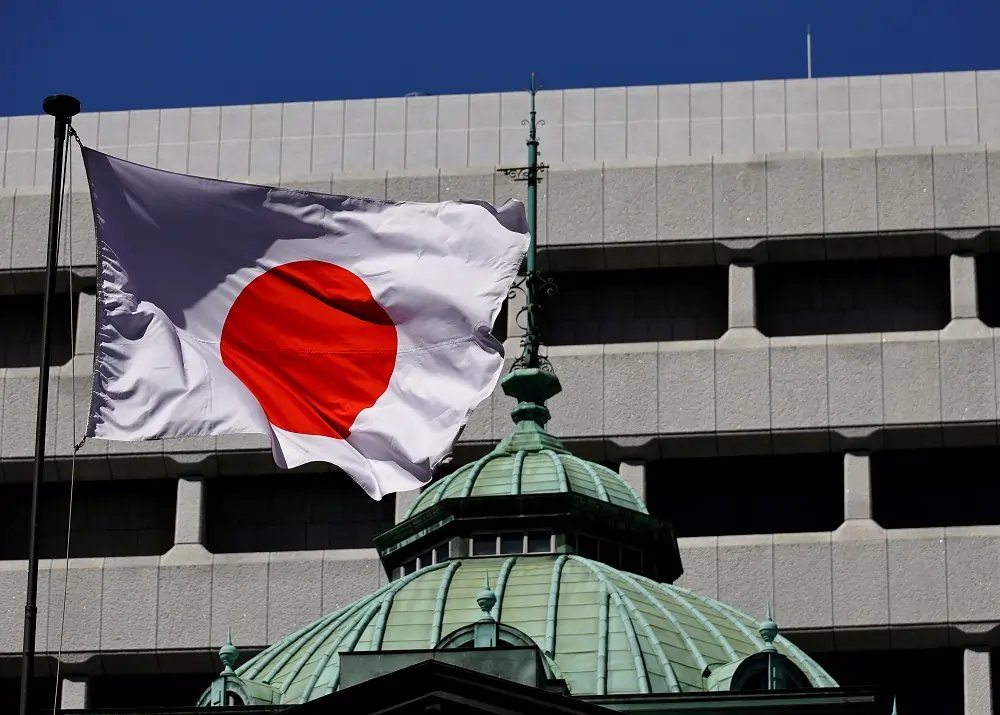
    This image depicts a graph showing the estimated effects of interest rate hikes by the Bank of Japan on its earnings. The article discusses potential losses and future monetary policy strategies.
    Graph illustrating the Bank of Japan's interest rate hike impact on earnings - Global Banking & Finance Review
    Why waste money on news and opinion when you can access them for free?

    Take advantage of our newsletter subscription and stay informed on the go!

    Subscribe

    Tags:monetary policyinterest ratesfinancial marketseconomic growth

    By Leika Kihara, Satoshi Sugiyama

    TOKYO (Reuters) -The Bank of Japan kept interest rates unchanged on Thursday and its governor offered few clues on how soon it could push up borrowing costs, sending the yen and bond yields tumbling on fresh doubts over the near-term chances of a rate hike.

    As widely expected, the nine-member board maintained its short-term policy rate at 0.25% in a sign policymakers preferred to tread cautiously amid uncertainty over U.S. president-elect Donald Trump’s economic plans.

    But hawkish board member Naoki Tamura dissented and proposed, unsuccessfully, to raise interest rates to 0.5% on the view that inflationary risks were building.

    The BOJ’s meeting concluded hours after the U.S. Federal Reserve cut interest rates but signalled a more cautious path of easing next year, sending global stocks sharply lower.

    BOJ Governor Kazuo Ueda reiterated the central bank’s resolve to keep raising rates from their current very low levels if the economy and prices move in line with its forecasts.

    Asked why the BOJ stood pat, Ueda told a news conference that the bank preferred to await data on whether wages would retain their upward momentum next year, and to gain more clarity on Trump’s economic policies.

    “Taken together, the likelihood of Japan’s economy moving in line with our forecast is heightening. But we’d like one notch more information to believe we can raise interest rates. That includes the sustainability of wage increases,” he said.

    Investors widely interpreted his remarks as diminishing the chance of a rate hike at the BOJ’s next meeting in January. The dollar rose to 157.075 yen, up 1.4% on the day and its highest since July.

    “There’s a chance the BOJ might wait until March, given he stressed the need to scrutinise next year’s wage negotiations,” said Junki Iwahashi, senior economist at Sumitomo Mitsui Trust Bank.

    Ueda said the BOJ would not necessarily need to wait for a particular event or piece of data to hike rates, although it could take its time as Japan’s underlying inflation remained moderate. The rise in import prices, a key contributor to inflation that has been blamed in part on the weak yen, was slowing, he added.

    The yen has been languishing in recent months near its lowest in 30 years as Japanese interest rates lag other major economies. Market players have pointed to yen weakness as a key reason for the BOJ to hike rates or get more hawkish in its communications.

    STEADY RECOVERY

    The BOJ holds it next policy meeting on Jan. 23-24. The central bank’s report on regional economies, due on Jan. 9, will offer clues on whether wage hikes are broadening out and taking root among smaller firms.

    BOJ Deputy Governor Ryozo Himino will deliver a speech and hold a news conference on Jan. 14, which may offer further hints on whether the bank will raise rates in January.

    The next window for a move after January will come two months later, on March 18-19.

    The BOJ on Thursday also released its review of the pros and cons of monetary easing tools, including negative interest rates, deployed during its 25-year battle with deflation.

    The review warned of various side effects from unconventional monetary easing measures, rendering them unsuitable as a substitute for traditional tools like interest rate cuts.

    The BOJ ended negative interest rates in March and raised its short-term policy target to 0.25% in July. It has signalled a readiness to hike again if wages and prices move as projected.

    All respondents in a Reuters poll taken earlier this month expected the BOJ to raise rates to 0.50% by end-March, although they had been divided on whether the move would come in December, January or March.

    Japan’s economy expanded an annualised 1.2% in the three months to September, slowing from the previous quarter’s 2.2% increase, with consumption up a feeble 0.7%.

    BOJ policymakers hope that workers’ regular pay, which recently has been rising at an annual pace of 2.5% to 3%, keeps increasing and supports consumption.

    There are growing signs that companies are keen to continue hiking pay due to intensifying labour shortages, boding well for the BOJ’s plan to keep raising interest rates gradually.

    But slowing demand in China and uncertainty over the fallout from Trump’s policies could weigh on corporate profits and discourage some of them from boosting pay.

    (Reporting by Leika Kihara and Satoshi Sugiyama; Additional reporting by Makiko Yamazaki, Kantaro Komiya, Chang-Ran Kim, Yoshifumi Takemoto and Ankur Banerjee; Editing by Jamie Freed, Sam Holmes and Edmund Klamann)

    Frequently Asked Questions about BOJ keeps ultra-low rates, gives few clues on when it might hike

    1What is monetary policy?

    Monetary policy refers to the actions taken by a central bank to manage the money supply and interest rates to achieve macroeconomic goals such as controlling inflation and fostering economic growth.

    2What are interest rates?

    Interest rates are the cost of borrowing money or the return on savings, expressed as a percentage. They are influenced by central bank policies and affect economic activity.

    3What is inflation?

    Inflation is the rate at which the general level of prices for goods and services rises, eroding purchasing power. Central banks aim to control inflation through monetary policy.

    4What is economic growth?

    Economic growth is the increase in the production of goods and services in an economy over time, typically measured by the rise in Gross Domestic Product (GDP).

    5What is the role of a central bank?

    A central bank is responsible for overseeing the monetary system of a country, managing interest rates, controlling inflation, and ensuring financial stability.

    More from Banking

    Explore more articles in the Banking category

    Image for Nominate Today for the Leadership Awards 2026
    Nominate Today for the Leadership Awards 2026
    Image for Submit Your Entries for Insurance & Takaful Awards 2026
    Submit Your Entries for Insurance & Takaful Awards 2026
    Image for Calling for Entries: ESG & Sustainability Awards 2026
    Calling for Entries: ESG & Sustainability Awards 2026
    Image for Call for Entries: Deal of the Year Awards 2026
    Call for Entries: Deal of the Year Awards 2026
    Image for Submit Your Entry Today for Customer Service Awards 2026
    Submit Your Entry Today for Customer Service Awards 2026
    Image for Submit Your Entry Today for CSR Awards 2026
    Submit Your Entry Today for CSR Awards 2026
    Image for Submit Your Entry Today for Retail Banking Awards 2026
    Submit Your Entry Today for Retail Banking Awards 2026
    Image for Nominations Open for Islamic Banking Awards 2026
    Nominations Open for Islamic Banking Awards 2026
    Image for Submit Your Entry Today for Fund & Asset Management Awards 2026
    Submit Your Entry Today for Fund & Asset Management Awards 2026
    Image for Entries Open for Forex Banking Awards 2026
    Entries Open for Forex Banking Awards 2026
    Image for Call for Entries for Brand of the Year Awards 2026
    Call for Entries for Brand of the Year Awards 2026
    Image for Nominations Open for Corporate Banking Awards 2026
    Nominations Open for Corporate Banking Awards 2026
    View All Banking Posts
    Previous Banking PostNorway Keeps Rates on Hold, Eyes Three Cuts in 2025
    Next Banking PostBank of England to Keep Rates Steady as Price Pressures Linger






