Search
00
GBAF Logo
trophy
Top StoriesInterviewsBusinessFinanceBankingTechnologyInvestingTradingVideosAwardsMagazinesHeadlinesTrends

Subscribe to our newsletter

Get the latest news and updates from our team.

Global Banking & Finance Review®

Global Banking & Finance Review® - Subscribe to our newsletter

Company

    GBAF Logo
    • About Us
    • Profile
    • Privacy & Cookie Policy
    • Terms of Use
    • Contact Us
    • Advertising
    • Submit Post
    • Latest News
    • Research Reports
    • Press Release
    • Awards▾
      • About the Awards
      • Awards TimeTable
      • Submit Nominations
      • Testimonials
      • Media Room
      • Award Winners
      • FAQ
    • Magazines▾
      • Global Banking & Finance Review Magazine Issue 79
      • Global Banking & Finance Review Magazine Issue 78
      • Global Banking & Finance Review Magazine Issue 77
      • Global Banking & Finance Review Magazine Issue 76
      • Global Banking & Finance Review Magazine Issue 75
      • Global Banking & Finance Review Magazine Issue 73
      • Global Banking & Finance Review Magazine Issue 71
      • Global Banking & Finance Review Magazine Issue 70
      • Global Banking & Finance Review Magazine Issue 69
      • Global Banking & Finance Review Magazine Issue 66
    Top StoriesInterviewsBusinessFinanceBankingTechnologyInvestingTradingVideosAwardsMagazinesHeadlinesTrends

    Global Banking & Finance Review® is a leading financial portal and online magazine offering News, Analysis, Opinion, Reviews, Interviews & Videos from the world of Banking, Finance, Business, Trading, Technology, Investing, Brokerage, Foreign Exchange, Tax & Legal, Islamic Finance, Asset & Wealth Management.
    Copyright © 2010-2026 GBAF Publications Ltd - All Rights Reserved. | Sitemap | Tags | Developed By eCorpIT

    Editorial & Advertiser disclosure

    Global Banking & Finance Review® is an online platform offering news, analysis, and opinion on the latest trends, developments, and innovations in the banking and finance industry worldwide. The platform covers a diverse range of topics, including banking, insurance, investment, wealth management, fintech, and regulatory issues. The website publishes news, press releases, opinion and advertorials on various financial organizations, products and services which are commissioned from various Companies, Organizations, PR agencies, Bloggers etc. These commissioned articles are commercial in nature. This is not to be considered as financial advice and should be considered only for information purposes. It does not reflect the views or opinion of our website and is not to be considered an endorsement or a recommendation. We cannot guarantee the accuracy or applicability of any information provided with respect to your individual or personal circumstances. Please seek Professional advice from a qualified professional before making any financial decisions. We link to various third-party websites, affiliate sales networks, and to our advertising partners websites. When you view or click on certain links available on our articles, our partners may compensate us for displaying the content to you or make a purchase or fill a form. This will not incur any additional charges to you. To make things simpler for you to identity or distinguish advertised or sponsored articles or links, you may consider all articles or links hosted on our site as a commercial article placement. We will not be responsible for any loss you may suffer as a result of any omission or inaccuracy on the website.

    Home > Top Stories > Biden says Afghan leaders must ‘fight for their nation’ as Taliban gains
    Top Stories

    Biden says Afghan leaders must ‘fight for their nation’ as Taliban gains

    Published by maria gbaf

    Posted on August 11, 2021

    9 min read

    Last updated: January 21, 2026

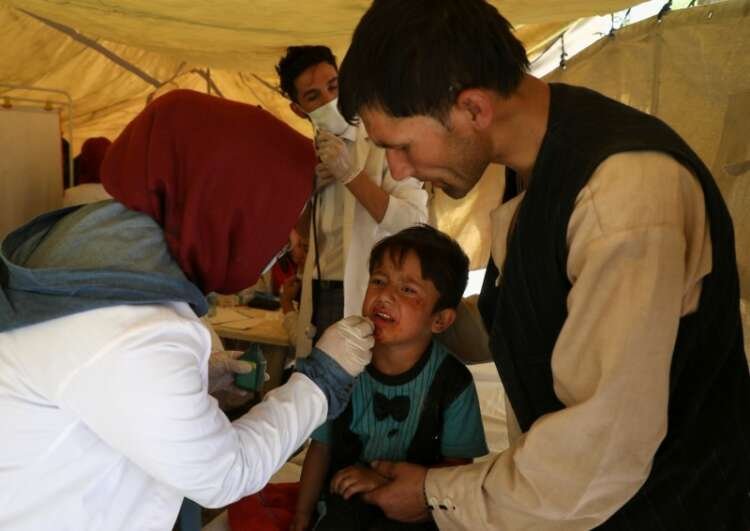
    U.S. President Joe Biden emphasizes the need for Afghan leaders to unite and fight against the Taliban's territorial gains, as 65% of Afghanistan falls under militant control. This image reflects the ongoing conflict and its implications for Afghanistan's future.
    Afghan leaders urged to unite against Taliban insurgents - Global Banking & Finance Review
    Why waste money on news and opinion when you can access them for free?

    Take advantage of our newsletter subscription and stay informed on the go!

    Subscribe

    KABUL/WASHINGTON (Reuters) -Taliban insurgents tightened their grip on captured Afghan territory on Tuesday, now controlling 65% of the country, as U.S. President Joe Biden urged the nation’s leaders to fight for their homeland.

    Pul-e-Khumri, capital of the northern province of Baghlan, fell to the Taliban on Tuesday evening, according to residents who reported Afghan security forces retreating toward the Kelagi desert, home to a large Afghan army base.

    Pul-e-Khumri became the seventh regional capital to come under the control of the Islamist militants in about a week. https://graphics.reuters.com/AFGHANISTAN-CONFLICT/FLASHPOINTS/lbpgnrazjvq/index.html

    “Afghan leaders have to come together,” Biden told reporters at the White House, saying the Afghan troops outnumber the Taliban and must want to fight. “They’ve got to fight for themselves, fight for their nation.”

    The U.S. president said he does not regret his decision to withdraw, noting that Washington has spent more than $1 trillion over 20 years and lost thousands of troops. He said the United States continues to provide significant air support, food, equipment and salaries to Afghan forces.

    In Kabul, Afghan President Ashraf Ghani said he was seeking help from regional militias he has squabbled with for years. He appealed to civilians to defend Afghanistan’s “democratic fabric.”

    In Aibak, a provincial capital between the northern city of Mazar-i-Sharif and Kabul, Taliban fighters were moving into government buildings. Most government forces appeared to have withdrawn.

    “The only way is self-imposed house arrest or to find a way to leave for Kabul,” said tax officer Sher Mohamed Abbas, when asked about living conditions in Aibak.

    “But then even Kabul is not a safe option anymore,” said Abbas, who supports a family of nine.

    The north for years was Afghanistan’s most peaceful region, with only a minimal Taliban presence. The militants’ strategy https://graphics.reuters.com/AFGHANISTAN-CONFLICT/FLASHPOINTS/lbpgnrazjvq/index.html appears to be to take the north, and border crossings in the north, west and south, and then close in on Kabul.

    The Taliban, battling to defeat the U.S-backed government and reimpose strict Islamic law with peace talks at an impasse, met little resistance as they swept into Aibak on Monday.

    A spokesman for the group’s political office told Al Jazeera TV on Tuesday that the group is committed to the negotiation path in Doha and does not want it to collapse.

    Taliban forces now control 65% of Afghanistan, threaten to take 11 provincial capitals and seek to deprive Kabul of its traditional support from national forces in the north, a senior European Union official said on Tuesday.

    The government has withdrawn from hard-to-defend rural districts to focus on holding population centers. Officials have appealed for pressure on Pakistan to stop Taliban reinforcements and supplies flowing over the border. Pakistan denies backing the Taliban.

    The United States has been carrying out some air strikes to support government troops. Defense Department spokesman John Kirby said the strikes were having a “kinetic” effect on the Taliban, but acknowledged limitations.

    “Nobody has suggested here that air strikes are a panacea, that will solve all the problems of the conditions on the ground. We’ve never said that,” Kirby said.

    DISPLACED FAMILIES

    Taliban and government officials confirmed that the Islamist insurgents have overrun six provincial capitals in recent days in the north, west and south.

    Gulam Bahauddin Jailani, head of the national disaster authority, told Reuters fighting was going on in 25 of 34 provinces and 60,000 families had been displaced over the past two months, with most seeking refuge in Kabul.

    Six EU member states warned the bloc’s executive against halting deportations of rejected Afghan asylum seekers arriving in Europe, fearing a possible replay of a 2015-16 crisis over the arrival of more than a million migrants, mainly from the Middle East.

    U.N. human rights chief Michelle Bachelet said reports of violations that could amount to war crimes and crimes against humanity were emerging, including “deeply disturbing reports” of the summary execution of surrendering government troops.

    “People rightly fear that a seizure of power by the Taliban will erase the human rights gains of the past two decades,” Bachelet said.

    The Taliban, ousted after the Sept. 11 attacks on the United States, appeared to be in a position to advance from different directions on Mazar-i-Sharif. Its fall would deal a devastating blow to Ghani’s government.

    Atta Mohammad Noor, a northern militia commander, vowed there would be “resistance until the last drop of my blood”. He added on Twitter: “I prefer dying in dignity than dying in despair.”

    Washington will complete the withdrawal of its forces this month in exchange for Taliban promises to prevent Afghanistan being used for international terrorism. The Taliban promised not to attack foreign forces as they withdraw but did not agree to a ceasefire with the government.

    (Reporting by Afganistan bureau; Additional reporting by Emma Farge in Geneva, Sabine Siebold and John Chalmers in Brussels and Andrea Shalal and Trevor Hunnicutt in Washington; Writing by Patricia Zengerle; Editing by Mark Heinrich and Peter Cooney)

    KABUL/WASHINGTON (Reuters) -Taliban insurgents tightened their grip on captured Afghan territory on Tuesday, now controlling 65% of the country, as U.S. President Joe Biden urged the nation’s leaders to fight for their homeland.

    Pul-e-Khumri, capital of the northern province of Baghlan, fell to the Taliban on Tuesday evening, according to residents who reported Afghan security forces retreating toward the Kelagi desert, home to a large Afghan army base.

    Pul-e-Khumri became the seventh regional capital to come under the control of the Islamist militants in about a week. https://graphics.reuters.com/AFGHANISTAN-CONFLICT/FLASHPOINTS/lbpgnrazjvq/index.html

    “Afghan leaders have to come together,” Biden told reporters at the White House, saying the Afghan troops outnumber the Taliban and must want to fight. “They’ve got to fight for themselves, fight for their nation.”

    The U.S. president said he does not regret his decision to withdraw, noting that Washington has spent more than $1 trillion over 20 years and lost thousands of troops. He said the United States continues to provide significant air support, food, equipment and salaries to Afghan forces.

    In Kabul, Afghan President Ashraf Ghani said he was seeking help from regional militias he has squabbled with for years. He appealed to civilians to defend Afghanistan’s “democratic fabric.”

    In Aibak, a provincial capital between the northern city of Mazar-i-Sharif and Kabul, Taliban fighters were moving into government buildings. Most government forces appeared to have withdrawn.

    “The only way is self-imposed house arrest or to find a way to leave for Kabul,” said tax officer Sher Mohamed Abbas, when asked about living conditions in Aibak.

    “But then even Kabul is not a safe option anymore,” said Abbas, who supports a family of nine.

    The north for years was Afghanistan’s most peaceful region, with only a minimal Taliban presence. The militants’ strategy https://graphics.reuters.com/AFGHANISTAN-CONFLICT/FLASHPOINTS/lbpgnrazjvq/index.html appears to be to take the north, and border crossings in the north, west and south, and then close in on Kabul.

    The Taliban, battling to defeat the U.S-backed government and reimpose strict Islamic law with peace talks at an impasse, met little resistance as they swept into Aibak on Monday.

    A spokesman for the group’s political office told Al Jazeera TV on Tuesday that the group is committed to the negotiation path in Doha and does not want it to collapse.

    Taliban forces now control 65% of Afghanistan, threaten to take 11 provincial capitals and seek to deprive Kabul of its traditional support from national forces in the north, a senior European Union official said on Tuesday.

    The government has withdrawn from hard-to-defend rural districts to focus on holding population centers. Officials have appealed for pressure on Pakistan to stop Taliban reinforcements and supplies flowing over the border. Pakistan denies backing the Taliban.

    The United States has been carrying out some air strikes to support government troops. Defense Department spokesman John Kirby said the strikes were having a “kinetic” effect on the Taliban, but acknowledged limitations.

    “Nobody has suggested here that air strikes are a panacea, that will solve all the problems of the conditions on the ground. We’ve never said that,” Kirby said.

    DISPLACED FAMILIES

    Taliban and government officials confirmed that the Islamist insurgents have overrun six provincial capitals in recent days in the north, west and south.

    Gulam Bahauddin Jailani, head of the national disaster authority, told Reuters fighting was going on in 25 of 34 provinces and 60,000 families had been displaced over the past two months, with most seeking refuge in Kabul.

    Six EU member states warned the bloc’s executive against halting deportations of rejected Afghan asylum seekers arriving in Europe, fearing a possible replay of a 2015-16 crisis over the arrival of more than a million migrants, mainly from the Middle East.

    U.N. human rights chief Michelle Bachelet said reports of violations that could amount to war crimes and crimes against humanity were emerging, including “deeply disturbing reports” of the summary execution of surrendering government troops.

    “People rightly fear that a seizure of power by the Taliban will erase the human rights gains of the past two decades,” Bachelet said.

    The Taliban, ousted after the Sept. 11 attacks on the United States, appeared to be in a position to advance from different directions on Mazar-i-Sharif. Its fall would deal a devastating blow to Ghani’s government.

    Atta Mohammad Noor, a northern militia commander, vowed there would be “resistance until the last drop of my blood”. He added on Twitter: “I prefer dying in dignity than dying in despair.”

    Washington will complete the withdrawal of its forces this month in exchange for Taliban promises to prevent Afghanistan being used for international terrorism. The Taliban promised not to attack foreign forces as they withdraw but did not agree to a ceasefire with the government.

    (Reporting by Afganistan bureau; Additional reporting by Emma Farge in Geneva, Sabine Siebold and John Chalmers in Brussels and Andrea Shalal and Trevor Hunnicutt in Washington; Writing by Patricia Zengerle; Editing by Mark Heinrich and Peter Cooney)

    More from Top Stories

    Explore more articles in the Top Stories category

    Image for Lessons From the Ring and the Deal Table: How Boxing Shapes Steven Nigro’s Approach to Banking and Life
    Lessons From the Ring and the Deal Table: How Boxing Shapes Steven Nigro’s Approach to Banking and Life
    Image for Joe Kiani in 2025: Capital, Conviction, and a Focused Return to Innovation
    Joe Kiani in 2025: Capital, Conviction, and a Focused Return to Innovation
    Image for Marco Robinson – CLOSE THE DEAL AND SUDDENLY GROW RICH
    Marco Robinson – CLOSE THE DEAL AND SUDDENLY GROW RICH
    Image for Digital Tracing: Turning a regulatory obligation into a commercial advantage
    Digital Tracing: Turning a regulatory obligation into a commercial advantage
    Image for Exploring the Role of Blockchain and the Bitcoin Price Today in Education
    Exploring the Role of Blockchain and the Bitcoin Price Today in Education
    Image for Inside the World’s First Collection Industry Conglomerate: PCA Global’s Platform Strategy
    Inside the World’s First Collection Industry Conglomerate: PCA Global’s Platform Strategy
    Image for Chase Buchanan Private Wealth Management Highlights Key Autumn 2025 Budget Takeaways for Expats
    Chase Buchanan Private Wealth Management Highlights Key Autumn 2025 Budget Takeaways for Expats
    Image for PayLaju Strengthens Its Position as Malaysia’s Trusted Interest-Free Sharia-Compliant Loan Provider
    PayLaju Strengthens Its Position as Malaysia’s Trusted Interest-Free Sharia-Compliant Loan Provider
    Image for A Notable Update for Employee Health Benefits:
    A Notable Update for Employee Health Benefits:
    Image for Creating Equity Between Walls: How Mohak Chauhan is Using Engineering, Finance, and Community Vision to Reengineer Affordable Housing
    Creating Equity Between Walls: How Mohak Chauhan is Using Engineering, Finance, and Community Vision to Reengineer Affordable Housing
    Image for Upcoming Book on Real Estate Investing: Harvard Grace Capital Founder Stewart Heath’s Puts Lessons in Print
    Upcoming Book on Real Estate Investing: Harvard Grace Capital Founder Stewart Heath’s Puts Lessons in Print
    Image for ELECTIVA MARKS A LANDMARK FIRST YEAR WITH MAJOR SENIOR APPOINTMENTS AND EXPANSION MILESTONES
    ELECTIVA MARKS A LANDMARK FIRST YEAR WITH MAJOR SENIOR APPOINTMENTS AND EXPANSION MILESTONES
    View All Top Stories Posts
    Previous Top Stories PostFrench vaccination centres vandalised as health pass is introduced
    Next Top Stories PostAustralia extends COVID-19 lockdown in Melbourne for seven days