Search
00
GBAF Logo
trophy
Top StoriesInterviewsBusinessFinanceBankingTechnologyInvestingTradingVideosAwardsMagazinesHeadlinesTrends

Subscribe to our newsletter

Get the latest news and updates from our team.

Global Banking & Finance Review®

Global Banking & Finance Review® - Subscribe to our newsletter

Company

    GBAF Logo
    • About Us
    • Profile
    • Privacy & Cookie Policy
    • Terms of Use
    • Contact Us
    • Advertising
    • Submit Post
    • Latest News
    • Research Reports
    • Press Release
    • Awards▾
      • About the Awards
      • Awards TimeTable
      • Submit Nominations
      • Testimonials
      • Media Room
      • Award Winners
      • FAQ
    • Magazines▾
      • Global Banking & Finance Review Magazine Issue 79
      • Global Banking & Finance Review Magazine Issue 78
      • Global Banking & Finance Review Magazine Issue 77
      • Global Banking & Finance Review Magazine Issue 76
      • Global Banking & Finance Review Magazine Issue 75
      • Global Banking & Finance Review Magazine Issue 73
      • Global Banking & Finance Review Magazine Issue 71
      • Global Banking & Finance Review Magazine Issue 70
      • Global Banking & Finance Review Magazine Issue 69
      • Global Banking & Finance Review Magazine Issue 66
    Top StoriesInterviewsBusinessFinanceBankingTechnologyInvestingTradingVideosAwardsMagazinesHeadlinesTrends

    Global Banking & Finance Review® is a leading financial portal and online magazine offering News, Analysis, Opinion, Reviews, Interviews & Videos from the world of Banking, Finance, Business, Trading, Technology, Investing, Brokerage, Foreign Exchange, Tax & Legal, Islamic Finance, Asset & Wealth Management.
    Copyright © 2010-2026 GBAF Publications Ltd - All Rights Reserved. | Sitemap | Tags | Developed By eCorpIT

    Editorial & Advertiser disclosure

    Global Banking & Finance Review® is an online platform offering news, analysis, and opinion on the latest trends, developments, and innovations in the banking and finance industry worldwide. The platform covers a diverse range of topics, including banking, insurance, investment, wealth management, fintech, and regulatory issues. The website publishes news, press releases, opinion and advertorials on various financial organizations, products and services which are commissioned from various Companies, Organizations, PR agencies, Bloggers etc. These commissioned articles are commercial in nature. This is not to be considered as financial advice and should be considered only for information purposes. It does not reflect the views or opinion of our website and is not to be considered an endorsement or a recommendation. We cannot guarantee the accuracy or applicability of any information provided with respect to your individual or personal circumstances. Please seek Professional advice from a qualified professional before making any financial decisions. We link to various third-party websites, affiliate sales networks, and to our advertising partners websites. When you view or click on certain links available on our articles, our partners may compensate us for displaying the content to you or make a purchase or fill a form. This will not incur any additional charges to you. To make things simpler for you to identity or distinguish advertised or sponsored articles or links, you may consider all articles or links hosted on our site as a commercial article placement. We will not be responsible for any loss you may suffer as a result of any omission or inaccuracy on the website.

    Home > Top Stories > Bank of Canada’s ‘soft landing’ scenario hits the rocks in bond market
    Top Stories

    Bank of Canada’s ‘soft landing’ scenario hits the rocks in bond market

    Published by Jessica Weisman-Pitts

    Posted on August 11, 2022

    3 min read

    Last updated: February 4, 2026

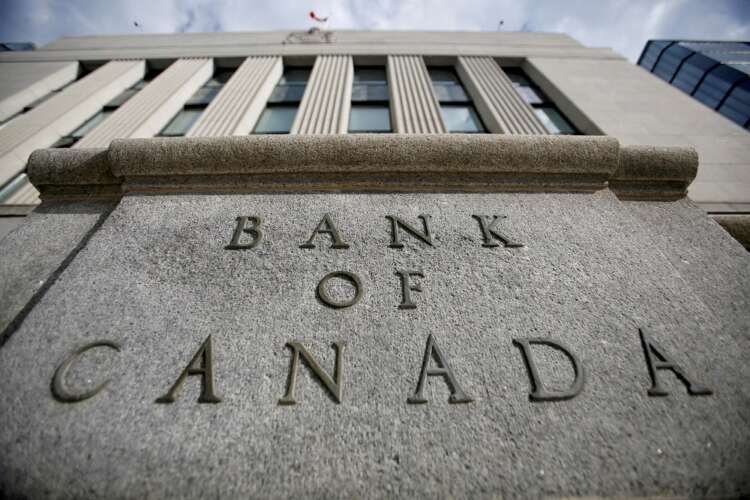
    The image shows the exterior of the Bank of Canada building in Ottawa, highlighting its significance in the current economic climate marked by rising interest rates and recession fears as discussed in the article.
    Exterior view of the Bank of Canada building, relating to interest rates and economic forecasts - Global Banking & Finance Review
    Why waste money on news and opinion when you can access them for free?

    Take advantage of our newsletter subscription and stay informed on the go!

    Subscribe

    Tags:monetary policyinterest ratesfinancial marketseconomic growth

    By Fergal Smith

    TORONTO (Reuters) – Canada’s inverted yield curve is signaling the Bank of Canada may raise interest rates to a level that triggers a recession, placing the central bank in a tough spot as it aims to tame high inflation and engineer a “soft landing” for the economy.

    The yield on the Canadian 10-year government bond has fallen some 50 basis points below the 2-year yield. That’s the biggest inversion of Canada’s yield curve in Reuters data going back to 1994 and deeper than the U.S. Treasury yield curve inversion.

    Some analysts see curve inversions as predictors of recessions. Canada’s economy is likely to be particularly sensitive to higher interest rates after Canadians borrowed heavily during the COVID-19 pandemic to participate in a red-hot housing market.

    “It makes sense that we should see more of an inversion this cycle than we have in the last few just because there is so much more of a central bank overtightening component to this,” said Andrew Kelvin, chief Canada strategist at TD Securities.

    “That’s what happens when central banks fall behind the curve.”

    The Bank of Canada, like many other central banks, held that inflation was “temporary” or “transitory” into the fall of 2021, and did not start raising borrowing costs until March 2022, when inflation was more than double the 2% target.

    Canada’s annual inflation rate hit 8.1% in June, its fastest pace since 1983.

    Investors have worried that central banks around the world will be unable to cool price pressures without triggering downturns. The Bank of England last week built a lengthy recession into its forecast.

    Meanwhile, the BoC has continued to project Canada will experience a “soft landing” in which the economy slows but does not tip into recession.

    “Such an outcome is not entirely impossible, but I don’t think they’d ease up (on rate hikes) because of a recession if inflation proves to be persistent,” said Derek Holt, head of capital markets economics at Scotiabank.

    Since March, Canada’s central bank has raised its benchmark lending rate by 225 basis points to 2.50%, including a full-percentage-point hike in its last policy decision in July.

    After U.S. data on Wednesday showed an easing of inflation pressures, money markets reduced their bets that Canada’s central bank would hike rates by another three-quarters of a percentage point next month.

    Still, the BoC’s policy rate is expected to climb to a peak of about 3.50% in the coming months, moving above the top of the 2%-3% range that the central bank estimates to be a neutral setting, or the level at which monetary policy is neither stimulating nor weighing on the economy.

    Such a restrictive setting would likely test the resilience of Canada’s economy, including the housing market, which has slowed rapidly in recent months.

    “In Canada, investors are worried about the impact a downturn in housing markets – and a longer-term household deleveraging cycle – could have on the wider economy,” said Karl Schamotta, chief market strategist at Corpay.

    “Under the central bank’s mandate, price stability trumps near-term economic growth considerations.”

    (Reporting by Fergal Smith; Editing by Paul Simao)

    Frequently Asked Questions about Bank of Canada’s ‘soft landing’ scenario hits the rocks in bond market

    1What is an inverted yield curve?

    An inverted yield curve occurs when short-term interest rates are higher than long-term rates, often signaling an upcoming recession as it reflects investor pessimism about future economic growth.

    2What is monetary policy?

    Monetary policy refers to the actions taken by a central bank to control the money supply and interest rates to achieve macroeconomic goals such as controlling inflation, consumption, growth, and liquidity.

    3What is inflation?

    Inflation is the rate at which the general level of prices for goods and services rises, eroding purchasing power. It is typically measured by the Consumer Price Index (CPI).

    4What are interest rates?

    Interest rates are the cost of borrowing money or the return on savings, expressed as a percentage. They are influenced by central bank policies and economic conditions.

    5What is a soft landing in economics?

    A soft landing refers to a scenario where an economy slows down without entering a recession, often achieved through careful monetary policy to control inflation while maintaining growth.

    More from Top Stories

    Explore more articles in the Top Stories category

    Image for Lessons From the Ring and the Deal Table: How Boxing Shapes Steven Nigro’s Approach to Banking and Life
    Lessons From the Ring and the Deal Table: How Boxing Shapes Steven Nigro’s Approach to Banking and Life
    Image for Joe Kiani in 2025: Capital, Conviction, and a Focused Return to Innovation
    Joe Kiani in 2025: Capital, Conviction, and a Focused Return to Innovation
    Image for Marco Robinson – CLOSE THE DEAL AND SUDDENLY GROW RICH
    Marco Robinson – CLOSE THE DEAL AND SUDDENLY GROW RICH
    Image for Digital Tracing: Turning a regulatory obligation into a commercial advantage
    Digital Tracing: Turning a regulatory obligation into a commercial advantage
    Image for Exploring the Role of Blockchain and the Bitcoin Price Today in Education
    Exploring the Role of Blockchain and the Bitcoin Price Today in Education
    Image for Inside the World’s First Collection Industry Conglomerate: PCA Global’s Platform Strategy
    Inside the World’s First Collection Industry Conglomerate: PCA Global’s Platform Strategy
    Image for Chase Buchanan Private Wealth Management Highlights Key Autumn 2025 Budget Takeaways for Expats
    Chase Buchanan Private Wealth Management Highlights Key Autumn 2025 Budget Takeaways for Expats
    Image for PayLaju Strengthens Its Position as Malaysia’s Trusted Interest-Free Sharia-Compliant Loan Provider
    PayLaju Strengthens Its Position as Malaysia’s Trusted Interest-Free Sharia-Compliant Loan Provider
    Image for A Notable Update for Employee Health Benefits:
    A Notable Update for Employee Health Benefits:
    Image for Creating Equity Between Walls: How Mohak Chauhan is Using Engineering, Finance, and Community Vision to Reengineer Affordable Housing
    Creating Equity Between Walls: How Mohak Chauhan is Using Engineering, Finance, and Community Vision to Reengineer Affordable Housing
    Image for Upcoming Book on Real Estate Investing: Harvard Grace Capital Founder Stewart Heath’s Puts Lessons in Print
    Upcoming Book on Real Estate Investing: Harvard Grace Capital Founder Stewart Heath’s Puts Lessons in Print
    Image for ELECTIVA MARKS A LANDMARK FIRST YEAR WITH MAJOR SENIOR APPOINTMENTS AND EXPANSION MILESTONES
    ELECTIVA MARKS A LANDMARK FIRST YEAR WITH MAJOR SENIOR APPOINTMENTS AND EXPANSION MILESTONES
    View All Top Stories Posts
    Previous Top Stories PostFTSE 100 ends down as GSK slumps, eyes on GDP data
    Next Top Stories PostEuropean shares tick higher; Aegon shines on forecast raise