Search
00
GBAF Logo
trophy
Top StoriesInterviewsBusinessFinanceBankingTechnologyInvestingTradingVideosAwardsMagazinesHeadlinesTrends

Subscribe to our newsletter

Get the latest news and updates from our team.

Global Banking & Finance Review®

Global Banking & Finance Review® - Subscribe to our newsletter

Company

    GBAF Logo
    • About Us
    • Profile
    • Privacy & Cookie Policy
    • Terms of Use
    • Contact Us
    • Advertising
    • Submit Post
    • Latest News
    • Research Reports
    • Press Release
    • Awards▾
      • About the Awards
      • Awards TimeTable
      • Submit Nominations
      • Testimonials
      • Media Room
      • Award Winners
      • FAQ
    • Magazines▾
      • Global Banking & Finance Review Magazine Issue 79
      • Global Banking & Finance Review Magazine Issue 78
      • Global Banking & Finance Review Magazine Issue 77
      • Global Banking & Finance Review Magazine Issue 76
      • Global Banking & Finance Review Magazine Issue 75
      • Global Banking & Finance Review Magazine Issue 73
      • Global Banking & Finance Review Magazine Issue 71
      • Global Banking & Finance Review Magazine Issue 70
      • Global Banking & Finance Review Magazine Issue 69
      • Global Banking & Finance Review Magazine Issue 66
    Top StoriesInterviewsBusinessFinanceBankingTechnologyInvestingTradingVideosAwardsMagazinesHeadlinesTrends

    Global Banking & Finance Review® is a leading financial portal and online magazine offering News, Analysis, Opinion, Reviews, Interviews & Videos from the world of Banking, Finance, Business, Trading, Technology, Investing, Brokerage, Foreign Exchange, Tax & Legal, Islamic Finance, Asset & Wealth Management.
    Copyright © 2010-2026 GBAF Publications Ltd - All Rights Reserved. | Sitemap | Tags | Developed By eCorpIT

    Editorial & Advertiser disclosure

    Global Banking & Finance Review® is an online platform offering news, analysis, and opinion on the latest trends, developments, and innovations in the banking and finance industry worldwide. The platform covers a diverse range of topics, including banking, insurance, investment, wealth management, fintech, and regulatory issues. The website publishes news, press releases, opinion and advertorials on various financial organizations, products and services which are commissioned from various Companies, Organizations, PR agencies, Bloggers etc. These commissioned articles are commercial in nature. This is not to be considered as financial advice and should be considered only for information purposes. It does not reflect the views or opinion of our website and is not to be considered an endorsement or a recommendation. We cannot guarantee the accuracy or applicability of any information provided with respect to your individual or personal circumstances. Please seek Professional advice from a qualified professional before making any financial decisions. We link to various third-party websites, affiliate sales networks, and to our advertising partners websites. When you view or click on certain links available on our articles, our partners may compensate us for displaying the content to you or make a purchase or fill a form. This will not incur any additional charges to you. To make things simpler for you to identity or distinguish advertised or sponsored articles or links, you may consider all articles or links hosted on our site as a commercial article placement. We will not be responsible for any loss you may suffer as a result of any omission or inaccuracy on the website.

    Home > Top Stories > Automakers scramble to decode new U.S. EV tax credits
    Top Stories

    Automakers scramble to decode new U.S. EV tax credits

    Published by Jessica Weisman-Pitts

    Posted on August 12, 2022

    5 min read

    Last updated: February 4, 2026

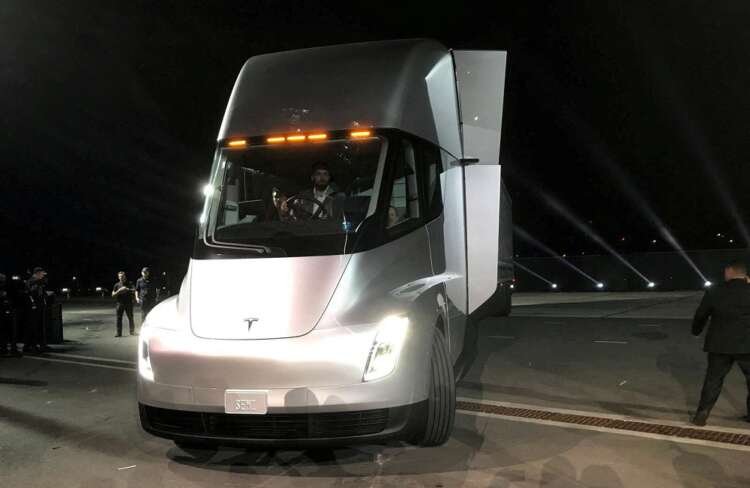
    The image captures Tesla's electric semi truck unveiled at an event, highlighting the shift in U.S. EV tax credits and manufacturing policies discussed in the article.
    Tesla electric semi truck showcased during unveiling event - Global Banking & Finance Review
    Why waste money on news and opinion when you can access them for free?

    Take advantage of our newsletter subscription and stay informed on the go!

    Subscribe

    Tags:sustainabilityinnovation

    By David Shepardson and Joseph White

    WASHINGTON (Reuters) – U.S. automakers and dealers are scrambling to figure out if they can still offer $7,500 tax credits to would-be buyers of electric vehicles (EVs), as Congress prepares for final votes today on a bill that includes a top-to-bottom overhaul of Washington’s clean vehicle policies.

    Under the $430 billion climate, health care and tax bill that the House of Representatives is set to vote on Friday, rules governing the current $7,500 EV tax credit aimed at persuading consumers to buy the vehicles would be replaced by incentives designed to bring more battery and EV manufacturing into the United States.

    Manufacturers, dealers and consumers do not have answers to many basic questions about how the new rules will affect the way clean vehicles aimed at consumers – including fully electric and hybrid models – will be bought, sold and built, automakers, consultants and lobbyists said.

    However, industry executives were more positive about proposed incentives of up to $40,000 per vehicle for larger commercial electric vehicles, such as Tesla Inc’s Semi or electric commercial vans developed by several manufacturers.

    The provisions in the Inflation Reduction Act are “a powerful tail wind in the commercial space,” said RJ Scaringe, chief executive of Rivian which has an agreement to deliver up to 100,000 large vans to shareholder Amazon.com Inc.

    The legislation brings “a significant change in value chain requirements, in a very short period of time, that affects an industry where supply chain development … is measured in years,” said John Loehr, a managing director with consulting firm AlixPartners.

    NO LONGER ELIGIBLE

    The most immediate effect of the Inflation Reduction Act would be a ban on tax credits for vehicles assembled outside North America. That would mean about 70% of the 72 current EV and plug-in hybrids on the U.S. market would no longer be eligible, said the Alliance for Automotive Innovation, which warned the change “will surprise and disappoint customers in the market for a new vehicle” and “jeopardize” EV sales goals.

    However, U.S. Transportation Secretary Pete Buttigieg told Reuters in an interview this week: “This is … going to be a very important long-term transformational policy to accelerate the EV revolution and to make sure it is a ‘Made in America’ EV revolution.”

    “Industry is capable of sometimes more than they will at first see,” Buttigieg added.

    The Biden administration must still write and finalize implementing regulations to handle some of the complex questions raised by the quick rewrite of the tax credit.

    New restrictions on battery sourcing and critical minerals, along with price caps and income caps, take effect on Jan. 1, which will potentially make all current EVs ineligible for the full $7,500 credit.

    A Congressional Budget Office forecast estimated as few as 11,000 EVs may qualify for the tax credit in 2023.

    The domestic content requirements ratchet up over the next six years.

    Volvo Car North America said just one of its models that currently qualify for EV tax credits will still qualify after the bill is signed. The only one in the short term that will qualify is the S60 Recharge, that is assembled in South Carolina, and even that may not qualify after Jan. 1.

    Several automakers, including startups Rivian and Fisker, this week began urging would-be customers to get off the fence and commit to buying vehicles before the current rules are replaced.

    BINDING CONTRACT

    The bill does allow consumers to still get the credit if they buy before Biden signs the bill into law, but must have a “written binding contract” to purchase.

    Rivian encouraged would-be buyers in a letter to make $100 of their deposits non-refundable in order to qualify for the credit. Rivian executives said Thursday customers are ordering R1 trucks and SUVs with average prices of $93,000 – well above the cut-offs in the proposal before the House.

    “We cannot guarantee that the IRS (Internal Revenue Service) will approve tax credit eligibility as we interpret the terms of the Inflation Reduction Act,” Rivian cautioned in its letter.

    Mercedes-Benz said it is “reviewing the proposal in anticipation of the new provisions becoming final in the coming week.”

    European Union and South Korean government officials on Thursday said they were concerned the domestic content and manufacturing requirements in the Inflation Reduction Act could violate World Trade Organization rules.

    U.S. electric vehicle market leader Tesla and General Motors Co already sell their EVs without a federal tax credit, because they hit the 200,000 vehicle cap under the current law.

    Tesla and GM may not become eligible to offer tax credits under the new law until Jan. 1. And even then, it is not clear which models – if any – will get the full $7,500 by meeting requirements that 40% of battery minerals come only from North America, or countries with which the United States has free trade agreements.

    The proposed subsidy limits would hit hardest on automakers and battery makers with corporate parents in China.

    Starting in 2024, rules will take effect that make vehicles ineligible for any credit if they have content from an “foreign entity of concern,” a term that could include Chinese firms.

    (Reporting by David Shepardson and Joseph White; Written by David Shepardson; Editing by Joseph White and David Holmes)

    Frequently Asked Questions about Automakers scramble to decode new U.S. EV tax credits

    1What is the Inflation Reduction Act?

    The Inflation Reduction Act is a legislative bill aimed at overhauling clean vehicle policies, including changes to tax credits for electric vehicles.

    2What are battery sourcing requirements?

    Battery sourcing requirements are regulations that dictate where the materials for electric vehicle batteries must be sourced from, impacting eligibility for tax credits.

    3What is the significance of 'Made in America' in EV policies?

    The 'Made in America' policy emphasizes the need for electric vehicles and their components to be manufactured domestically to qualify for certain tax incentives.

    More from Top Stories

    Explore more articles in the Top Stories category

    Image for Lessons From the Ring and the Deal Table: How Boxing Shapes Steven Nigro’s Approach to Banking and Life
    Lessons From the Ring and the Deal Table: How Boxing Shapes Steven Nigro’s Approach to Banking and Life
    Image for Joe Kiani in 2025: Capital, Conviction, and a Focused Return to Innovation
    Joe Kiani in 2025: Capital, Conviction, and a Focused Return to Innovation
    Image for Marco Robinson – CLOSE THE DEAL AND SUDDENLY GROW RICH
    Marco Robinson – CLOSE THE DEAL AND SUDDENLY GROW RICH
    Image for Digital Tracing: Turning a regulatory obligation into a commercial advantage
    Digital Tracing: Turning a regulatory obligation into a commercial advantage
    Image for Exploring the Role of Blockchain and the Bitcoin Price Today in Education
    Exploring the Role of Blockchain and the Bitcoin Price Today in Education
    Image for Inside the World’s First Collection Industry Conglomerate: PCA Global’s Platform Strategy
    Inside the World’s First Collection Industry Conglomerate: PCA Global’s Platform Strategy
    Image for Chase Buchanan Private Wealth Management Highlights Key Autumn 2025 Budget Takeaways for Expats
    Chase Buchanan Private Wealth Management Highlights Key Autumn 2025 Budget Takeaways for Expats
    Image for PayLaju Strengthens Its Position as Malaysia’s Trusted Interest-Free Sharia-Compliant Loan Provider
    PayLaju Strengthens Its Position as Malaysia’s Trusted Interest-Free Sharia-Compliant Loan Provider
    Image for A Notable Update for Employee Health Benefits:
    A Notable Update for Employee Health Benefits:
    Image for Creating Equity Between Walls: How Mohak Chauhan is Using Engineering, Finance, and Community Vision to Reengineer Affordable Housing
    Creating Equity Between Walls: How Mohak Chauhan is Using Engineering, Finance, and Community Vision to Reengineer Affordable Housing
    Image for Upcoming Book on Real Estate Investing: Harvard Grace Capital Founder Stewart Heath’s Puts Lessons in Print
    Upcoming Book on Real Estate Investing: Harvard Grace Capital Founder Stewart Heath’s Puts Lessons in Print
    Image for ELECTIVA MARKS A LANDMARK FIRST YEAR WITH MAJOR SENIOR APPOINTMENTS AND EXPANSION MILESTONES
    ELECTIVA MARKS A LANDMARK FIRST YEAR WITH MAJOR SENIOR APPOINTMENTS AND EXPANSION MILESTONES
    View All Top Stories Posts
    Previous Top Stories PostBiotech stocks pin bounce back hopes on M&A boost
    Next Top Stories PostU.S. inflation outlook brightens as import prices fall, consumer sentiment rises