Search
00
GBAF Logo
trophy
Top StoriesInterviewsBusinessFinanceBankingTechnologyInvestingTradingVideosAwardsMagazinesHeadlinesTrends

Subscribe to our newsletter

Get the latest news and updates from our team.

Global Banking & Finance Review®

Global Banking & Finance Review® - Subscribe to our newsletter

Company

    GBAF Logo
    • About Us
    • Profile
    • Privacy & Cookie Policy
    • Terms of Use
    • Contact Us
    • Advertising
    • Submit Post
    • Latest News
    • Research Reports
    • Press Release
    • Awards▾
      • About the Awards
      • Awards TimeTable
      • Submit Nominations
      • Testimonials
      • Media Room
      • Award Winners
      • FAQ
    • Magazines▾
      • Global Banking & Finance Review Magazine Issue 79
      • Global Banking & Finance Review Magazine Issue 78
      • Global Banking & Finance Review Magazine Issue 77
      • Global Banking & Finance Review Magazine Issue 76
      • Global Banking & Finance Review Magazine Issue 75
      • Global Banking & Finance Review Magazine Issue 73
      • Global Banking & Finance Review Magazine Issue 71
      • Global Banking & Finance Review Magazine Issue 70
      • Global Banking & Finance Review Magazine Issue 69
      • Global Banking & Finance Review Magazine Issue 66
    Top StoriesInterviewsBusinessFinanceBankingTechnologyInvestingTradingVideosAwardsMagazinesHeadlinesTrends

    Global Banking & Finance Review® is a leading financial portal and online magazine offering News, Analysis, Opinion, Reviews, Interviews & Videos from the world of Banking, Finance, Business, Trading, Technology, Investing, Brokerage, Foreign Exchange, Tax & Legal, Islamic Finance, Asset & Wealth Management.
    Copyright © 2010-2026 GBAF Publications Ltd - All Rights Reserved. | Sitemap | Tags | Developed By eCorpIT

    Editorial & Advertiser disclosure

    Global Banking & Finance Review® is an online platform offering news, analysis, and opinion on the latest trends, developments, and innovations in the banking and finance industry worldwide. The platform covers a diverse range of topics, including banking, insurance, investment, wealth management, fintech, and regulatory issues. The website publishes news, press releases, opinion and advertorials on various financial organizations, products and services which are commissioned from various Companies, Organizations, PR agencies, Bloggers etc. These commissioned articles are commercial in nature. This is not to be considered as financial advice and should be considered only for information purposes. It does not reflect the views or opinion of our website and is not to be considered an endorsement or a recommendation. We cannot guarantee the accuracy or applicability of any information provided with respect to your individual or personal circumstances. Please seek Professional advice from a qualified professional before making any financial decisions. We link to various third-party websites, affiliate sales networks, and to our advertising partners websites. When you view or click on certain links available on our articles, our partners may compensate us for displaying the content to you or make a purchase or fill a form. This will not incur any additional charges to you. To make things simpler for you to identity or distinguish advertised or sponsored articles or links, you may consider all articles or links hosted on our site as a commercial article placement. We will not be responsible for any loss you may suffer as a result of any omission or inaccuracy on the website.

    Home > Top Stories > Automakers’ drive to avoid China’s EV rare earth dominance gathers speed
    Top Stories

    Automakers’ drive to avoid China’s EV rare earth dominance gathers speed

    Published by Wanda Rich

    Posted on November 14, 2023

    5 min read

    Last updated: January 31, 2026

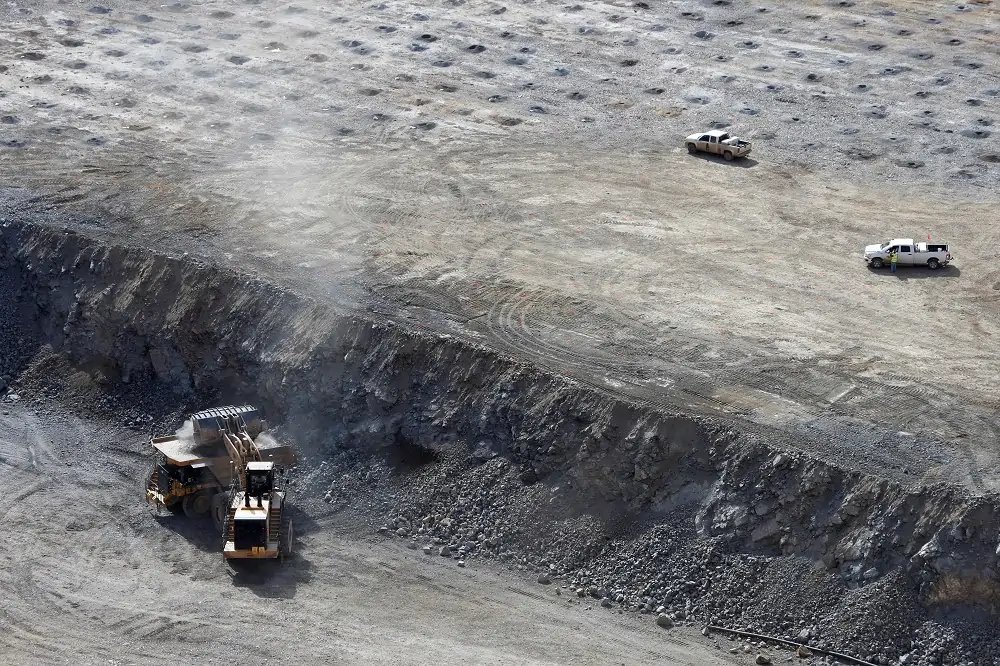
    This image illustrates the evolving landscape of electric vehicle motors as automakers seek alternatives to rare earth elements, highlighting the industry's push to reduce reliance on China for rare earth materials.
    Electric vehicle motors and rare earth elements in the automotive industry - Global Banking & Finance Review
    Why waste money on news and opinion when you can access them for free?

    Take advantage of our newsletter subscription and stay informed on the go!

    Subscribe

    Tags:innovationsustainabilityAutomotive industrytechnology

    Automakers’ drive to avoid China’s EV rare earth dominance gathers speed

    By Nick Carey and Christina Amann

    LONDON/BERLIN (Reuters) – The auto industry’s drive to make electric vehicle motors with little to no rare earth content has hit high gear, with European, U.S. and Japanese automakers and suppliers racing for alternatives in an area dominated by China.

    Automakers have mostly relied on motors with rare earth-based permanent magnets, which have been the most efficient at providing the torque to power EVs.

    But different types of motors without permanent magnets that were previously too big and too inefficient, or those with greatly-reduced rare earth content have become commercially viable, prompting the rush for alternatives.

    Market leader Tesla garnered headlines earlier this year saying it would cut rare earths from its next-generation EVs.

    But automakers from General Motors to Jaguar Land Rover (JLR) and major suppliers like BorgWarner are researching, or have developed, motors with low- to zero-rare earth content such as magnet-free externally excited synchronous machines (EESMs), which generate a magnetic field using electric current.

    Others like Nissan are going further than previously reported, with a dual strategy to develop both newer EESM motors and also to develop permanent magnet motors where the rare earth content will be gradually eliminated altogether.

    China dominates the mining and processing of a group of 17 metals known as rare earths, though companies elsewhere are trying to loosen China’s grip.

    Recent Chinese restrictions on exports of gallium and graphite – which is critical for EV production – highlighted the risk of over-reliance on China.

    German supplier ZF has developed an EESM motor that Chief Technology Officer Otmar Scharrer said matches the size and performance of permanent magnet motors.

    “This is an important contribution to making us a little more independent of China,” he said.

    ZF is in talks with U.S., European and Chinese automakers to supply the motor and could be in production model EVs within two years, Scharrer said.

    Aside from over-reliance on China, refining rare earths, such as neodymium and dysprosium, involves solvents and toxic waste that conflict with sustainability goals.

    “If you get it right, you’ve got a much more sustainable product,” Ben Chiswick, director of engineering business development at Detroit-based Drive System Design, which is developing rare earth-free motors with three automakers.

    Some automakers, like BMW say they are already there after years of research.

    “It was not a home run… but it works very well without rare earths” said Uwe Deuke, the engineer in charge of developing BMW’s EESM motor for its next-generation EVs.

    ‘WAITING IN THE WINGS’

    The average EV permanent magnet motor uses around 600 grams (1.32 lb) of heavy rare earth neodymium. Prices have fluctuated greatly for neodymium – at around $125/kg now, it is down from a peak of around $223 last year, but well above $65 in 2020.

    Vitesco designed an EESM motor for Renault and has a new version coming in 2026. Gerd Roesel, innovation head at the German supplier’s electrification division, said rare earth-free alternatives avoid those wild price swings.

    Others like U.S. startup Niron Magnetics are developing permanent magnets without rare earths.

    Tesla’s announcement on dropping rare earths “opened up buyers’ eyes to the fact that you don’t really need rare earths to make EV magnets,” Niron CEO Jonathan Rowntree said.

    Niron’s latest funding round included investments from GM and Stellantis.

    Nissan uses an EESM motor in its Ariya crossover. Shunji Oki, expert leader at the automaker’s powertrain and EV engineering division, said Nissan is developing both better EESM motors and permanent magnets where rare earths will be phased out.

    James Edmondson, an analyst at consultancy IDTechEx, said automakers rushed to find alternatives as rare earth prices rose, but now prices have fallen they are watching China closely and waiting to see if governments take action that would curb the use of Chinese rare earths, as the U.S. Inflation Reduction Act did.

    “This is why they (automakers) have other technologies waiting in the wings,” he said.

    IDTechEx forecasts that as of now rare-earth permanent magnet motors will lose some global market share over the next decade but still make up more than 70% as Chinese EV makers face no pressure to curtail their use – though their share will be much closer to 50% in Europe, Edmondson said.

    And where western automakers are sticking with rare-earth permanent magnets, they are working to dramatically reduce their content, he added.

    Mercedes-Benz’s next-generation EV platform, for instance, has almost no heavy rare earth content.

    The challenge also goes beyond motors.

    In some EVs, around a third of the rare earths used are in the sound system’s speakers. UK firm Warwick Acoustics has developed rare earth-free speakers that are 90% lighter and more energy efficient than conventional ones. It has signed up its first luxury automaker customer and is talking to others, CEO Mike Grant said.

    “We’re fighting off people right now,” he said.

    (Reporting by Nick Carey in London and Christina Amann in Berlin, additional reporting by Paul Lienert in Detroit, Ernest Scheyder in Houston, Gilles Guillaume in Paris and Giulio Piovaccari in Milan, editing by Ben Klayman and Sharon Singleton)

    Frequently Asked Questions about Automakers’ drive to avoid China’s EV rare earth dominance gathers speed

    1What are rare earth elements?

    Rare earth elements are a group of 17 metals essential for various technologies, including electric vehicle motors, due to their unique magnetic properties.

    2What is an electric vehicle (EV)?

    An electric vehicle (EV) is a type of vehicle that is powered by electricity instead of gasoline or diesel, often using rechargeable batteries.

    3What is sustainability in manufacturing?

    Sustainability in manufacturing refers to creating products in a way that minimizes environmental impact, conserves resources, and supports social responsibility.

    4What is a permanent magnet motor?

    A permanent magnet motor is an electric motor that uses permanent magnets to produce torque, commonly used in electric vehicles for efficient power delivery.

    5What is the significance of the automotive industry?

    The automotive industry is crucial for economic development, providing jobs, driving innovation, and contributing to advancements in technology and sustainability.

    More from Top Stories

    Explore more articles in the Top Stories category

    Image for Lessons From the Ring and the Deal Table: How Boxing Shapes Steven Nigro’s Approach to Banking and Life
    Lessons From the Ring and the Deal Table: How Boxing Shapes Steven Nigro’s Approach to Banking and Life
    Image for Joe Kiani in 2025: Capital, Conviction, and a Focused Return to Innovation
    Joe Kiani in 2025: Capital, Conviction, and a Focused Return to Innovation
    Image for Marco Robinson – CLOSE THE DEAL AND SUDDENLY GROW RICH
    Marco Robinson – CLOSE THE DEAL AND SUDDENLY GROW RICH
    Image for Digital Tracing: Turning a regulatory obligation into a commercial advantage
    Digital Tracing: Turning a regulatory obligation into a commercial advantage
    Image for Exploring the Role of Blockchain and the Bitcoin Price Today in Education
    Exploring the Role of Blockchain and the Bitcoin Price Today in Education
    Image for Inside the World’s First Collection Industry Conglomerate: PCA Global’s Platform Strategy
    Inside the World’s First Collection Industry Conglomerate: PCA Global’s Platform Strategy
    Image for Chase Buchanan Private Wealth Management Highlights Key Autumn 2025 Budget Takeaways for Expats
    Chase Buchanan Private Wealth Management Highlights Key Autumn 2025 Budget Takeaways for Expats
    Image for PayLaju Strengthens Its Position as Malaysia’s Trusted Interest-Free Sharia-Compliant Loan Provider
    PayLaju Strengthens Its Position as Malaysia’s Trusted Interest-Free Sharia-Compliant Loan Provider
    Image for A Notable Update for Employee Health Benefits:
    A Notable Update for Employee Health Benefits:
    Image for Creating Equity Between Walls: How Mohak Chauhan is Using Engineering, Finance, and Community Vision to Reengineer Affordable Housing
    Creating Equity Between Walls: How Mohak Chauhan is Using Engineering, Finance, and Community Vision to Reengineer Affordable Housing
    Image for Upcoming Book on Real Estate Investing: Harvard Grace Capital Founder Stewart Heath’s Puts Lessons in Print
    Upcoming Book on Real Estate Investing: Harvard Grace Capital Founder Stewart Heath’s Puts Lessons in Print
    Image for ELECTIVA MARKS A LANDMARK FIRST YEAR WITH MAJOR SENIOR APPOINTMENTS AND EXPANSION MILESTONES
    ELECTIVA MARKS A LANDMARK FIRST YEAR WITH MAJOR SENIOR APPOINTMENTS AND EXPANSION MILESTONES
    View All Top Stories Posts
    Previous Top Stories PostCryptoverse: Bitcoin miners make money ahead of ‘halving’
    Next Top Stories PostStrong pay growth in UK spreads to public sector, survey shows