
Top Stories
Aussie Dollar Jumps on Inflation Spike, While Yen Stays Under Pressure
Published by Uma Rajagopal
Posted on June 26, 2024
3 min readLast updated: January 30, 2026
Add as preferred source on Google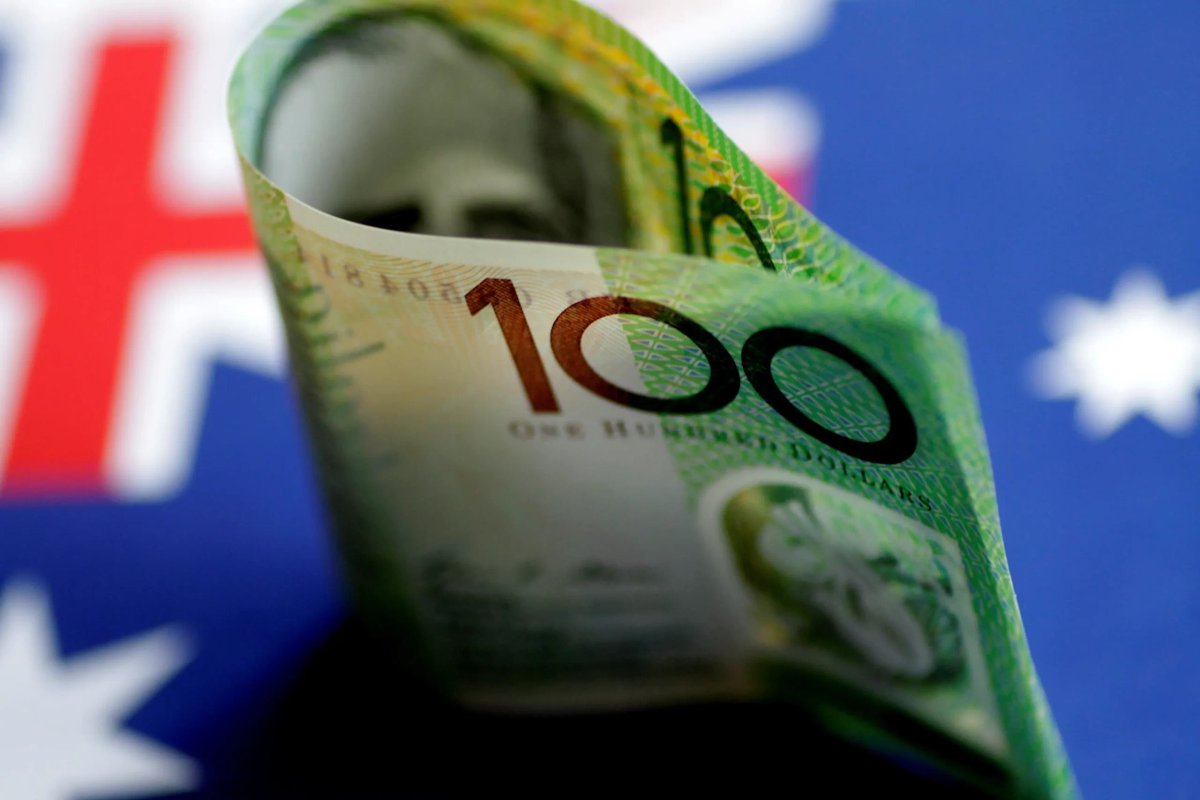
Published by Uma Rajagopal
Posted on June 26, 2024
3 min readLast updated: January 30, 2026
Add as preferred source on GoogleBy Harry Robertson and Tom Westbrook
LONDON/SINGAPORE (Reuters) -The Australian dollar rallied after a surprise jump in inflation on Wednesday raised the prospect of another rate hike, while the U.S. dollar kept downward pressure on the Japanese yen.
Moves elsewhere in the market were relatively subdued as investors waited for the release of the Federal Reserve’s preferred gauge of inflation on Friday.
Australian inflation accelerated to a six-month high of 4% in May, which had traders scrambling to price in a 70% chance of a further rate hike by November and sent the Aussie dollar up 0.46% at $0.6679. [AUD/]
“Today’s inflation data from Australia will be very concerning for the Reserve Bank of Australia and could well tilt a decision in favour of a hike when it next meets on 6 August,” said Derek Halpenny, currency strategist at Japanese bank MUFG.
A similar surprise in Canadian inflation had sent the Canadian dollar briefly spiking to a three-week high as investors dialled back expectations of further cuts. [CAD/]
Elsewhere the euro slipped 0.16% to $1.0698 after a European Central Bank policymaker talked up the chances of further rate cuts this year, a notably different stance from the Fed’s Michelle Bowman.
ECB governing council member Olli Rehn told Bloomberg that two more cuts this year seemed “reasonable. That contrasted with Fed Governor Bowman, who said she does not expect any U.S. rate cuts this year.
Francesco Pesole, FX strategist at ING, said political risks stemming from French parliamentary elections were at the front of investors’ minds.
“Euro-U.S. dollar price action into the weekend will be determined by French election positioning and Friday’s US PCE (inflation data),” he said.
The dollar index, which tracks the currency against six peers, rose 0.1% to 105.78, around its highest level in two months.
A pick-up in the dollar hurt the Japanese yen, with the U.S. currency rising 0.14% to 159.895 yen. The move kept traders on alert for signs of intervention, being only a whisker from where Japanese authorities stepped in to buy yen in April.
Sterling dipped 0.14% to $1.2669, with the lack of movement reflecting thin trade ahead of the U.S. data release. Citi said this week that its etraders found interbank FX volumes some 40% lower than thirty-day averages.
Analysts expect Friday’s U.S. data will show personal consumption expenditure index inflation slowed to 2.6% in May, the lowest in more than three years, down from 2.7% in April.
The yuan was also getting squeezed by the dollar’s stubborn strength, with China seemingly having signalled some tolerance for a cheaper currency by gradually weakening the midpoint of the yuan’s daily trading range on the dollar.
The yuan, which has hugged the low side of its band for months, slumped to a seven-month trough on Wednesday of 7.2670 per dollar. [CNY/]
(Reporting by Harry Robertson in London and Tom Westbrook in Singapore; Editing by Stephen Coates, Edwina Gibbs and Anil D’Silva)
Inflation is the rate at which the general level of prices for goods and services rises, eroding purchasing power. It is typically measured by the Consumer Price Index (CPI) or the Personal Consumption Expenditures (PCE) index.
A currency hedge is a financial strategy used to protect against potential losses due to fluctuations in exchange rates. It often involves using financial instruments like options or futures contracts.
Interest rates are the amount charged by lenders to borrowers for the use of money, usually expressed as a percentage of the principal. They influence economic activity and can affect inflation and currency values.
The foreign exchange market, or forex, is a global decentralized market where currencies are traded. It is the largest financial market in the world, facilitating international trade and investment.
Central banks manage a country's currency, money supply, and interest rates. They influence currency valuation through monetary policy, which can include setting interest rates and engaging in open market operations.
Explore more articles in the Top Stories category











