
Top Stories
As UN COP16 Nature Talks Are Gridlocked, Scientists Warn of Extinction Risks
Published by Jessica Weisman-Pitts
Posted on October 28, 2024
3 min readLast updated: January 29, 2026
Add as preferred source on Google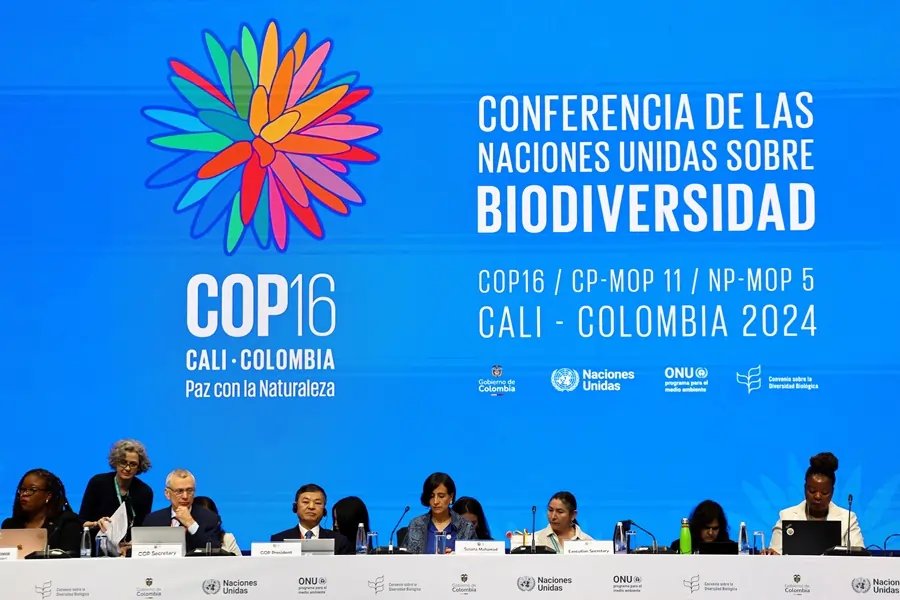
Published by Jessica Weisman-Pitts
Posted on October 28, 2024
3 min readLast updated: January 29, 2026
Add as preferred source on GoogleBy Jake Spring and Oliver Griffin
CALI, Colombia (Reuters) – Countries were at an impasse over how to fund nature conservation and other key decisions as the U.N. COP16 biodiversity summit entered its second week on Monday in the Colombian mountain town of Cali.
With nature in unprecedented decline and species going extinct faster than ever, scientists warned the world’s governments that there is no time to waste.
As of today, roughly 38% of the world’s tree species – totaling 16,425 species – are at risk of extinction thanks to timber logging and clear-cutting to make way for farming, mining, road-building and other development efforts, according to the International Union for Conservation of Nature and Natural Resources (IUCN).
We need to take urgent action … if we really want to keep these tree (species) alive,” IUCN Director Grethel Aguilar told a news briefing in Cali.
The summit, which marks the 16th meeting of parties to the U.N. Convention on Biological Diversity (CBD), is tasked with figuring out how to implement 23 goals outlined in the 2022 Kunming-Montreal Global Biodiversity Framework aimed at halting and reversing nature loss by 2030.
Chief among those goals is having each country of the world set aside 30% of its land and sea territory for conservation – a target known as the 30-by-30 goal.
By the summit’s end on Friday, negotiators and observers hope to achieve progress on a raft of issues touching on financing, genetic material, Indigenous representation and conservation policy.
“The discussions are going well, but it’s a heavy agenda,” said David Ainsworth, a spokesperson for the secretariat.
While the intensity of these discussions shows countries’ engagement, it is also in some cases is a sign “of a relatively low level of trust” between countries, Ainsworth said. “They have a lot of work to do this week.”
So far, delegates are close to agreeing on a measure to recognize and include Indigenous groups in biodiversity decision-making, including with a new permanent presence for these groups within the official U.N. CBD process.
But many are watching for COP16 to deliver strong options for funding conservation as a measure of the summit’s success.
Summit talks on how to mobilize the billions of dollars needed to halt biodiversity loss this decade were stuck on Monday, as country delegates debated whether there should be an additional fund created to handle this financing.
(Reporting by Jake Spring and Oliver Griffin in Cali, Colombia. Editing by Katy Daigle and Marguerita Choy)
Biodiversity refers to the variety of life on Earth, including the diversity of species, ecosystems, and genetic variations. It is crucial for ecosystem stability and resilience.
Conservation funding is financial support allocated for the protection and management of natural resources, wildlife, and habitats to prevent biodiversity loss and promote sustainability.
The 30-by-30 goal aims for countries to protect 30% of their land and sea areas by the year 2030 to halt and reverse biodiversity loss.
Indigenous groups play a vital role in biodiversity conservation by managing natural resources sustainably and preserving traditional ecological knowledge.
This framework outlines 23 goals aimed at halting and reversing biodiversity loss globally by 2030, emphasizing conservation and sustainable use of ecosystems.
Explore more articles in the Top Stories category











