Search
00
GBAF Logo
trophy
Top StoriesInterviewsBusinessFinanceBankingTechnologyInvestingTradingVideosAwardsMagazinesHeadlinesTrends

Subscribe to our newsletter

Get the latest news and updates from our team.

Global Banking & Finance Review®

Global Banking & Finance Review® - Subscribe to our newsletter

Company

    GBAF Logo
    • About Us
    • Profile
    • Privacy & Cookie Policy
    • Terms of Use
    • Contact Us
    • Advertising
    • Submit Post
    • Latest News
    • Research Reports
    • Press Release
    • Awards▾
      • About the Awards
      • Awards TimeTable
      • Submit Nominations
      • Testimonials
      • Media Room
      • Award Winners
      • FAQ
    • Magazines▾
      • Global Banking & Finance Review Magazine Issue 79
      • Global Banking & Finance Review Magazine Issue 78
      • Global Banking & Finance Review Magazine Issue 77
      • Global Banking & Finance Review Magazine Issue 76
      • Global Banking & Finance Review Magazine Issue 75
      • Global Banking & Finance Review Magazine Issue 73
      • Global Banking & Finance Review Magazine Issue 71
      • Global Banking & Finance Review Magazine Issue 70
      • Global Banking & Finance Review Magazine Issue 69
      • Global Banking & Finance Review Magazine Issue 66
    Top StoriesInterviewsBusinessFinanceBankingTechnologyInvestingTradingVideosAwardsMagazinesHeadlinesTrends

    Global Banking & Finance Review® is a leading financial portal and online magazine offering News, Analysis, Opinion, Reviews, Interviews & Videos from the world of Banking, Finance, Business, Trading, Technology, Investing, Brokerage, Foreign Exchange, Tax & Legal, Islamic Finance, Asset & Wealth Management.
    Copyright © 2010-2026 GBAF Publications Ltd - All Rights Reserved. | Sitemap | Tags | Developed By eCorpIT

    Editorial & Advertiser disclosure

    Global Banking & Finance Review® is an online platform offering news, analysis, and opinion on the latest trends, developments, and innovations in the banking and finance industry worldwide. The platform covers a diverse range of topics, including banking, insurance, investment, wealth management, fintech, and regulatory issues. The website publishes news, press releases, opinion and advertorials on various financial organizations, products and services which are commissioned from various Companies, Organizations, PR agencies, Bloggers etc. These commissioned articles are commercial in nature. This is not to be considered as financial advice and should be considered only for information purposes. It does not reflect the views or opinion of our website and is not to be considered an endorsement or a recommendation. We cannot guarantee the accuracy or applicability of any information provided with respect to your individual or personal circumstances. Please seek Professional advice from a qualified professional before making any financial decisions. We link to various third-party websites, affiliate sales networks, and to our advertising partners websites. When you view or click on certain links available on our articles, our partners may compensate us for displaying the content to you or make a purchase or fill a form. This will not incur any additional charges to you. To make things simpler for you to identity or distinguish advertised or sponsored articles or links, you may consider all articles or links hosted on our site as a commercial article placement. We will not be responsible for any loss you may suffer as a result of any omission or inaccuracy on the website.

    Home > Top Stories > Analysis-Smoldering Iran nuclear crisis risks catching fire
    Top Stories

    Analysis-Smoldering Iran nuclear crisis risks catching fire

    Published by Uma Rajagopal

    Posted on May 5, 2023

    5 min read

    Last updated: February 1, 2026

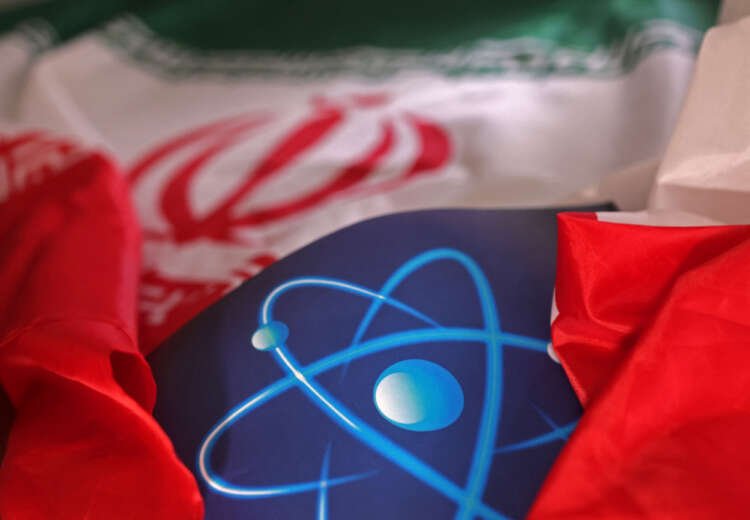
    This illustration features the atomic symbol intertwined with the Iranian flag, representing the ongoing nuclear crisis in Iran. The image highlights concerns over Iran's nuclear ambitions and the geopolitical implications discussed in the article.
    Illustration of atomic symbol merged with Iranian flag, symbolizing nuclear crisis - Global Banking & Finance Review
    Why waste money on news and opinion when you can access them for free?

    Take advantage of our newsletter subscription and stay informed on the go!

    Subscribe

    Tags:financial crisisinternational financial institutioninvestment

    Quick Summary

    By Arshad Mohammed, John Irish, Jonathan Landay and Parisa Hafezi

    Table of Contents

    • Analysis-Smoldering Iran nuclear crisis risks catching fire
    • ‘SNAPBACK’ OF U.N. SANCTIONS?
    • ‘FACE A CRISIS AT SOME POINT’

    Analysis-Smoldering Iran nuclear crisis risks catching fire

    By Arshad Mohammed, John Irish, Jonathan Landay and Parisa Hafezi

    WASHINGTON/PARIS/DUBAI (Reuters) – Even as the United States and its European allies grapple with Russia’s invasion of Ukraine and rising tensions with China, the smoldering crisis over Iran’s nuclear program threatens to reignite.

    In a sign of European concern, Britain, France and Germany have warned Iran they would trigger a return of U.N. sanctions against Tehran if it enriched uranium to the optimal level for a nuclear weapon, three European officials said.

    The threat, made last year in a previously unreported letter sent by the countries’ foreign ministers, underscores Western fears that Iran could produce bomb-grade uranium of 90% purity.

    Those concerns intensified in February after U.N. inspectors revealed their discovery of uranium particles of 83.7% purity at an Iran nuclear facility built deep underground to protect it from air strikes.

    A renewed crisis over Iran would come at a bad time for U.S. President Joe Biden who is focused on maintaining allies’ support for the war in Ukraine and on rallying Western countries to push back on China’s military and diplomatic ambitions.

    But while some White House aides may prefer to keep Iran off the president’s desk, officials and analysts suggested they may not have that luxury.

    “They are busy with Ukraine, Russia and they don’t want, for the time being, to open another front,” said a Western diplomat on condition of anonymity. “Therefore, they want to do everything in their power to prevent this (90%) from happening.”

    ‘SNAPBACK’ OF U.N. SANCTIONS?

    Western officials fear a nuclear-armed Iran could threaten Israel, Gulf Arab oil producers, and spark a regional arms race.

    Iran denies seeking nuclear weapons.

    U.S. and European officials have been searching for ways to curb Tehran’s program since the breakdown of indirect U.S.-Iranian talks on reviving the 2015 nuclear deal between Iran, Britain, China, France, Germany, Russia, and the United States.

    The accord, aimed at keeping Iran from developing a nuclear weapon, required Tehran to accept restrictions on its nuclear program and more extensive U.N. inspections, in exchange for an end to U.N., U.S., and EU sanctions.

    The deal, which had capped Iran’s uranium enrichment at 3.67%, was abandoned in 2018 by then-U.S. President Donald Trump, who argued it was too generous to Tehran.

    Trump reimposed broad U.S. sanctions, many of which have the secondary effect of forcing non-U.S. firms stop dealing with Iran or risk losing access to the U.S. market, but UN sanctions were not reactivated.

    The deal had set out a procedure for the veto-proof “snapback” of the U.N. sanctions on Iran – including an oil embargo and banking restrictions – in response to Iranian violations. Any of the states who signed onto the original deal can trigger the snapback.

    U.S. sanctions – even with their secondary effects – have failed to keep Iran from producing ever-purer levels of uranium and China has flouted them by buying Iranian oil, making it unclear if the U.N. measures would be any more effective.

    But Iran might refrain from enriching to 90% to avoid the public rebuke implicit in the return of U.N. sanctions.

    A senior Iranian nuclear official said Tehran would not take the revival of U.N. sanctions lying down.

    “If the other parties under any pretext trigger it, they will be responsible for all the consequences,” he told Reuters. “Iran’s reaction could range from leaving the NPT (Nuclear Non-Proliferation Treaty) to accelerating our nuclear work.”

    Leaving the NPT would free Iran to develop nuclear arms.

    The Iranian official’s threat was more explicit than comments by an Iranian foreign ministry spokesman, who on Monday said only that Iran had told Western powers how it would react.

    It remains unclear if the 83.7% particles were created deliberately. But Western officials and analysts say that Iran’s production of 90% uranium would demand a significant response.

    A U.S. State Department spokesman said Biden “is absolutely committed” to making sure Iran never obtains a nuclear weapon.

    “We believe diplomacy is the best way to achieve that goal, but President Biden has also been clear that we have not removed any option from the table,” the spokesperson added, hinting at the possibility of military action.

    ‘FACE A CRISIS AT SOME POINT’

    While Western officials want to leave the door open for diplomacy, tensions with Russia and China make that harder.

    Divisions over the Ukraine war, which has seen Iran provide military aid to Russia, and rising Sino-U.S. tensions further reduce the odds of resurrecting the deal because it is unclear how hard Moscow or Beijing might push for its revival.

    If the deal is dead, the West has three broad options: deterrence, military action, or a new negotiated arrangement.

    Deterrence has a downside: it could give Tehran time to creep toward a nuclear weapons capability.

    Dennis Ross, a veteran U.S. diplomat now at the Washington Institute for Near East Policy think tank, suggested Biden may have to do more to make Iran fear the consequences of enriching to higher levels.

    “If you don’t do enough to persuade the Iranians of the risks they are running, you will face a crisis at some point because they will go to 90%” or move toward weaponization, he said. “What you are seeing is an effort to walk that tightrope.”

    (Reporting By Arshad Mohammed and Jonathan Landay in Washington, John Irish in Paris and Parisa Hafezi in Dubai; Editing by Don Durfee and Alistair Bell)

    Frequently Asked Questions about Analysis-Smoldering Iran nuclear crisis risks catching fire

    1What are U.N. sanctions?

    U.N. sanctions are measures imposed by the United Nations to influence a country's behavior. They can include economic restrictions, trade bans, and diplomatic measures aimed at promoting compliance with international laws.

    2What is the Nuclear Non-Proliferation Treaty (NPT)?

    The NPT is an international treaty aimed at preventing the spread of nuclear weapons and promoting peaceful uses of nuclear energy. It establishes a framework for nuclear disarmament and non-proliferation.

    More from Top Stories

    Explore more articles in the Top Stories category

    Image for Lessons From the Ring and the Deal Table: How Boxing Shapes Steven Nigro’s Approach to Banking and Life
    Lessons From the Ring and the Deal Table: How Boxing Shapes Steven Nigro’s Approach to Banking and Life
    Image for Joe Kiani in 2025: Capital, Conviction, and a Focused Return to Innovation
    Joe Kiani in 2025: Capital, Conviction, and a Focused Return to Innovation
    Image for Marco Robinson – CLOSE THE DEAL AND SUDDENLY GROW RICH
    Marco Robinson – CLOSE THE DEAL AND SUDDENLY GROW RICH
    Image for Digital Tracing: Turning a regulatory obligation into a commercial advantage
    Digital Tracing: Turning a regulatory obligation into a commercial advantage
    Image for Exploring the Role of Blockchain and the Bitcoin Price Today in Education
    Exploring the Role of Blockchain and the Bitcoin Price Today in Education
    Image for Inside the World’s First Collection Industry Conglomerate: PCA Global’s Platform Strategy
    Inside the World’s First Collection Industry Conglomerate: PCA Global’s Platform Strategy
    Image for Chase Buchanan Private Wealth Management Highlights Key Autumn 2025 Budget Takeaways for Expats
    Chase Buchanan Private Wealth Management Highlights Key Autumn 2025 Budget Takeaways for Expats
    Image for PayLaju Strengthens Its Position as Malaysia’s Trusted Interest-Free Sharia-Compliant Loan Provider
    PayLaju Strengthens Its Position as Malaysia’s Trusted Interest-Free Sharia-Compliant Loan Provider
    Image for A Notable Update for Employee Health Benefits:
    A Notable Update for Employee Health Benefits:
    Image for Creating Equity Between Walls: How Mohak Chauhan is Using Engineering, Finance, and Community Vision to Reengineer Affordable Housing
    Creating Equity Between Walls: How Mohak Chauhan is Using Engineering, Finance, and Community Vision to Reengineer Affordable Housing
    Image for Upcoming Book on Real Estate Investing: Harvard Grace Capital Founder Stewart Heath’s Puts Lessons in Print
    Upcoming Book on Real Estate Investing: Harvard Grace Capital Founder Stewart Heath’s Puts Lessons in Print
    Image for ELECTIVA MARKS A LANDMARK FIRST YEAR WITH MAJOR SENIOR APPOINTMENTS AND EXPANSION MILESTONES
    ELECTIVA MARKS A LANDMARK FIRST YEAR WITH MAJOR SENIOR APPOINTMENTS AND EXPANSION MILESTONES
    View All Top Stories Posts
    Previous Top Stories PostWHO declares end to COVID global health emergency
    Next Top Stories PostWorld food prices rise for first time in a year- FAO