Search
00
GBAF Logo
trophy
Top StoriesInterviewsBusinessFinanceBankingTechnologyInvestingTradingVideosAwardsMagazinesHeadlinesTrends

Subscribe to our newsletter

Get the latest news and updates from our team.

Global Banking & Finance Review®

Global Banking & Finance Review® - Subscribe to our newsletter

Company

    GBAF Logo
    • About Us
    • Profile
    • Privacy & Cookie Policy
    • Terms of Use
    • Contact Us
    • Advertising
    • Submit Post
    • Latest News
    • Research Reports
    • Press Release
    • Awards▾
      • About the Awards
      • Awards TimeTable
      • Submit Nominations
      • Testimonials
      • Media Room
      • Award Winners
      • FAQ
    • Magazines▾
      • Global Banking & Finance Review Magazine Issue 79
      • Global Banking & Finance Review Magazine Issue 78
      • Global Banking & Finance Review Magazine Issue 77
      • Global Banking & Finance Review Magazine Issue 76
      • Global Banking & Finance Review Magazine Issue 75
      • Global Banking & Finance Review Magazine Issue 73
      • Global Banking & Finance Review Magazine Issue 71
      • Global Banking & Finance Review Magazine Issue 70
      • Global Banking & Finance Review Magazine Issue 69
      • Global Banking & Finance Review Magazine Issue 66
    Top StoriesInterviewsBusinessFinanceBankingTechnologyInvestingTradingVideosAwardsMagazinesHeadlinesTrends

    Global Banking & Finance Review® is a leading financial portal and online magazine offering News, Analysis, Opinion, Reviews, Interviews & Videos from the world of Banking, Finance, Business, Trading, Technology, Investing, Brokerage, Foreign Exchange, Tax & Legal, Islamic Finance, Asset & Wealth Management.
    Copyright © 2010-2026 GBAF Publications Ltd - All Rights Reserved. | Sitemap | Tags | Developed By eCorpIT

    Editorial & Advertiser disclosure

    Global Banking & Finance Review® is an online platform offering news, analysis, and opinion on the latest trends, developments, and innovations in the banking and finance industry worldwide. The platform covers a diverse range of topics, including banking, insurance, investment, wealth management, fintech, and regulatory issues. The website publishes news, press releases, opinion and advertorials on various financial organizations, products and services which are commissioned from various Companies, Organizations, PR agencies, Bloggers etc. These commissioned articles are commercial in nature. This is not to be considered as financial advice and should be considered only for information purposes. It does not reflect the views or opinion of our website and is not to be considered an endorsement or a recommendation. We cannot guarantee the accuracy or applicability of any information provided with respect to your individual or personal circumstances. Please seek Professional advice from a qualified professional before making any financial decisions. We link to various third-party websites, affiliate sales networks, and to our advertising partners websites. When you view or click on certain links available on our articles, our partners may compensate us for displaying the content to you or make a purchase or fill a form. This will not incur any additional charges to you. To make things simpler for you to identity or distinguish advertised or sponsored articles or links, you may consider all articles or links hosted on our site as a commercial article placement. We will not be responsible for any loss you may suffer as a result of any omission or inaccuracy on the website.

    Home > Top Stories > Analysis-Loosening financial conditions threaten central bank inflation fight
    Top Stories

    Analysis-Loosening financial conditions threaten central bank inflation fight

    Published by Wanda Rich

    Posted on August 16, 2022

    5 min read

    Last updated: February 4, 2026

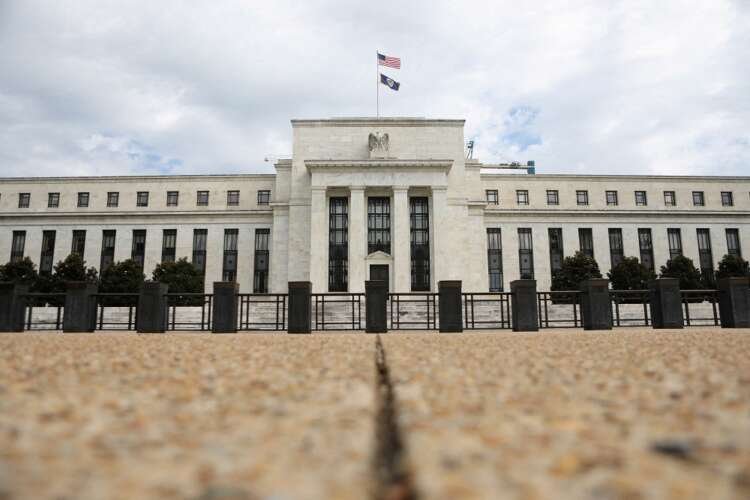
    The Federal Reserve building in Washington, DC, is a prominent symbol of U.S. monetary policy. This image highlights the Fed's role in managing financial conditions and combating inflation as discussed in the article.
    The Federal Reserve building in Washington, DC, symbolizing U.S. monetary policy amid inflation concerns - Global Banking & Finance Review
    Why waste money on news and opinion when you can access them for free?

    Take advantage of our newsletter subscription and stay informed on the go!

    Subscribe

    Tags:monetary policyfinancial marketsinterest rateseconomic growth

    By Yoruk Bahceli

    (Reuters) – The U.S. Federal Reserve is hiking interest rates at the most aggressive pace in a generation, but the financial conditions it needs to tighten to tame soaring inflation are heading in the wrong direction.

    A rally in equities and falling government bond yields since the Fed’s June hike means financial conditions are actually loosening, despite the U.S. economy having been hit with a combined 150 basis points of rate hikes at that meeting and the next one.

    Financial conditions reflect the availability of funding in an economy. They dictate spending, saving and investment plans of businesses and households, so central banks want them to tighten to help control inflation, which is now running far above their target levels.

    A widely followed U.S. financial conditions index (FCI) compiled by Goldman Sachs, which factors in borrowing costs, equity levels and exchange rates, has loosened some 80 basis points (bps) since the Fed’s June meeting.

    A similar index from the Chicago Federal Reserve, which tracks financial conditions independent of prevailing economic conditions, has turned negative, implying conditions are loose relative to what the current economic picture would usually suggest.

    In the euro zone, conditions have also loosened by about 40 basis points, according to Goldman Sachs, and money markets have priced out most of the 2023 rate hikes they had previously expected.

    “Back in June we thought that (U.S.) financial conditions were broadly where they should be to engineer the slowdown that you need to bring activity, wage growth and price inflation back to target,” said Daan Struyven, senior global economist at Goldman Sachs.

    “Our best guess is that they’ve eased a little too much.”

    The change in conditions has been driven by recession fears, which have prompted markets to not only reduce how far they expect the Fed to hike, but also to price in rate cuts next year. This suggests investors think the Fed will be more concerned by a slowing economy rather than inflation next year.

    Fed Chairman Jerome Powell’s comments following the bank’s July rate hike were also interpreted by some investors as implying a “dovish pivot”.

    Money markets now expect Fed hikes to stop at around 3.6% next March, compared with the 4%-plus expected before the June hike, followed by some 50 bps of cuts by the end of 2023.

    Since the June hike, the S&P 500 has gained 13%, oil prices are down 22% and 10-year U.S. Treasury yields have fallen 70 bps. Credit markets have also rallied.

    To be sure, financial conditions are still some 200 bps tighter than late 2021’s record low, and stocks remain 10% down for 2022.

    Goldman estimates a 100 bps tightening in its FCI will crimp economic growth by one percentage point in the coming year.

    But the recent loosening is approaching what the bank terms an “FCI loop”, Struyven said.

    “If you see very significant additional financial conditions easing that would probably not be sustainable because the outlook for activity, wage growth and inflation would look too hot.”

    UNFINISHED JOB

    That risk is already reflected in market gauges of long-term inflation expectations.

    The 10-year U.S. breakeven rate has risen some 15 bps to 2.44% since early July. Euro zone expectations have risen too.

    “That dovish interpretation was the reason why inflation expectations were driven up again. This just goes to show that the Fed still has an unfinished job ahead of itself,” said Patrick Saner, head of macro strategy at Swiss Re.

    Data last week showing U.S. inflation unchanged in July instead of rising fuelled a further loosening in financial conditions.

    But recent U.S. jobs and wage growth data point to increasingly tight labour markets.

    Economists note the U.S. unemployment rate, at 3.5%, is far lower than the lowest level — 4.4% according to the Congressional Budget Office — it can reach without boosting inflation.

    Annual wage growth of 5.2% is way above the 3.5% Goldman estimates is necessary to pull inflation down to the Fed’s target of 2%.

    PUSHING BACK

    Several Fed policymakers have pushed back against the shift in market pricing, emphasising determination to keep tightening policy until price pressures abate.

    They also say that it is unlikely that the Fed will pivot to cutting rates in 2023. A pricing out of those cuts would tighten financial conditions.

    Financial conditions need to tighten more and for that to happen, “you either need to see some declines in risk assets, equity prices or increases in longer-dated yields. Typically it’s a combination,” Saner said.

    Goldman Sachs expects 10-year U.S. Treasury yields to reach 3.30% by year-end, up from today’s 2.80%.

    Others are sceptical of current equity valuations. Morgan Stanley expects the S&P 500 to fall some 9% by June next year.

    UBS analysts note that the stock market currently is consistent with core inflation returning to 1.5%-2%. If it ends up a percentage point higher, valuation adjustments imply a 25% drop in the S&P 500, they estimate.

    “Wishful thinking in markets only makes the job harder, by loosening financial conditions and requiring more monetary tightening to compensate,” Bill Dudley, former head of the New York Fed, warned in an opinion piece for Bloomberg News earlier in August.

    (Reporting by Yoruk Bahceli, additional reporting by Samuel Indyk; Editing by Tommy Reggiori Wilkes and Hugh Lawson)

    Frequently Asked Questions about Analysis-Loosening financial conditions threaten central bank inflation fight

    1What is monetary policy?

    Monetary policy refers to the actions taken by a central bank to manage the money supply and interest rates to achieve macroeconomic goals such as controlling inflation, consumption, growth, and liquidity.

    2What is inflation?

    Inflation is the rate at which the general level of prices for goods and services rises, eroding purchasing power. Central banks attempt to limit inflation to maintain economic stability.

    3What are interest rates?

    Interest rates are the cost of borrowing money or the return on savings, expressed as a percentage. They are influenced by central bank policies and affect economic activity.

    4What are financial markets?

    Financial markets are platforms where buyers and sellers engage in the trade of assets such as stocks, bonds, currencies, and derivatives, facilitating capital allocation and liquidity.

    5What is economic growth?

    Economic growth is the increase in the production of goods and services in an economy over time, typically measured by the rise in Gross Domestic Product (GDP).

    More from Top Stories

    Explore more articles in the Top Stories category

    Image for Lessons From the Ring and the Deal Table: How Boxing Shapes Steven Nigro’s Approach to Banking and Life
    Lessons From the Ring and the Deal Table: How Boxing Shapes Steven Nigro’s Approach to Banking and Life
    Image for Joe Kiani in 2025: Capital, Conviction, and a Focused Return to Innovation
    Joe Kiani in 2025: Capital, Conviction, and a Focused Return to Innovation
    Image for Marco Robinson – CLOSE THE DEAL AND SUDDENLY GROW RICH
    Marco Robinson – CLOSE THE DEAL AND SUDDENLY GROW RICH
    Image for Digital Tracing: Turning a regulatory obligation into a commercial advantage
    Digital Tracing: Turning a regulatory obligation into a commercial advantage
    Image for Exploring the Role of Blockchain and the Bitcoin Price Today in Education
    Exploring the Role of Blockchain and the Bitcoin Price Today in Education
    Image for Inside the World’s First Collection Industry Conglomerate: PCA Global’s Platform Strategy
    Inside the World’s First Collection Industry Conglomerate: PCA Global’s Platform Strategy
    Image for Chase Buchanan Private Wealth Management Highlights Key Autumn 2025 Budget Takeaways for Expats
    Chase Buchanan Private Wealth Management Highlights Key Autumn 2025 Budget Takeaways for Expats
    Image for PayLaju Strengthens Its Position as Malaysia’s Trusted Interest-Free Sharia-Compliant Loan Provider
    PayLaju Strengthens Its Position as Malaysia’s Trusted Interest-Free Sharia-Compliant Loan Provider
    Image for A Notable Update for Employee Health Benefits:
    A Notable Update for Employee Health Benefits:
    Image for Creating Equity Between Walls: How Mohak Chauhan is Using Engineering, Finance, and Community Vision to Reengineer Affordable Housing
    Creating Equity Between Walls: How Mohak Chauhan is Using Engineering, Finance, and Community Vision to Reengineer Affordable Housing
    Image for Upcoming Book on Real Estate Investing: Harvard Grace Capital Founder Stewart Heath’s Puts Lessons in Print
    Upcoming Book on Real Estate Investing: Harvard Grace Capital Founder Stewart Heath’s Puts Lessons in Print
    Image for ELECTIVA MARKS A LANDMARK FIRST YEAR WITH MAJOR SENIOR APPOINTMENTS AND EXPANSION MILESTONES
    ELECTIVA MARKS A LANDMARK FIRST YEAR WITH MAJOR SENIOR APPOINTMENTS AND EXPANSION MILESTONES
    View All Top Stories Posts
    Previous Top Stories PostJewellery maker Pandora goes big on lab-made diamonds with North American launch
    Next Top Stories PostUK to offer COVID booster to all adults from September