Search
00
GBAF Logo
trophy
Top StoriesInterviewsBusinessFinanceBankingTechnologyInvestingTradingVideosAwardsMagazinesHeadlinesTrends

Subscribe to our newsletter

Get the latest news and updates from our team.

Global Banking & Finance Review®

Global Banking & Finance Review® - Subscribe to our newsletter

Company

    GBAF Logo
    • About Us
    • Profile
    • Privacy & Cookie Policy
    • Terms of Use
    • Contact Us
    • Advertising
    • Submit Post
    • Latest News
    • Research Reports
    • Press Release
    • Awards▾
      • About the Awards
      • Awards TimeTable
      • Submit Nominations
      • Testimonials
      • Media Room
      • Award Winners
      • FAQ
    • Magazines▾
      • Global Banking & Finance Review Magazine Issue 79
      • Global Banking & Finance Review Magazine Issue 78
      • Global Banking & Finance Review Magazine Issue 77
      • Global Banking & Finance Review Magazine Issue 76
      • Global Banking & Finance Review Magazine Issue 75
      • Global Banking & Finance Review Magazine Issue 73
      • Global Banking & Finance Review Magazine Issue 71
      • Global Banking & Finance Review Magazine Issue 70
      • Global Banking & Finance Review Magazine Issue 69
      • Global Banking & Finance Review Magazine Issue 66
    Top StoriesInterviewsBusinessFinanceBankingTechnologyInvestingTradingVideosAwardsMagazinesHeadlinesTrends

    Global Banking & Finance Review® is a leading financial portal and online magazine offering News, Analysis, Opinion, Reviews, Interviews & Videos from the world of Banking, Finance, Business, Trading, Technology, Investing, Brokerage, Foreign Exchange, Tax & Legal, Islamic Finance, Asset & Wealth Management.
    Copyright © 2010-2026 GBAF Publications Ltd - All Rights Reserved. | Sitemap | Tags | Developed By eCorpIT

    Editorial & Advertiser disclosure

    Global Banking & Finance Review® is an online platform offering news, analysis, and opinion on the latest trends, developments, and innovations in the banking and finance industry worldwide. The platform covers a diverse range of topics, including banking, insurance, investment, wealth management, fintech, and regulatory issues. The website publishes news, press releases, opinion and advertorials on various financial organizations, products and services which are commissioned from various Companies, Organizations, PR agencies, Bloggers etc. These commissioned articles are commercial in nature. This is not to be considered as financial advice and should be considered only for information purposes. It does not reflect the views or opinion of our website and is not to be considered an endorsement or a recommendation. We cannot guarantee the accuracy or applicability of any information provided with respect to your individual or personal circumstances. Please seek Professional advice from a qualified professional before making any financial decisions. We link to various third-party websites, affiliate sales networks, and to our advertising partners websites. When you view or click on certain links available on our articles, our partners may compensate us for displaying the content to you or make a purchase or fill a form. This will not incur any additional charges to you. To make things simpler for you to identity or distinguish advertised or sponsored articles or links, you may consider all articles or links hosted on our site as a commercial article placement. We will not be responsible for any loss you may suffer as a result of any omission or inaccuracy on the website.

    Home > Top Stories > Analysis-ECB ‘QT’ may be next challenge for tumultuous markets
    Top Stories

    Analysis-ECB ‘QT’ may be next challenge for tumultuous markets

    Published by Wanda Rich

    Posted on October 14, 2022

    5 min read

    Last updated: February 3, 2026

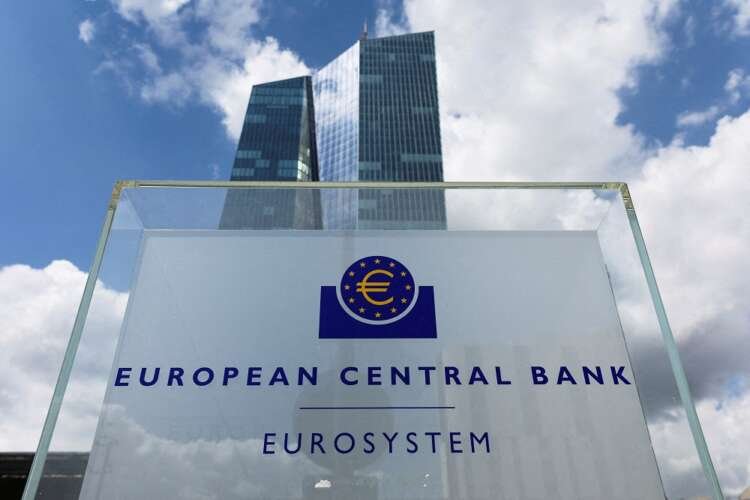
    The image shows European flags in front of the ECB building in Frankfurt, highlighting the institution's role in upcoming monetary policy changes, including potential quantitative tightening amidst market volatility.
    European flags in front of the ECB building symbolize financial policy changes - Global Banking & Finance Review
    Why waste money on news and opinion when you can access them for free?

    Take advantage of our newsletter subscription and stay informed on the go!

    Subscribe

    Tags:monetary policyquantitative tighteningfinancial marketsEuropean Central Bankinterest rates

    By Yoruk Bahceli and Dhara Ranasinghe

    LONDON (Reuters) – The European Central Bank is considering entering the maelstrom of volatile world markets to start winding down its massive bond holdings – just as governments scale up spending to respond to an energy crisis likely to induce a recession.

    The ECB, which bought 5 trillion euros ($4.87 trillion) of bonds over the past decade to lift inflation deemed too low, now finds itself battling to bring it down as it runs at a record high of 10%.

    On top of aggressive interest rate hikes including an unprecedented 75 basis-point move last month, policy hawks want to begin quantitative tightening (QT): the scaling back of the ECB’s bond holdings.

    European Central Bank policymakers discussed earlier this month a detailed timeline for running down part of their bond portfolio and envisioned its start sometime in the second quarter of 2023, Reuters reported on Thursday.

    The process will likely come after the ECB hikes its benchmark rate to around 2% and be very gradual, but bond markets, reeling from aggressive rate hikes globally, an energy crisis and a rout in British bonds – are nervous.

    “There is much at stake in the euro zone when it comes to QT,” said ING senior rates strategist Benjamin Schroeder, adding that the closely watched gap between Italian and German yields was the main focus.

    “But beyond spreads there is also a fear of stoking further market volatility, especially when government funding plans in the eurozone are under growing upside risk.”

    At 2.35%, Germany’s 10-year bond yield is up 250 basis points this year and Italy’s up almost 360 bps – the largest surges in decades.

    Germany last month unveiled a 200 billion euro package funded by new borrowing to help cushion the blow from the energy shock. BofA expects net European government bond supply to rise close to 400 billion euros next year, the highest on record and well above the 120-145 billion euros expected this year, dampened in part by ECB bond-buying.

    “This consideration also makes the practical implementation of ECB QT significantly harder,” BofA said.

    SOFTLY, SOFTLY

    Analysts expect the ECB would first gradually phase out reinvestments of bonds maturing under its conventional bond purchase programme. That would reduce its balance sheet by a “manageable” 155 billion euros in 2023 and 300 billion euros in 2024, ING reckons.

    Goldman Sachs estimates that bond markets should be able to digest an annual 250 billion euro unwind of those holdings. Ten-year bond yields in higher-rated states would rise a mere 6 bps, and 15 bps in Southern Europe.

    Even if those holdings were to be unwound, analysts widely expect the ECB would still continue reinvestments under its pandemic emergency bond purchase programme (PEPP). It shifted funds to countries such as Italy and Spain over the summer as a first line of defence for a divergence of the yield spread they pay over top-rated Germany’s seen as “unwarranted”.

    Reuters sources said the QT discussion earlier this month did not impact PEPP reinvestments, set to run through 2024.

    Eric Oynoyan, head of European rates strategy at Morgan Stanley, estimates PEPP redemptions will total around 151 bln euros next year.

    “To some extent, ironically the PEPP flexibility is a way to keep on doing QE for peripheral debt while doing QT and could even eventually lead to tighter spreads,” he said, referring to the first half of next year.

    An eventual wind-down of PEPP holdings could add to balance sheet reductions in 2025 worth a total 388 billion euros, ING said. Analysts do not expect the ECB to speed up the process with outright bond sales.

    UNCHARTERED TERRITORY

    How QT will play out is largely unknown in the same way that quantitative easing was an experiment.

    The Federal Reserve has started to wind down its $9 trillion balance sheet and staff recently concluded that bond market strains could complicate the operation by amplifying its impact and raising rates more than anticipated.

    The Bank of England’s plans to start QT in early October were delayed until Oct. 31 as it launched an emergency bond-buying programme to stem a bond market rout sparked by the UK government’s Sept. 23 announcement of a “mini-budget”.

    “The lesson from the Bank of England is that essentially, if you don’t have financial stability, there’s no point trying to pursue price stability,” said Piet Haines Christiansen, chief analyst at Danske Bank.

    The big headache for the ECB is containing bond spreads.

    In addition to PEPP reinvestments, it has also launched a new tool, the Transmission Protection Instrument (TPI), under which it would buy bonds from states seeing an “unwarranted” widening of spreads over Germany.

    AllianceBernstein portfolio manager Nick Sanders said he was “sceptical” how the ECB could achieve QT with those protections in place.

    “If you’ve got euro zone yields supported by backstop they’ve got in place, it’s going to be very hard for them to move into QT environment without a shock towards peripheral spreads, particularly Italy.”

    The ECB may also find itself undertaking QT during a recession, which would lead to “overtightening” of policy, said Annalisa Piazza, analyst at MFS Investment Management.

    No doubt the ECB, whose assets rival the Fed’s, adding to balance sheet runoff globally would be another source of uncertainty for broader markets.

    A rough rule of thumb is that $1 trillion of QT is consistently worth about 10% off global equities, strategists said.

    ($1 = 1.0264 euros)

    (Reporting by Yoruk Bahceli and Dhara Ranasinghe, additional reporting by Samuel Indyk in London; Editing by Hugh Lawson and Tomasz Janowski)

    Frequently Asked Questions about Analysis-ECB ‘QT’ may be next challenge for tumultuous markets

    1What is quantitative tightening?

    Quantitative tightening (QT) is a monetary policy used by central banks to decrease the amount of money circulating in the economy by reducing their bond holdings.

    2What is the European Central Bank?

    The European Central Bank (ECB) is the central bank for the euro and is responsible for monetary policy within the Eurozone, aiming to maintain price stability.

    3What are interest rates?

    Interest rates are the cost of borrowing money, expressed as a percentage of the amount borrowed, and are influenced by central bank policies.

    4What is inflation?

    Inflation is the rate at which the general level of prices for goods and services rises, eroding purchasing power.

    5What are bond markets?

    Bond markets are financial markets where participants can issue new debt or buy and sell existing debt securities, primarily bonds.

    More from Top Stories

    Explore more articles in the Top Stories category

    Image for Lessons From the Ring and the Deal Table: How Boxing Shapes Steven Nigro’s Approach to Banking and Life
    Lessons From the Ring and the Deal Table: How Boxing Shapes Steven Nigro’s Approach to Banking and Life
    Image for Joe Kiani in 2025: Capital, Conviction, and a Focused Return to Innovation
    Joe Kiani in 2025: Capital, Conviction, and a Focused Return to Innovation
    Image for Marco Robinson – CLOSE THE DEAL AND SUDDENLY GROW RICH
    Marco Robinson – CLOSE THE DEAL AND SUDDENLY GROW RICH
    Image for Digital Tracing: Turning a regulatory obligation into a commercial advantage
    Digital Tracing: Turning a regulatory obligation into a commercial advantage
    Image for Exploring the Role of Blockchain and the Bitcoin Price Today in Education
    Exploring the Role of Blockchain and the Bitcoin Price Today in Education
    Image for Inside the World’s First Collection Industry Conglomerate: PCA Global’s Platform Strategy
    Inside the World’s First Collection Industry Conglomerate: PCA Global’s Platform Strategy
    Image for Chase Buchanan Private Wealth Management Highlights Key Autumn 2025 Budget Takeaways for Expats
    Chase Buchanan Private Wealth Management Highlights Key Autumn 2025 Budget Takeaways for Expats
    Image for PayLaju Strengthens Its Position as Malaysia’s Trusted Interest-Free Sharia-Compliant Loan Provider
    PayLaju Strengthens Its Position as Malaysia’s Trusted Interest-Free Sharia-Compliant Loan Provider
    Image for A Notable Update for Employee Health Benefits:
    A Notable Update for Employee Health Benefits:
    Image for Creating Equity Between Walls: How Mohak Chauhan is Using Engineering, Finance, and Community Vision to Reengineer Affordable Housing
    Creating Equity Between Walls: How Mohak Chauhan is Using Engineering, Finance, and Community Vision to Reengineer Affordable Housing
    Image for Upcoming Book on Real Estate Investing: Harvard Grace Capital Founder Stewart Heath’s Puts Lessons in Print
    Upcoming Book on Real Estate Investing: Harvard Grace Capital Founder Stewart Heath’s Puts Lessons in Print
    Image for ELECTIVA MARKS A LANDMARK FIRST YEAR WITH MAJOR SENIOR APPOINTMENTS AND EXPANSION MILESTONES
    ELECTIVA MARKS A LANDMARK FIRST YEAR WITH MAJOR SENIOR APPOINTMENTS AND EXPANSION MILESTONES
    View All Top Stories Posts
    Previous Top Stories PostRoyal Mail warns of thousands of job cuts as it slides into red
    Next Top Stories PostEuro zone posts record trade deficit in August amid soaring energy prices