Search
00
GBAF Logo
trophy
Top StoriesInterviewsBusinessFinanceBankingTechnologyInvestingTradingVideosAwardsMagazinesHeadlinesTrends

Subscribe to our newsletter

Get the latest news and updates from our team.

Global Banking & Finance Review®

Global Banking & Finance Review® - Subscribe to our newsletter

Company

    GBAF Logo
    • About Us
    • Profile
    • Privacy & Cookie Policy
    • Terms of Use
    • Contact Us
    • Advertising
    • Submit Post
    • Latest News
    • Research Reports
    • Press Release
    • Awards▾
      • About the Awards
      • Awards TimeTable
      • Submit Nominations
      • Testimonials
      • Media Room
      • Award Winners
      • FAQ
    • Magazines▾
      • Global Banking & Finance Review Magazine Issue 79
      • Global Banking & Finance Review Magazine Issue 78
      • Global Banking & Finance Review Magazine Issue 77
      • Global Banking & Finance Review Magazine Issue 76
      • Global Banking & Finance Review Magazine Issue 75
      • Global Banking & Finance Review Magazine Issue 73
      • Global Banking & Finance Review Magazine Issue 71
      • Global Banking & Finance Review Magazine Issue 70
      • Global Banking & Finance Review Magazine Issue 69
      • Global Banking & Finance Review Magazine Issue 66
    Top StoriesInterviewsBusinessFinanceBankingTechnologyInvestingTradingVideosAwardsMagazinesHeadlinesTrends

    Global Banking & Finance Review® is a leading financial portal and online magazine offering News, Analysis, Opinion, Reviews, Interviews & Videos from the world of Banking, Finance, Business, Trading, Technology, Investing, Brokerage, Foreign Exchange, Tax & Legal, Islamic Finance, Asset & Wealth Management.
    Copyright © 2010-2026 GBAF Publications Ltd - All Rights Reserved. | Sitemap | Tags | Developed By eCorpIT

    Editorial & Advertiser disclosure

    Global Banking & Finance Review® is an online platform offering news, analysis, and opinion on the latest trends, developments, and innovations in the banking and finance industry worldwide. The platform covers a diverse range of topics, including banking, insurance, investment, wealth management, fintech, and regulatory issues. The website publishes news, press releases, opinion and advertorials on various financial organizations, products and services which are commissioned from various Companies, Organizations, PR agencies, Bloggers etc. These commissioned articles are commercial in nature. This is not to be considered as financial advice and should be considered only for information purposes. It does not reflect the views or opinion of our website and is not to be considered an endorsement or a recommendation. We cannot guarantee the accuracy or applicability of any information provided with respect to your individual or personal circumstances. Please seek Professional advice from a qualified professional before making any financial decisions. We link to various third-party websites, affiliate sales networks, and to our advertising partners websites. When you view or click on certain links available on our articles, our partners may compensate us for displaying the content to you or make a purchase or fill a form. This will not incur any additional charges to you. To make things simpler for you to identity or distinguish advertised or sponsored articles or links, you may consider all articles or links hosted on our site as a commercial article placement. We will not be responsible for any loss you may suffer as a result of any omission or inaccuracy on the website.

    Home > Top Stories > Analysis-China’s great reopening may come too late for many businesses
    Top Stories

    Analysis-China’s great reopening may come too late for many businesses

    Published by Uma Rajagopal

    Posted on November 22, 2022

    4 min read

    Last updated: February 3, 2026

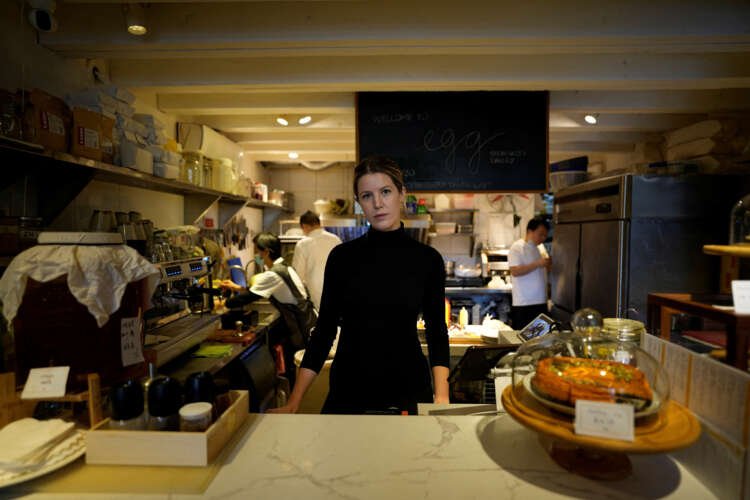
    The image depicts a bustling café in Shanghai, symbolizing the struggles of local businesses amid China's reopening efforts post-COVID. It highlights the impact of prolonged restrictions and consumer behavior as entrepreneurs adapt to changing economic conditions.
    Café scene in Shanghai highlighting business challenges amid China's reopening - Global Banking & Finance Review
    Why waste money on news and opinion when you can access them for free?

    Take advantage of our newsletter subscription and stay informed on the go!

    Subscribe

    Tags:GDPeconomic growthconsumer perceptionfinancial marketsretail trade

    by Casey Hall and Sophie Yu

    SHANGHAI (Reuters) – The culinary tourism business of Brian Bergey and his wife Ruixi Hu has persevered in China through three years of harsh COVID-19 restrictions.

    But just as excitement is mounting in global financial markets that the world’s second-largest economy may finally come out of isolation next year, the two are packing their bags.

    “I remain fairly pessimistic about the quote-unquote reopening of China,” said Bergey. Their Lost Plate company, which has been hosting food tours in several Chinese cities since 2015, will instead veer to Southeast Asia.

    China, the last among major countries not treating COVID as endemic, this month unveiled 20 new steps that eased its stringent anti-COVID policies.

    That catapulted Chinese stocks, bonds and the yuan currency higher, and a broad range of assets from Asia to Europe and Latin America rallied.

    If China reconnects with the world next year, the investor thesis went, its economy will recover from its sharpest slowdown in decades, and with it, the prospects of a global recession in 2023 might fade as well.

    But that exuberance contrasts with the bleak economic reality inside China.

    Many businesses, especially customer-facing ones, fear they may not survive until next year: China is still battling some of its biggest outbreaks so far, while shell-shocked consumers – whose lives were upended by the government’s harsh anti-COVID measures – are holding on to their cash.

    “The biggest thing will be to see in February and March who was actually able to survive the winter,” said Shanghai-based American entrepreneur Camden Hauge, who owns a cafe, a bar, several matcha kiosks and an events company in the city.

    Shanghai’s 25 million people, traumatised by two months of captivity in their own homes early this year, often without access to basic necessities, will continue to avoid crowded venues for a long time regardless of the rules, she expects.

    “People are not going to flick a switch and go back to the way life was before,” Hauge said.

    SHELL-SHOCKED CONSUMERS

    China’s economy is expected to grow around 3% this year, missing its target of about 5.5%.

    A slate of economic data for October came in below already weak expectations: Exports fell. Inflation slowed. New bank lending tumbled. The downturn in the property market deepened. Retail sales fell for the first time since Shanghai’s April-May lockdown.

    With COVID outbreaks getting worse, it is unlikely that China’s economy can shift into a higher gear in the near term.

    JPMorgan estimated earlier this month that cities with more than 10 new COVID cases accounted for 780 million people and 62.2% of GDP – roughly triple the levels seen at the end of September.

    Vaccination and booster rates remain relatively low across China, especially among vulnerable populations such as the elderly, leaving authorities wary about easing up before the populace is better prepared.

    As a result, the new COVID rules have not been implemented uniformly. Local authorities in some Chinese cities eased restrictions, while others tightened.

    In several cities, officials came out to reassure residents the tweaks did not mean letting their guard down.

    Faced with mixed messages, some nervous households have been taking matters into their own hands. Posts on social media showed many parents, fearing their children might get COVID, are using pretexts such as toothaches or ear infections to pull them from school.

    Those families will not be going out for dinner or shopping excursions any time soon, economists warn.

    “The new measures to ‘optimise’ COVID containment seem to be creating chaos on the ground as local governments attempt to interpret the policies,” analysts at Gavekal Dragonomics said.

    “[This] presents economic uncertainty that seems likely to further dampen consumption and property sales in the near term.”

    At its core, the problem reflects authorities’ failure to prioritise the interests of consumers, who are often the punching bag in China’s investment-driven economy.

    Take China’s traffic data: in the third quarter, freight turnover by road, rail and water were roughly the same as in the third quarter in 2019, pre-COVID, according to a Fitch Ratings analysis.

    By comparison, passenger turnover on the same modes of transportation was only half or even one-third the levels of three years ago, indicating that people’s lives suffered far more disruption than industrial logistics.

    That bodes ill for customer-facing businesses.

    Yao Lu’s Shanghai-based bar, Union Trading Company, was a stalwart on international “best bar” lists until this year, when it has only operated for 50 days between COVID shutdowns.

    “What this year has taught us is that whatever plan you have for the future doesn’t really matter,” Yao said. “We’re just trying to live day by day.”

    (Reporting by Casey Hall in Shanghai and Sophie Yu in Beijing; Editing by Marius Zaharia and Edmund Klamann)

    Frequently Asked Questions about Analysis-China’s great reopening may come too late for many businesses

    1What is economic growth?

    Economic growth refers to an increase in the production of goods and services in an economy over a period of time, typically measured by the rise in GDP.

    2What is consumer perception?

    Consumer perception is the way consumers view and interpret a brand or product based on their experiences, beliefs, and feelings, influencing their purchasing decisions.

    3What are financial markets?

    Financial markets are platforms where buyers and sellers engage in the trade of assets such as stocks, bonds, currencies, and derivatives, facilitating capital flow and investment.

    4What is retail trade?

    Retail trade involves the sale of goods and services to consumers for personal use, typically through stores, online platforms, or direct sales.

    More from Top Stories

    Explore more articles in the Top Stories category

    Image for Lessons From the Ring and the Deal Table: How Boxing Shapes Steven Nigro’s Approach to Banking and Life
    Lessons From the Ring and the Deal Table: How Boxing Shapes Steven Nigro’s Approach to Banking and Life
    Image for Joe Kiani in 2025: Capital, Conviction, and a Focused Return to Innovation
    Joe Kiani in 2025: Capital, Conviction, and a Focused Return to Innovation
    Image for Marco Robinson – CLOSE THE DEAL AND SUDDENLY GROW RICH
    Marco Robinson – CLOSE THE DEAL AND SUDDENLY GROW RICH
    Image for Digital Tracing: Turning a regulatory obligation into a commercial advantage
    Digital Tracing: Turning a regulatory obligation into a commercial advantage
    Image for Exploring the Role of Blockchain and the Bitcoin Price Today in Education
    Exploring the Role of Blockchain and the Bitcoin Price Today in Education
    Image for Inside the World’s First Collection Industry Conglomerate: PCA Global’s Platform Strategy
    Inside the World’s First Collection Industry Conglomerate: PCA Global’s Platform Strategy
    Image for Chase Buchanan Private Wealth Management Highlights Key Autumn 2025 Budget Takeaways for Expats
    Chase Buchanan Private Wealth Management Highlights Key Autumn 2025 Budget Takeaways for Expats
    Image for PayLaju Strengthens Its Position as Malaysia’s Trusted Interest-Free Sharia-Compliant Loan Provider
    PayLaju Strengthens Its Position as Malaysia’s Trusted Interest-Free Sharia-Compliant Loan Provider
    Image for A Notable Update for Employee Health Benefits:
    A Notable Update for Employee Health Benefits:
    Image for Creating Equity Between Walls: How Mohak Chauhan is Using Engineering, Finance, and Community Vision to Reengineer Affordable Housing
    Creating Equity Between Walls: How Mohak Chauhan is Using Engineering, Finance, and Community Vision to Reengineer Affordable Housing
    Image for Upcoming Book on Real Estate Investing: Harvard Grace Capital Founder Stewart Heath’s Puts Lessons in Print
    Upcoming Book on Real Estate Investing: Harvard Grace Capital Founder Stewart Heath’s Puts Lessons in Print
    Image for ELECTIVA MARKS A LANDMARK FIRST YEAR WITH MAJOR SENIOR APPOINTMENTS AND EXPANSION MILESTONES
    ELECTIVA MARKS A LANDMARK FIRST YEAR WITH MAJOR SENIOR APPOINTMENTS AND EXPANSION MILESTONES
    View All Top Stories Posts
    Previous Top Stories PostExclusive-Bankman-Fried’s FTX, parents bought Bahamas property worth $121 million
    Next Top Stories PostKing Charles hosts first state visit for S.Africa’s Ramaphosa