Search
00
GBAF Logo
trophy
Top StoriesInterviewsBusinessFinanceBankingTechnologyInvestingTradingVideosAwardsMagazinesHeadlinesTrends

Subscribe to our newsletter

Get the latest news and updates from our team.

Global Banking & Finance Review®

Global Banking & Finance Review® - Subscribe to our newsletter

Company

    GBAF Logo
    • About Us
    • Profile
    • Privacy & Cookie Policy
    • Terms of Use
    • Contact Us
    • Advertising
    • Submit Post
    • Latest News
    • Research Reports
    • Press Release
    • Awards▾
      • About the Awards
      • Awards TimeTable
      • Submit Nominations
      • Testimonials
      • Media Room
      • Award Winners
      • FAQ
    • Magazines▾
      • Global Banking & Finance Review Magazine Issue 79
      • Global Banking & Finance Review Magazine Issue 78
      • Global Banking & Finance Review Magazine Issue 77
      • Global Banking & Finance Review Magazine Issue 76
      • Global Banking & Finance Review Magazine Issue 75
      • Global Banking & Finance Review Magazine Issue 73
      • Global Banking & Finance Review Magazine Issue 71
      • Global Banking & Finance Review Magazine Issue 70
      • Global Banking & Finance Review Magazine Issue 69
      • Global Banking & Finance Review Magazine Issue 66
    Top StoriesInterviewsBusinessFinanceBankingTechnologyInvestingTradingVideosAwardsMagazinesHeadlinesTrends

    Global Banking & Finance Review® is a leading financial portal and online magazine offering News, Analysis, Opinion, Reviews, Interviews & Videos from the world of Banking, Finance, Business, Trading, Technology, Investing, Brokerage, Foreign Exchange, Tax & Legal, Islamic Finance, Asset & Wealth Management.
    Copyright © 2010-2026 GBAF Publications Ltd - All Rights Reserved. | Sitemap | Tags | Developed By eCorpIT

    Editorial & Advertiser disclosure

    Global Banking & Finance Review® is an online platform offering news, analysis, and opinion on the latest trends, developments, and innovations in the banking and finance industry worldwide. The platform covers a diverse range of topics, including banking, insurance, investment, wealth management, fintech, and regulatory issues. The website publishes news, press releases, opinion and advertorials on various financial organizations, products and services which are commissioned from various Companies, Organizations, PR agencies, Bloggers etc. These commissioned articles are commercial in nature. This is not to be considered as financial advice and should be considered only for information purposes. It does not reflect the views or opinion of our website and is not to be considered an endorsement or a recommendation. We cannot guarantee the accuracy or applicability of any information provided with respect to your individual or personal circumstances. Please seek Professional advice from a qualified professional before making any financial decisions. We link to various third-party websites, affiliate sales networks, and to our advertising partners websites. When you view or click on certain links available on our articles, our partners may compensate us for displaying the content to you or make a purchase or fill a form. This will not incur any additional charges to you. To make things simpler for you to identity or distinguish advertised or sponsored articles or links, you may consider all articles or links hosted on our site as a commercial article placement. We will not be responsible for any loss you may suffer as a result of any omission or inaccuracy on the website.

    Home > Top Stories > Analysis-Britain’s shrunken workforce hampers COVID recovery
    Top Stories

    Analysis-Britain’s shrunken workforce hampers COVID recovery

    Published by Jessica Weisman-Pitts

    Posted on May 26, 2022

    5 min read

    Last updated: February 6, 2026

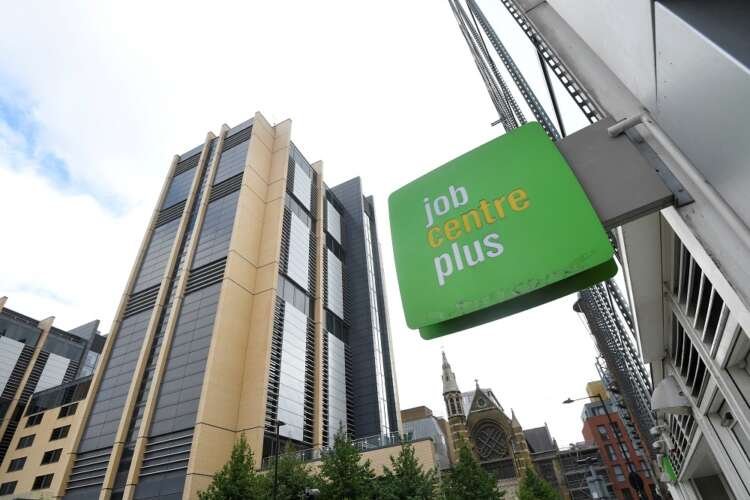
    The image shows a sign outside a London employment agency, symbolizing the challenges in Britain's labor market as the workforce shrinks due to COVID-19 impacts and economic changes.
    Sign outside a London employment agency, highlighting UK labor market challenges - Global Banking & Finance Review
    Tags:BrexitUK economyunemployment ratesfinancial sector

    By David Milliken

    LONDON (Reuters) – Britain’s economy regained its pre-COVID size late last year, but in one crucial way it has not recovered: there are 400,000 fewer workers than at the start of the pandemic.

    This stands in contrast to most other big, rich economies where the labour force has recovered more, and adds to the Bank of England’s inflation worries after surging energy prices and other bottlenecks pushed it to a 40-year high.

    The central bank fears a tight labour market will limit the economy’s growth potential and put fresh upward pressure on wages, making it harder to bring inflation back to its target.

    People have dropped out of the workforce not for want of jobs: the number of job vacancies advertised exceeded the number of those looking for work for the first time on record this year and the unemployment rate is the lowest since the 1970s.

    Instead, Britain has seen a sharp rise in people reporting long-term sickness – potentially due to the after-effects of high rates of COVID – as well as an exodus of older workers and more full-time study by the young.

    The Bank of England is not sure any of these factors will turn around soon. And with the pool of European Union workers no longer readily available after Brexit, labour shortages risk trapping Britain in a stagflation rut.

    Before the pandemic, Britain enjoyed steady labour force growth and high rates of participation.

    The number of people employed or looking for work in Britain was 34.2 million in the fourth quarter of 2019, but by the first quarter of this year it had fallen to 33.8 million.

    Britain stands out here. According to OECD data, across the Group of Seven countries only Italy has seen a bigger percentage drop in the share of those aged 15-64 active in its workforce. Inactivity among the working-age population has increased in Britain by a higher margin than any of its peers.

    The decline in Britain’s workforce is also the longest since the early 1990s, when a recession caused unemployment to soar and some people gave up looking for work.

    “The persistence and scale of this drop has been a surprise to us,” BoE Governor Andrew Bailey told lawmakers earlier this month as he sought to explain why inflation is forecast to be stickier in Britain than elsewhere.

    <RCItemMarker xmlns=”http://CoreService.Lynx.ThomsonReuters.com/2009/03/02/Schemas”>a06f1014-e6b2-441a-96a6-7940d660ef7d1</RCItemMarker>

    UK workforce shrinks more than most in G7: https://graphics.reuters.com/BRITAIN-ECONOMY/EMPLOYMENT/xmvjoxjnxpr/chart.png

    SICKER BRITS

    Some 233,000 people left the labour market because of long-term sickness between the fourth quarter of 2019 and the first quarter of 2022, around two thirds of the total outflow. Early retirement accounted for 49,000 and full-time study for 55,000 of the departures.

    One category which has seen a big fall is “looking after family/home”, with 156,000 fewer people citing as a reason for leaving the workforce than in late 2019.

    Hannah Slaughter, an economist at the Resolution Foundation, said this could reflect how remote working in the pandemic had made it easier to juggle a job with other duties.

    <RCItemMarker xmlns=”http://CoreService.Lynx.ThomsonReuters.com/2009/03/02/Schemas”>5d92dc04-1e12-4f05-96ca-c2281215004c2</RCItemMarker>

    Long-term illness is behind smaller UK workforce: https://graphics.reuters.com/BRITAIN-ECONOMY/EMPLOYMENT/lgpdwejravo/chart.png

    LONG COVID TO BLAME?

    How much of the increase in long-term sickness is directly due to COVID is hard to pin down.

    Around 1.8 million Britons reported in early April that they had COVID symptoms lasting more than a month, with some 346,000 saying they were so bad that they “limited a lot” their day-to-day activities, possibly a reason for those of working age to drop out of the labour market.

    Michael Saunders, a BoE policymaker, also suggested in a recent speech that a big rise in waiting times for non-emergency medical care due to pandemic backlogs could have made more Britons too sick to work.

    Directly comparable data for other countries is hard to find. Annual EU figures show no consistent trend in the percentage of those unable to work because of sickness or disability between 2019 and 2021, with a sharp fall in France but a rise in Italy, for example.

    A comparison with Spain might suggest the severity of the pandemic may have played a role. Spain – which had a 13% lower COVID death rate than Britain – shows a 4% rise in sickness being cited as a reason for staying out of the workforce between late 2019 and early 2022, compared with a 12% increase in Britain.

    <RCItemMarker xmlns=”http://CoreService.Lynx.ThomsonReuters.com/2009/03/02/Schemas”>e790a586-e1c0-49b8-b9c1-f01fa27e82b53</RCItemMarker>

    Britain has bigger rise in sickness than Spain: https://graphics.reuters.com/BRITAIN-ECONOMY/EMPLOYMENT/byvrjdxomve/chart.png

    NO REMISSION

    Before Brexit, the strong demand in Britain’s labour market – where wages rose by an annual 7% in the first quarter – would encourage more people into work and bring in EU workers where needed.

    But over the past two years the number of EU nationals working in Britain has fallen by 211,000 while the number of non-EU nationals rose by 182,000. And hiring from abroad has become tougher as almost all foreign workers now require a visa and filling vacancies quickly with those with the right skills became more challenging.

    Saunders said Brexit could be “limiting the extent to which domestic capacity strains and specific skill shortages can be eased through imports and inward migration”.

    The BoE revised down its expectations for labour force participation in its latest forecasts and sees further falls over the coming years while a looming economic slowdown caused by high inflation is expected to push up unemployment.

    In addition, almost all of those citing illness as a reason for not working say they no longer want a job.

    (Additional reporting by Belen Carreno in MADRID; reporting by David Milliken; Editing by Tomasz Janowski)

    Frequently Asked Questions about Analysis-Britain’s shrunken workforce hampers COVID recovery

    1What is Brexit?

    Brexit is the term used to describe the United Kingdom's decision to leave the European Union, which was finalized on January 31, 2020. It has significant implications for trade, immigration, and labor markets.

    2What is inflation?

    Inflation is the rate at which the general level of prices for goods and services rises, eroding purchasing power. Central banks attempt to limit inflation to maintain economic stability.

    Why waste money on news and opinion when you can access them for free?

    Take advantage of our newsletter subscription and stay informed on the go!

    Subscribe

    More from Top Stories

    Explore more articles in the Top Stories category

    Image for Lessons From the Ring and the Deal Table: How Boxing Shapes Steven Nigro’s Approach to Banking and Life
    Lessons From the Ring and the Deal Table: How Boxing Shapes Steven Nigro’s Approach to Banking and Life
    Image for Joe Kiani in 2025: Capital, Conviction, and a Focused Return to Innovation
    Joe Kiani in 2025: Capital, Conviction, and a Focused Return to Innovation
    Image for Marco Robinson – CLOSE THE DEAL AND SUDDENLY GROW RICH
    Marco Robinson – CLOSE THE DEAL AND SUDDENLY GROW RICH
    Image for Digital Tracing: Turning a regulatory obligation into a commercial advantage
    Digital Tracing: Turning a regulatory obligation into a commercial advantage
    Image for Exploring the Role of Blockchain and the Bitcoin Price Today in Education
    Exploring the Role of Blockchain and the Bitcoin Price Today in Education
    Image for Inside the World’s First Collection Industry Conglomerate: PCA Global’s Platform Strategy
    Inside the World’s First Collection Industry Conglomerate: PCA Global’s Platform Strategy
    Image for Chase Buchanan Private Wealth Management Highlights Key Autumn 2025 Budget Takeaways for Expats
    Chase Buchanan Private Wealth Management Highlights Key Autumn 2025 Budget Takeaways for Expats
    Image for PayLaju Strengthens Its Position as Malaysia’s Trusted Interest-Free Sharia-Compliant Loan Provider
    PayLaju Strengthens Its Position as Malaysia’s Trusted Interest-Free Sharia-Compliant Loan Provider
    Image for A Notable Update for Employee Health Benefits:
    A Notable Update for Employee Health Benefits:
    Image for Creating Equity Between Walls: How Mohak Chauhan is Using Engineering, Finance, and Community Vision to Reengineer Affordable Housing
    Creating Equity Between Walls: How Mohak Chauhan is Using Engineering, Finance, and Community Vision to Reengineer Affordable Housing
    Image for Upcoming Book on Real Estate Investing: Harvard Grace Capital Founder Stewart Heath’s Puts Lessons in Print
    Upcoming Book on Real Estate Investing: Harvard Grace Capital Founder Stewart Heath’s Puts Lessons in Print
    Image for ELECTIVA MARKS A LANDMARK FIRST YEAR WITH MAJOR SENIOR APPOINTMENTS AND EXPANSION MILESTONES
    ELECTIVA MARKS A LANDMARK FIRST YEAR WITH MAJOR SENIOR APPOINTMENTS AND EXPANSION MILESTONES
    View All Top Stories Posts
    Previous Top Stories PostSony to ramp up PS5 production and broaden games portfolio
    Next Top Stories PostBack to snow: World Economic Forum reverts to January for 2023